
Score Formatting
When a professional copyist prepares a score for a world-class orchestra, they must ensure every single page communicates clear intent to the busy musician. If a performer spends precious rehearsal time decoding messy handwriting or confusing page turns, the entire ensemble suffers from a loss of focus and momentum. This is the practical application of the score formatting principles established in Station 11, where we learned that visual clarity is the foundation of musical communication. Much like a blueprint for a complex building, a musical score must provide enough detail to guide the builder without cluttering the view with unnecessary information that might distract from the primary structural goals.
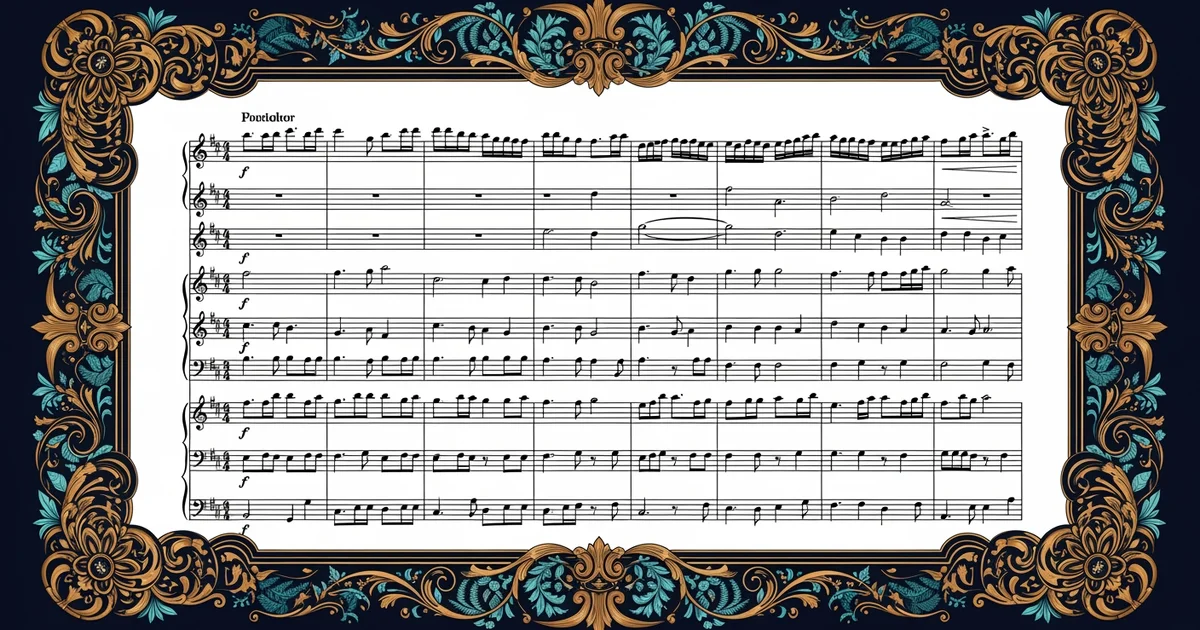
Establishing Visual Hierarchy
Effective score layout relies on a clear visual hierarchy that helps the eye prioritize important information during a performance. You should place the most essential elements, such as the melody and rhythmic pulse, in the most accessible areas of the page. Secondary information, including articulation marks and dynamic instructions, must remain close to the notes they modify. Think of this process like organizing a kitchen pantry where you store frequently used items at eye level while keeping specialty tools tucked away in lower drawers. By grouping related symbols together, you allow the performer to absorb the musical instructions subconsciously rather than struggling to decipher a cluttered and disorganized mess.
Key term: Score formatting — the systematic arrangement of musical notation on a page to maximize readability and minimize the cognitive load for performers.
Consistency remains the most vital aspect of professional manuscript preparation across all sections of the orchestra. If you use a specific style for staccato marks in the woodwind section, you must apply that exact same style to the brass and string sections as well. Inconsistent spacing or font sizes create a chaotic visual environment that forces the player to pause and reorient their brain to your unique style. By strictly adhering to a unified set of visual rules, you ensure that the performer focuses entirely on the music rather than the specific quirks of your personal notation habits.
Managing Page Turns and Spacing
Navigating page turns during a high-speed orchestral piece presents a significant challenge that requires careful planning and foresight. You must design your score so that logical resting points occur at the end of each page, allowing the musician to flip the sheet without missing any notes. A poorly placed page turn acts like a sudden roadblock on a highway, forcing the driver to slam on the brakes and lose their flow. If a section of music is too dense to allow for a comfortable rest, you might consider using a fold-out page or a blank page to create the necessary time for a safe transition.
Proper horizontal spacing also plays a critical role in how musicians perceive the tempo and rhythmic density of a passage. When you crowd too many notes into a single bar, the music appears rushed and difficult to sight-read for even the most experienced players. You should provide generous horizontal space for complex rhythmic figures, as this allows the performer to visualize the internal subdivisions of each beat. A well-spaced score breathes with the music, providing a visual representation of the time that passes between each note. The following list outlines the essential components of a readable manuscript:
- Consistent margins ensure that the printer does not cut off important musical information during the final assembly of the physical score.
- Standardized staff height allows musicians to maintain a comfortable reading distance from their music stands without straining their eyes during long rehearsals.
- Clear instrument labeling at the start of every system helps the conductor identify each voice instantly without having to scan the entire page.
Properly formatted scores act as a silent bridge between the composer and the ensemble, removing every possible barrier to a perfect performance. When you invest the time to polish your layout, you show respect for the musicians who will bring your creative vision to life. This attention to detail transforms a simple collection of notes into a professional document that invites artistic expression rather than confusion. Your commitment to clarity ensures that the symphonic experience remains cohesive from the very first rehearsal until the final concert performance.
Professional score formatting reduces the cognitive burden on performers by prioritizing visual consistency and logical flow throughout the entire manuscript.
But this visual clarity faces a major challenge when we must adapt complex symphonic scores for smaller ensembles with limited instrumentation.