
Counterpoint Basics
Writing two melodies that sound great together is like planning a busy intersection for cars. If every driver moves at the exact same speed and follows the same path, they might collide or cause a major traffic jam. However, if you design lanes that allow cars to move independently while respecting the flow of the entire road, you create a smooth and efficient system.
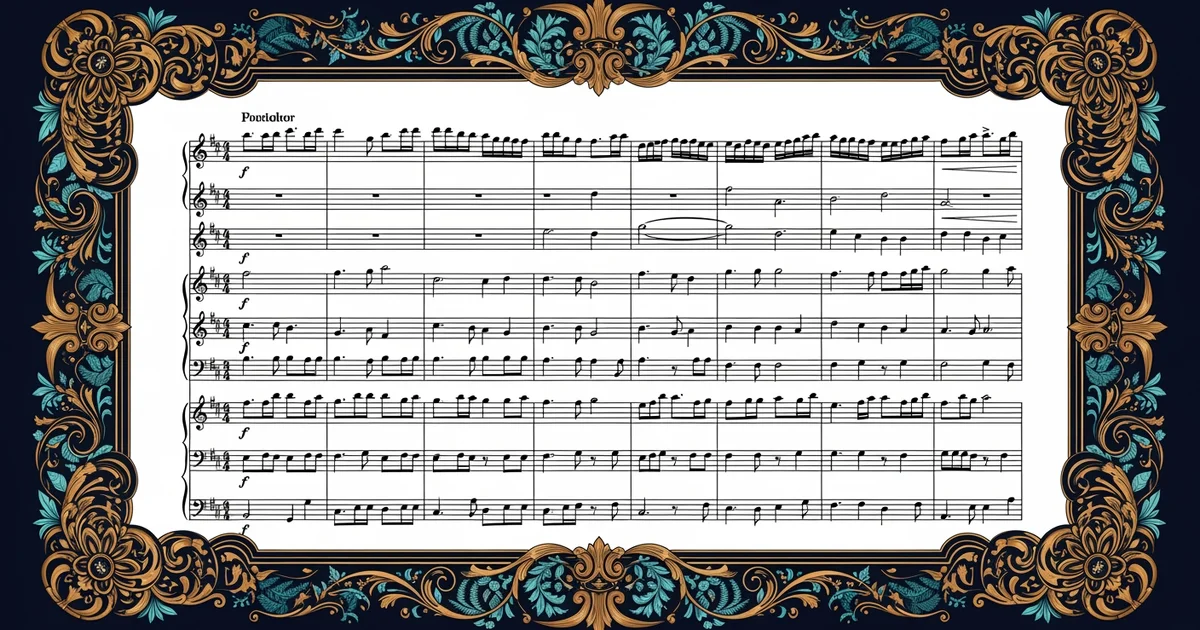
The Logic of Independent Melodies
When composers write music, they often use counterpoint to weave separate musical lines into a unified fabric. This technique requires each melody to maintain its own character while fitting perfectly against the other parts. You should think of these lines as conversations between two distinct voices that agree on the same underlying rhythm. If one voice moves upward, the other might descend to create a sense of balance and space. This constant push and pull prevents the music from feeling static or repetitive, which keeps the listener fully engaged throughout the entire performance. By focusing on how notes interact at specific moments, you can build textures that feel much richer than a simple melody with basic chords.
To master this, you must treat each musical line as a protagonist with its own unique story to tell. If you force both lines to mirror each other, you lose the beauty of the interaction and the music becomes predictable. Instead, try to vary the intervals between the notes to create tension and release. When the voices move in opposite directions, the listener hears a clear separation that makes the harmony feel broad and expansive. This approach allows you to construct complex symphonic textures that maintain clarity even when many instruments play at once. Remember that the goal is not to fill every second with noise but to leave enough room for each melody to breathe.
Balancing Melodic Motion
Developing a secondary line requires you to follow specific rules about how notes relate to the main theme. You can categorize the way these melodies move relative to each other to ensure they never sound muddy or cluttered.
- Contrary motion occurs when one melody ascends while the other descends, creating a strong sense of independence between the two voices.
- Parallel motion happens when both melodies move in the same direction, which can reinforce a theme but may sound thin if used too often.
- Oblique motion involves one voice staying on a single note while the other moves, which is excellent for building anticipation or adding subtle harmonic flavor.
These patterns provide a reliable framework for your writing process, allowing you to make intentional choices about how your music develops over time. By mixing these different types of motion, you prevent the listener from getting bored and ensure that your symphonic experience feels dynamic and purposeful.
Key term: Interval — the distance in pitch between two musical notes that defines how they sound when played together.
When you compose, always check that your secondary line does not accidentally overpower the primary melody. You want the voices to support each other like partners in a dance, where one leads and the other anticipates the next move. If you find that your lines are competing for attention, try simplifying the rhythm of the secondary part to let the main theme shine through. This careful editing process is what separates a chaotic mess of notes from a truly cohesive and professional arrangement. As you practice writing these lines, focus on keeping the melodic shapes distinct so that each voice remains recognizable to the audience.
True counterpoint succeeds when independent melodies interact through balanced motion to create a unified and complex musical texture.
The next Station introduces string section writing, which determines how these melodic lines are distributed across larger groups of instruments.