
Predator-Prey Oscillations
Imagine a forest where the number of hungry wolves rises and falls in perfect sync with the local rabbit population. When rabbits are plentiful, the wolf pack thrives and grows, but their rising numbers soon lead to a sharp decline in the rabbit count. This endless dance of survival creates a repeating pattern known as predator-prey oscillations, which keeps natural ecosystems in a delicate state of balance. These cycles are not random events because they follow specific mathematical rules that govern how two species interact within a shared habitat. By observing these shifts, researchers can predict when a population might crash or when it will experience a sudden, rapid expansion.
The Mechanics of Population Cycles
When we look at the interaction between predators and their prey, we notice a predictable lag in time between population peaks. As the prey population increases, the predator population follows behind because they have more food to support their own reproduction. Eventually, the predators consume too many prey animals, causing the prey numbers to drop significantly below their previous levels. This shortage of food forces the predator population to decline as well, which gives the prey a chance to recover. This process functions much like a household budget where high spending leads to a depleted bank account, forcing a period of saving before the next cycle of spending can begin. Because these cycles repeat indefinitely, they form a wave-like pattern that mathematicians use to model stable environments.
To understand this better, we can look at the three main stages that define these fluctuations in nature:
- The growth phase occurs when prey numbers are high, providing abundant energy for predators to increase their own birth rates.
- The decline phase begins once predators have over-hunted the prey, leading to a sudden scarcity of food resources for the hunters.
- The recovery phase happens when the low predator count allows the remaining prey to reproduce and rebuild their total population size.
These stages create a continuous loop where the success of one group directly triggers the eventual struggle of the other. The math behind this system relies on understanding how birth rates and death rates change as density shifts. If the prey population grows too fast, the predator population will also spike, ensuring that neither group dominates the environment for too long. This self-regulating mechanism prevents any single species from consuming all available resources and causing a complete ecosystem collapse.
Interpreting Biological Data Trends
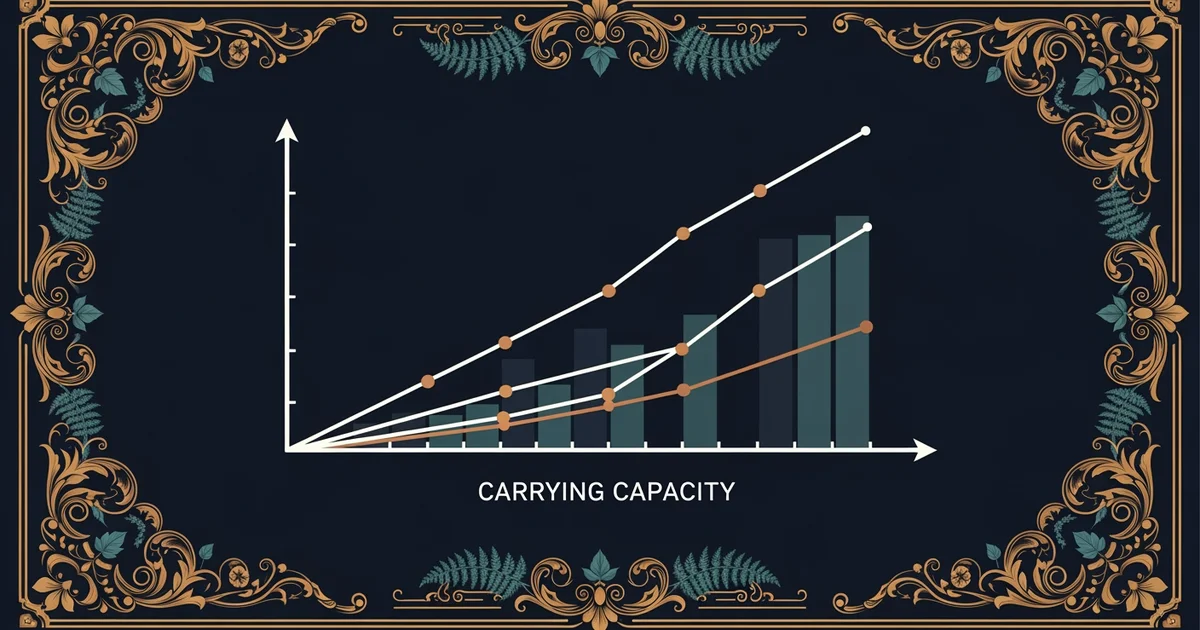
When scientists map these trends, they often use a graph to show how two different lines move across a shared timeline. One line represents the prey, while the second line tracks the predator, and you will notice the predator line consistently peaks slightly after the prey line. This delay proves that the predator population depends entirely on the previous success of the prey population. If you see the predator line rising, you can safely assume the prey line has already reached its maximum capacity. This visual tool helps biologists identify if an ecosystem is healthy or if it is suffering from an external disturbance that disrupts the natural cycle.
| Phase | Prey Status | Predator Status | Resulting Trend |
|---|---|---|---|
| Early | Increasing | Low | Prey population grows rapidly |
| Middle | Peak | Increasing | Predator population starts rising |
| Late | Decreasing | Peak | Prey numbers crash due to hunting |
| Final | Low | Decreasing | Predator numbers fall due to hunger |
By analyzing this table, you can see how the two groups trade places in terms of dominance. The system remains stable as long as the environment provides enough space for the prey to hide and reproduce. If the environment changes, such as through human intervention or climate shifts, the cycles may become erratic or disappear entirely. Understanding these oscillations is vital for conservation efforts because it allows us to protect species before they reach a point of no return. We must respect these mathematical boundaries to ensure that nature continues to function through its own built-in logic.
Natural populations maintain long-term stability by following rhythmic cycles of growth and decline that prevent any single species from exhausting its food supply.
But what does this pattern look like when we apply these same mathematical models to the complex growth of human civilization?