
Density Independent Factors
A sudden, unexpected frost can wipe out an entire field of crops overnight. This event happens regardless of how many plants were growing in that specific area.
Environmental Drivers of Population Change
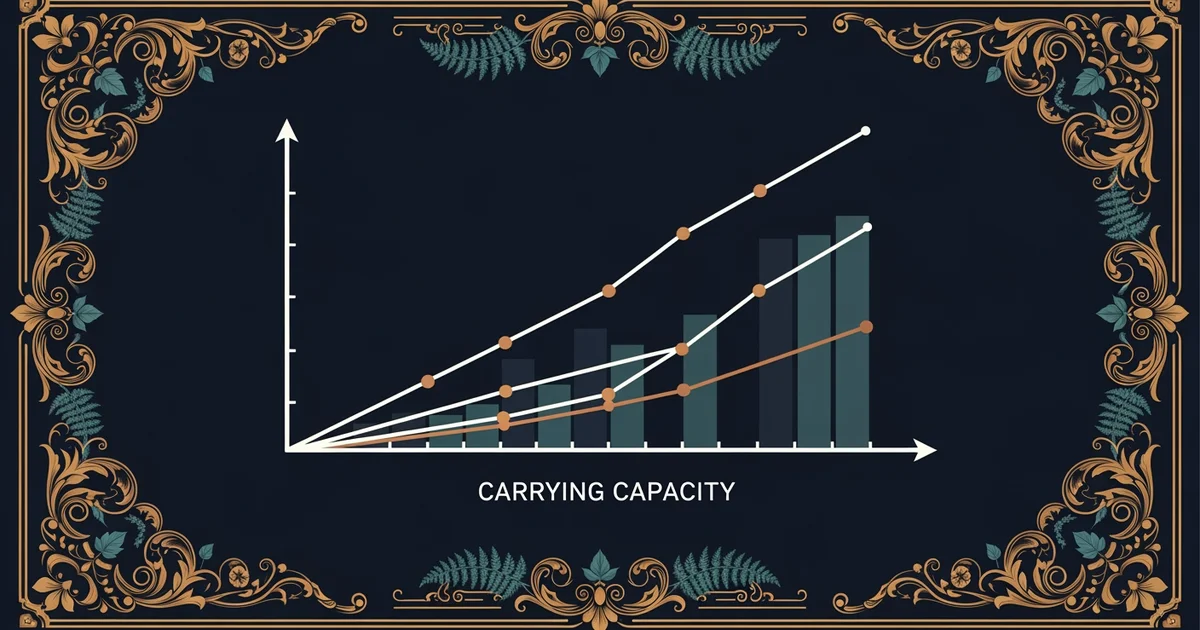
When we look at how groups of living things survive, we often focus on competition for food or space. These factors change based on the density of the group, which means the pressure increases as the population grows larger. However, nature also features events that do not care about the number of individuals present. We call these density independent factors, as they impact survival rates without regard for population size. Think of these events as a sudden economic recession that affects every business owner equally. It does not matter if a store has one customer or one hundred customers when a city-wide power grid fails. The business will lose power and stop operating because the external pressure is universal and unavoidable for everyone involved.
Weather and climate serve as the most common examples of these forces in the wild. A harsh winter or a severe drought acts as a filter that removes individuals from a population at random. Because these events do not target specific members based on their proximity to others, the entire group experiences the same level of risk. If a wildfire sweeps through a forest, it destroys the habitat for every creature living there. The population size drops immediately, but the cause of death relates to the fire rather than the number of animals. This distinction is vital for understanding why some populations crash even when they have plenty of food available. The environment acts as an external force that dictates survival regardless of internal group dynamics.
Key term: Density independent factors — environmental conditions that influence population size regardless of how many individuals are living in a specific area.
To see how these factors compare, we can look at how they differ from density dependent pressures:
- Natural disasters function by destroying physical structures or resources, which forces a population decline regardless of density.
- Climate shifts alter the metabolic demands of organisms, causing stress that affects every individual in the region simultaneously.
- Pollution events introduce toxic elements into the environment, which impact the health of every member within the affected ecosystem.
The Mathematical Impact of Random Events
When we represent these events mathematically, we treat them as external variables that subtract from the total count. If is the population size, a density independent event acts as a percentage reduction, such as , where is the death rate caused by the event. Unlike density dependent factors, the value of remains constant even if changes. This means that a flood will kill the same proportion of a population whether the group is small or large. The math shows that these factors can prevent a population from ever reaching its maximum potential. If these events happen frequently, the group may stay well below the limits of its environment because it never has time to recover.
| Factor Type | Density Dependent | Density Independent |
|---|---|---|
| Primary Cause | Competition/Disease | Weather/Disasters |
| Target | High density groups | All population sizes |
| Effect | Limits growth | Causes sudden drops |
This table illustrates why scientists classify these forces differently. While competition for resources keeps a population near a stable carrying capacity, density independent factors introduce volatility. This volatility makes long-term predictions difficult because a single storm can undo years of steady growth. By studying these patterns, we learn that survival is not just about how well a group competes for resources. It is also about how well a group can withstand the random, external shocks that nature delivers without warning. Understanding this balance helps us predict how ecosystems respond to changing global conditions over time.
Density independent factors are environmental events that reduce population size through external pressures that apply equally to every individual regardless of the total group count.
But what happens when two populations interact and their numbers begin to rise and fall in a predictable, repeating cycle?