
Introduction to Population Change
Imagine a small town where the number of people living there never changes from year to year. Every time a new baby is born, someone else moves away, or every time a new family arrives, someone passes away. This perfect balance keeps the total count exactly the same, but it is almost impossible to find in real life. Most groups of living things are constantly shifting in size because the world around them is always changing in unpredictable ways. Understanding these shifts helps us see how nature manages its limited resources through constant movement and adjustment.
The Mechanics of Group Changes
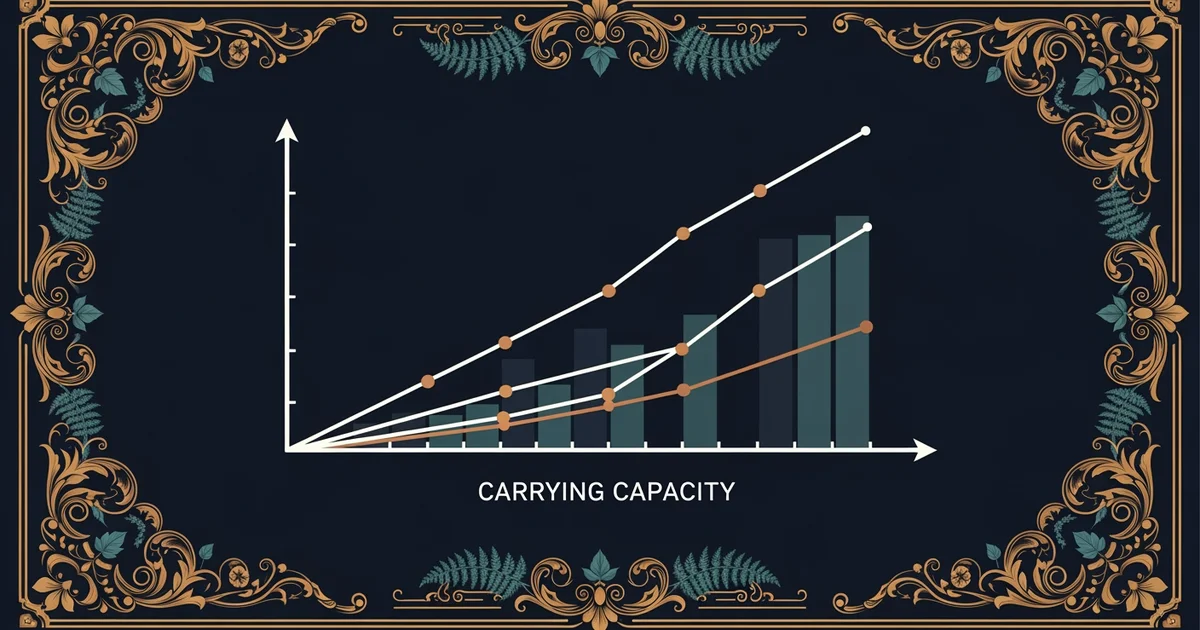
When we look at any group of living things, we must consider the factors that force the total count to move up or down over time. A group size is rarely static because births and deaths happen at different rates depending on the environment. If more individuals are born than die, the group grows larger, which puts more pressure on the food and space available. Conversely, if deaths exceed births, the group shrinks until it reaches a point where resources become abundant again for the survivors. This cycle is like a bank account where deposits represent new arrivals and withdrawals represent those leaving the group. Just as money flows in and out of your wallet based on your daily needs, a population moves based on the resources available in its habitat.
Key term: Population — the total count of individuals of a specific species living within a defined geographic area.
To understand these shifts, we look at how individuals enter and exit the group through specific processes that keep the numbers in motion. The following table shows the primary ways that a group size changes over time regardless of the species involved:
| Process | Impact on Size | Driver of Change |
|---|---|---|
| Births | Increases total | Successful reproduction |
| Deaths | Decreases total | Lack of resources |
| Immigration | Increases total | Moving into an area |
| Emigration | Decreases total | Moving out of an area |
Balancing Resources and Survival
Because every individual requires energy to survive, the environment acts as a gatekeeper that limits how large a group can become. If a group grows too quickly, it might consume all the available food, which then causes the death rate to rise sharply. This creates a natural feedback loop where the environment forces a correction on the group size to prevent total collapse. Think of this like a crowded store during a big sale where only a certain number of shoppers can fit inside at one time. If too many people try to enter, the store becomes too full to function, so people must leave before others can come inside to shop. This simple logic of supply and demand keeps the natural world from becoming overcrowded while ensuring that the strongest individuals have the best chance to thrive.
When we track these changes, we observe that populations are always seeking a state of balance with their surroundings. This does not mean they stop changing, but rather that they fluctuate around a specific point that the environment can support long-term. By studying these patterns, we can predict whether a group is likely to expand, stay steady, or face a decline in the near future. This knowledge provides a window into the health of an ecosystem and shows us how even the smallest changes in birth or death rates ripple through the entire community. You will learn how to measure these shifts using basic math as we move through this path to understand the laws of growth.
Go Deeper · Amazon
Keep going with Ecology
Browse Ecology on Amazon ↗As an Amazon Associate we earn from qualifying purchases. #ad