
Density Dependent Factors
Imagine a local coffee shop that suddenly becomes the only place in town with working electricity. As more people crowd inside to charge their devices, the available outlets vanish and the line for the espresso machine stretches out the door. The shop reaches a point where it cannot serve one more person without failing to provide service to everyone else. This scenario illustrates how limited resources dictate the survival and growth of groups within a shared environment.
The Mechanics of Resource Limitation
When a population grows, it begins to consume the vital resources available in its immediate surroundings. These resources, such as food, water, and nesting sites, are finite and cannot support an infinite number of individuals. As the density of the group increases, the amount of these essential items per individual drops significantly. This creates a competitive atmosphere where only those with the best access or the most efficiency can thrive. If the population continues to expand beyond the capacity of the area, the environment can no longer sustain the needs of every member. This process effectively slows down growth by increasing the death rate or lowering the birth rate of the group.
Key term: Density dependent factors — environmental pressures that change their intensity based on how crowded a population becomes.
These factors act as a natural brake on population expansion, preventing any single species from consuming all available energy. Unlike natural disasters that strike regardless of group size, these constraints specifically target larger populations. Think of it like a highway during rush hour where the high number of cars forces everyone to move much slower than they would on an empty road. The density of the traffic directly dictates the speed of the commute for every single driver involved. When the road is clear, speed is high, but when the road is packed, progress grinds to a halt.
Categorizing Social and Biological Constraints
Beyond simple resource scarcity, high density introduces complex social and biological hurdles that limit survival. As individuals live closer together, they often experience increased stress levels from constant interaction with neighbors. This heightened stress can weaken immune systems and make the group more susceptible to illness. Furthermore, living in close quarters allows for the rapid spread of contagious diseases, which can decimate a large population quickly. These pressures are not random, as they rely entirely on the number of individuals living in a specific area.
| Constraint Type | Mechanism of Impact | Resulting Population Effect |
|---|---|---|
| Resource Access | Competition for food | Lowered survival rates |
| Disease Spread | Increased contact | Higher mortality rate |
| Social Stress | Behavioral changes | Reduced birth rates |
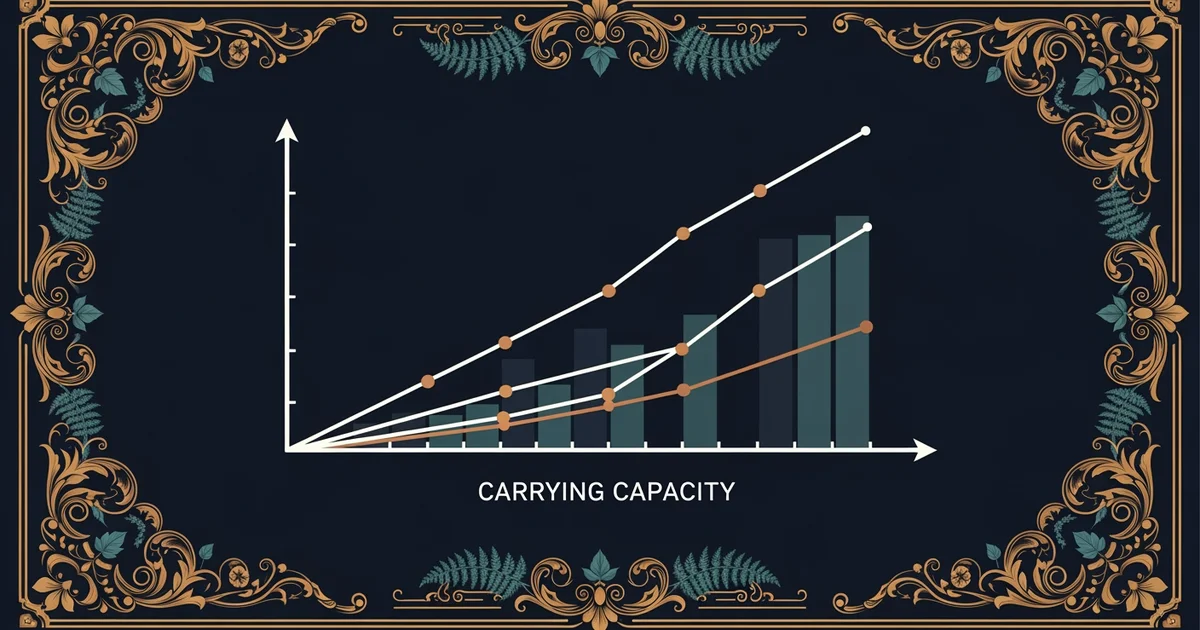
These constraints function as a feedback loop that balances the population size with the environment. When the group size is small, these factors have little impact on the growth rate of the individuals. As the group size grows, the intensity of these factors increases until the population reaches a stable limit. This limit is often referred to as the carrying capacity of the environment. Understanding these dynamics allows us to predict how different groups will respond to changes in their habitat or food supply. By observing the density of a population, we can estimate how close that group is to its maximum sustainable size.
It is important to recognize that these factors are not inherently negative, as they keep ecosystems in a healthy balance. Without these density dependent limits, a single species might overwhelm its environment and cause a total collapse of the local food web. These mechanisms ensure that resources remain available for future generations by keeping population numbers within manageable ranges. By studying these patterns, we gain a deeper insight into the mathematical logic that governs survival in nature. Every interaction within a high-density group serves as a data point in the larger equation of ecological stability.
Density dependent factors act as a self-regulating mechanism that slows population growth as the number of individuals approaches the limits of their environment.
But what happens when the environment changes in ways that affect everyone regardless of how many individuals are present?
Want this with sources you can check?
Premium Learning Paths for Mathematics & Logic are researched against open-access libraries — PubMed, arXiv, government databases, and more — with their distinctive claims cited to real sources and independently checked.
See what Premium includes