
Migration and Dispersal
When a local grocery store closes its doors, the neighborhood shoppers must quickly find new places to purchase their daily food. This sudden shift in movement mirrors how living groups react when their familiar environment can no longer support their basic survival needs. Just as shoppers look for stores with better prices or fresher stock, animal populations move to find areas where resources like water or shelter remain abundant. This constant flow of individuals across a landscape defines the process of migration, which acts as a vital survival strategy for many species. By moving away from crowded or depleted zones, these groups ensure they do not exhaust the natural resources that remain in their original home territory.
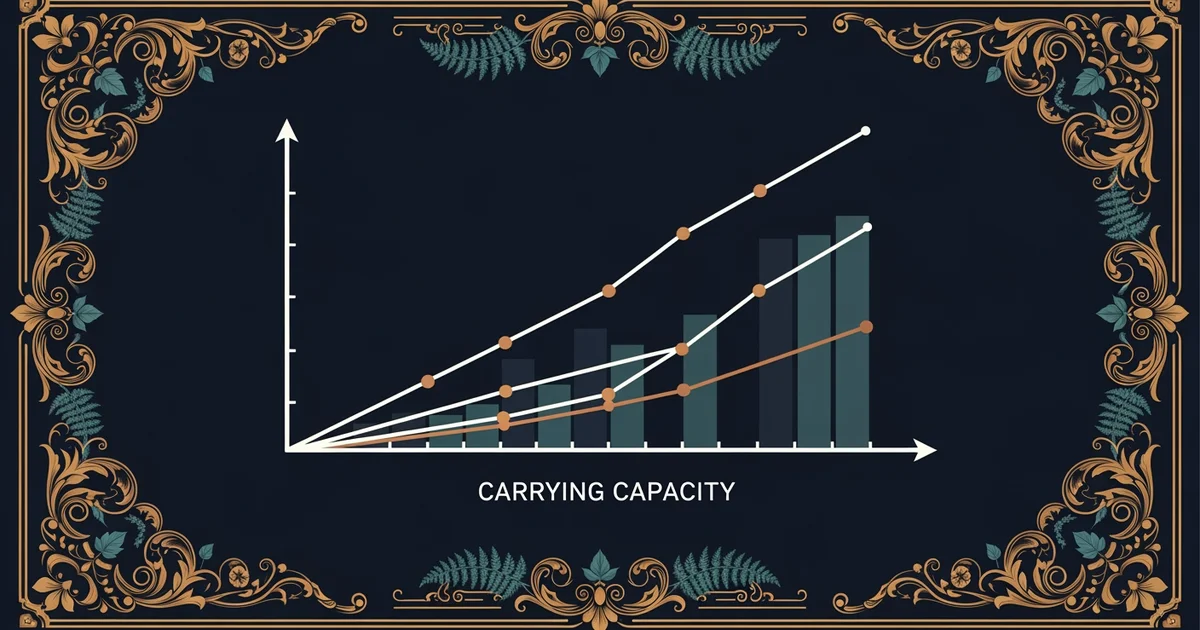
The Mechanics of Group Movement
To understand how these groups shift, we must view the landscape as a series of connected zones that vary in quality. Imagine a large city where residents move from expensive apartments to cheaper suburbs to maintain their standard of living. This economic decision functions much like the dispersal of animals from a high-density area into a vacant territory. When a population becomes too large for its immediate surroundings, competition for food and space intensifies rapidly. Individuals who choose to leave these crowded zones gain better access to nutrients, which often increases their own chances of living longer. This outward movement helps balance the total population density across the entire region, preventing any single area from suffering a total collapse of its resources.
Key term: Dispersal — the permanent movement of individuals away from their original population to settle in new areas with more space.
This process of spreading out allows a group to colonize new territories that might otherwise remain empty or underused. When individuals venture into these new zones, they effectively lower the pressure on their original home base. This reduction in local density gives the remaining members a better chance to find enough food for their own growth. While migration often implies a seasonal round trip, dispersal usually involves a one-way journey into a new, permanent home. Both actions serve the same mathematical goal of keeping the group size within the limits of what the environment can actually support over time.
Measuring the Impact of Movement
We can track these shifts by observing how the density of a group changes over specific time intervals. If a population moves into a new area, the local density increases while the original zone sees a corresponding decrease. This mathematical balance can be represented by the change in the number of individuals, denoted as , within a defined area. If the number of arrivals exceeds the number of departures, the local density rises, which might eventually trigger new rounds of dispersal. This creates a cycle where movement acts as a self-regulating mechanism for the entire ecosystem. The following table summarizes how different movement patterns influence the density of a local area:
| Movement Type | Direction | Density Impact | Primary Driver |
|---|---|---|---|
| Immigration | Inward | Increases | Resource wealth |
| Emigration | Outward | Decreases | Resource scarcity |
| Dispersal | Outward | Decreases | Space competition |
By analyzing these patterns, researchers can predict whether a group will stay stable or face a sudden decline in its health. When the rate of emigration is too low, a population might grow beyond what the land can sustain, leading to a sharp spike in mortality. Conversely, high rates of immigration can quickly overwhelm a new area, leading to a new cycle of competition for resources. Understanding these flows is essential for maintaining the balance of any living group within its habitat. Mathematical models that track these arrivals and departures allow us to see the bigger picture of how life persists in a changing world.
The survival of a group depends on its ability to redistribute its members when local resources become too scarce to support the current population density.
The next Station introduces density dependent factors, which determine how these moving groups interact with their new environment once they arrive.