
Case Study: Mammoth Cave
Imagine standing atop a vast, grassy landscape where the ground seems solid and completely ordinary. Below your feet, however, a massive, hidden labyrinth of stone tunnels spans hundreds of miles in every direction. This is the reality of Mammoth Cave, a site that perfectly illustrates how water shapes the planet over millions of years. The solid ground beneath our feet occasionally hollows out because acidic water slowly dissolves the limestone bedrock, creating vast, hidden underground worlds that grow through constant geological transformation.
The Mechanics of Limestone Dissolution
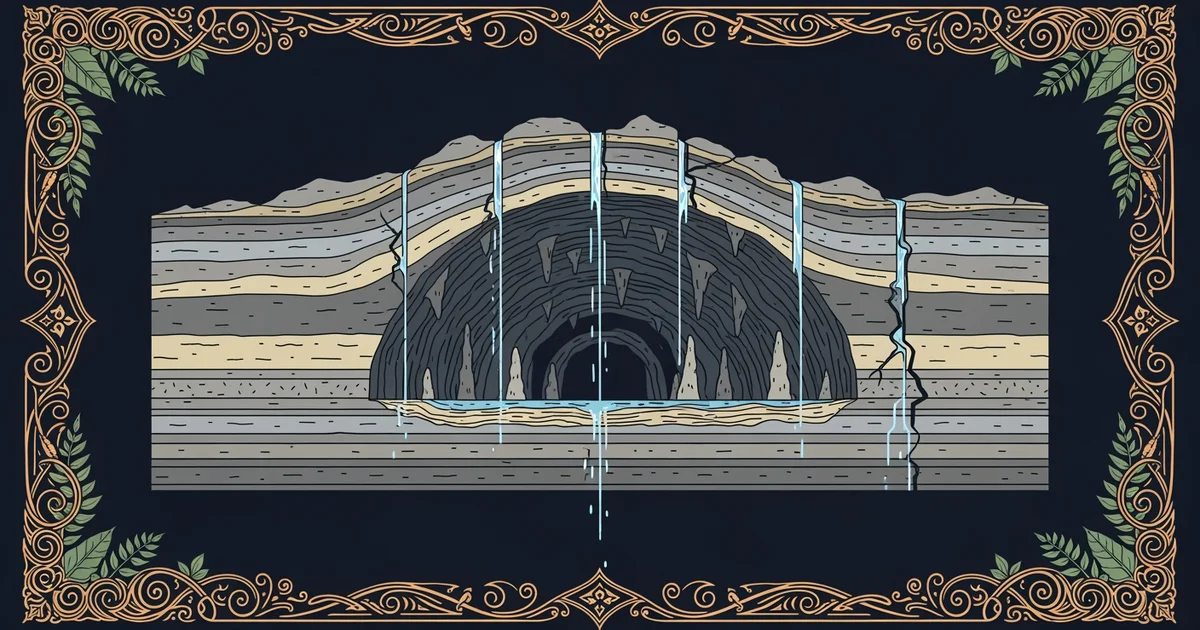
To understand how this massive system formed, we must examine the chemical reaction between rainwater and the earth. Rainwater picks up carbon dioxide from the atmosphere and soil, which turns it into a mild carbonic acid. This acidic water seeps through cracks in the surface, acting like a slow-motion drill that eats away at the solid rock below. Think of this process like a bank account where small, consistent deposits of acid eventually create a massive debt in the bedrock. Over time, these tiny fractures widen into channels that allow larger volumes of water to flow through the subsurface. This initial phase of development is crucial, as it creates the plumbing system that will eventually define the entire cave structure.
Key term: Karst topography — a landscape formed from the dissolution of soluble rocks like limestone, creating unique features such as sinkholes and caves.
As the water continues to flow, it does not just carve random paths through the rock. It follows the path of least resistance, moving toward lower elevations where it eventually joins larger river systems. This movement creates a dynamic environment where the cave structure evolves based on the shifting water table. Earlier stations established that cave ecosystems rely on these stable, dark environments, but the cave itself is a product of constant, flowing change. The interaction between the surface hydrology and the deep rock creates a tension between stability and erosion that defines the entire region.
Growth and Structural Evolution
Once the primary channels are established, the cave system undergoes a period of expansion that creates the vast rooms we see today. The process involves several distinct stages that transform simple cracks into massive, interconnected chambers over geological time scales.
- Initial Permeation: Surface water enters through small fractures in the limestone, beginning the chemical erosion process that slowly creates the first narrow pathways.
- Conduit Enlargement: As water flow increases, the pathways widen into large tunnels, allowing for more sediment transport and further structural expansion of the system.
- Stagnation and Decoration: When the water table drops, the tunnels drain, allowing mineral-rich drips to create stalactites and other formations that decorate the empty space.
| Stage | Primary Driver | Resulting Feature |
|---|---|---|
| Early | Acidic Inflow | Narrow Fissures |
| Middle | Flow Volume | Large Tunnels |
| Late | Mineral Drip | Cave Decorations |
This table shows how the cave transitions from a simple drainage pipe into a complex, decorated environment. The transition from a water-filled conduit to an air-filled chamber represents a major shift in the cave's life cycle. During this time, the cave acts like an underground reservoir that slowly empties, leaving behind the intricate architecture that scientists study today. By applying the principles of hydrology to this specific site, we can see that Mammoth Cave is not just a hole in the ground, but a record of past water movement. The research community remains divided on how fast these systems can collapse, which highlights the importance of ongoing monitoring and protection of these fragile environments.
Understanding cave formation requires viewing the solid earth as a dynamic, dissolving landscape shaped by the persistent movement of acidic water over vast time scales.
The future of karst research depends on our ability to predict how these underground systems will respond to changing surface climates and human activity.