
Water Movement Through Soil
Imagine pouring a large glass of water over a pile of dry sand. You watch as the liquid vanishes instantly into the tiny spaces between the grains. This simple act mirrors how rain travels from the surface into the dark, hidden layers of our planet. The ground acts like a massive, natural sponge that filters and directs rainfall toward deep underground reservoirs. Understanding this journey helps us see why the earth beneath us remains a constantly shifting and active environment. Without this movement, the vast cave systems we explore today would never have the chance to form.
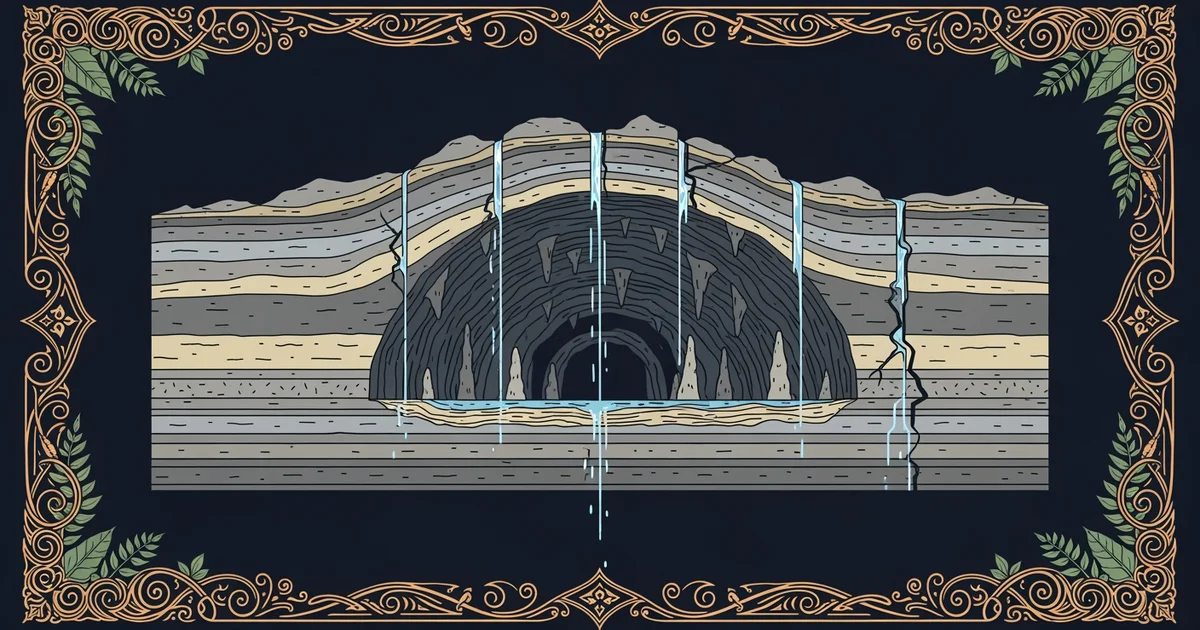
The Journey Through Soil Layers
When rain falls on the land, it does not just sit on the surface for very long. Gravity pulls the moisture down through the top layers of soil and loose dirt. This process is called infiltration. As the water moves downward, it encounters different types of materials that influence its speed and direction. Some soils are very fine and trap water near the surface, while others are coarse and allow for quick passage. Think of this process like a bank account where you deposit funds at the top. The water represents your savings, which must travel through various banking channels before reaching the main vault deep inside the earth. If the channels are blocked or too narrow, the water slows down significantly. If the paths are wide and clear, the water reaches the deep bedrock with great speed and force.
Key term: Infiltration — the natural process by which surface water enters the soil profile to replenish underground moisture levels.
Once the water passes through the soil, it reaches a zone where all the empty spaces are filled. This area is known as the saturation zone. In this region, the water no longer moves downward in a simple, straight line. Instead, it begins to follow the path of least resistance through cracks and openings in the rock. The water acts like a slow-moving river, carving tiny paths that eventually grow into larger systems over thousands of years. This constant flow is the primary reason why solid rock eventually develops massive, hollow chambers. The movement of water is not just a passive event, but a powerful geological force that shapes the landscape from the inside out.
Factors Influencing Water Speed
Several physical factors determine how quickly water can travel from the surface to the deep bedrock layers. These variables control the volume of water that eventually reaches the underground storage areas. If you understand these factors, you can predict where water will pool and where it will flow rapidly. The following list highlights the primary components that dictate the efficiency of this downward journey:
- Soil composition determines the size of the gaps between particles, which directly controls how fast water can seep into the ground below.
- Vegetation cover acts as a natural buffer that slows down surface runoff, allowing more time for the water to soak into the earth.
- Slope steepness dictates whether water will stay in one place to soak or run off the surface into nearby streams and rivers.
- Existing moisture levels in the ground change how much additional water the soil can absorb before it becomes completely saturated and blocked.
These elements work together to ensure that the underground world receives a steady supply of moisture throughout the year. When the soil is healthy and porous, the water reaches the deep rock layers with ease. If the surface becomes compacted or paved, the water is diverted away from these vital underground systems. This change in flow can stop the formation of new cave passages entirely. By protecting the surface, we also protect the hidden structures that lie deep beneath our feet.
Water travels from the surface into the deep earth by filtering through soil pores and following the path of least resistance through the bedrock.
Now that we understand how water moves through the soil, we must examine how it interacts with the rigid, fractured rock layers waiting below.