
The Chemistry of Dissolving Rock
Imagine you are holding a piece of chalk and watching it slowly vanish in a glass of vinegar. This simple kitchen experiment shows exactly how nature carves out massive, hidden underground chambers over millions of years. Deep beneath the surface, solid rock is not actually permanent because it reacts to the chemistry of the world around it. Rainwater starts its journey in the atmosphere where it encounters invisible gases that change its basic nature entirely. As the water falls, it absorbs carbon dioxide from the air and creates a weak, natural acid. This acidic liquid becomes a powerful tool for shaping the landscape once it reaches the ground.
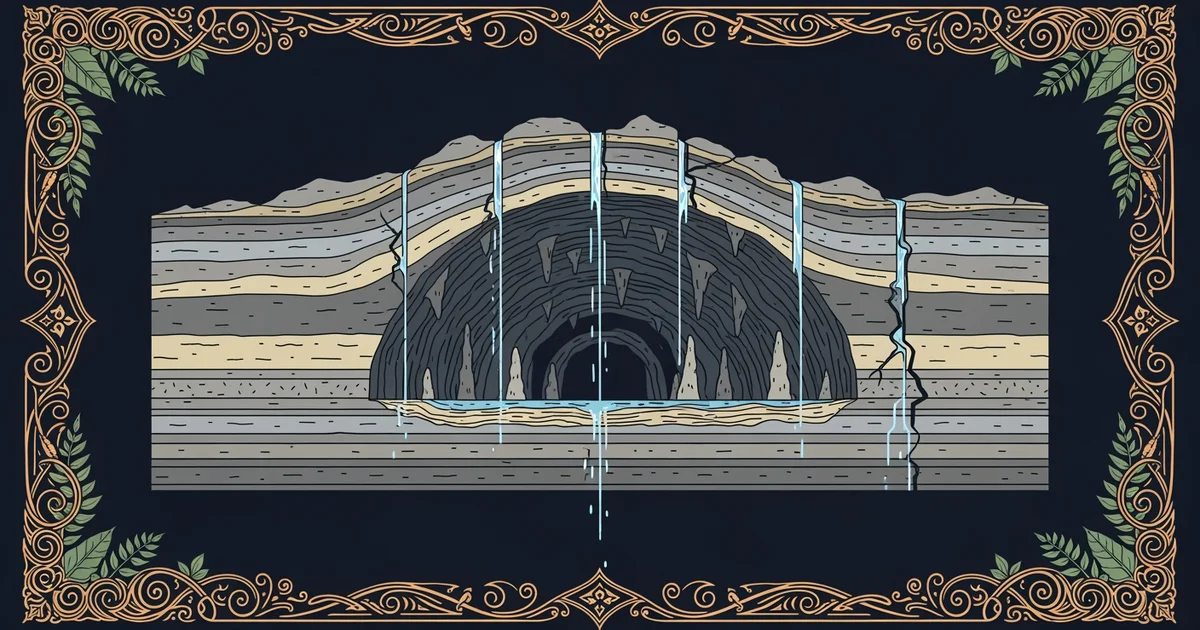
The Chemical Transformation of Falling Rain
When rain hits the soil, it picks up even more carbon dioxide from decaying organic matter. This process turns the water into a mild solution that acts like a slow-motion solvent. Think of this process like a monthly budget that slowly drains a bank account over many years. Even if the amount taken each day seems tiny, the total change becomes massive after a long enough time. The rock does not just break apart; it dissolves into the water at a molecular level. This liquid mixture then travels downward through tiny cracks, searching for a path deeper into the earth.
Key term: Carbonic acid — the weak acid formed when carbon dioxide dissolves into water, which acts as the primary agent for dissolving limestone bedrock.
As the acidic water moves through the ground, it encounters layers of limestone, a common type of rock made from ancient marine shells. Limestone is highly sensitive to the acidic water because of its chemical makeup. The acid attacks the solid structure of the rock and forces it to change into a liquid form. This chemical reaction turns the solid rock into a soluble substance that the water can carry away. The rock is essentially being washed away one microscopic layer at a time. This creates small gaps that grow larger as more water flows through the system.
How Dissolved Rock Creates Hidden Spaces
These tiny gaps eventually turn into wider channels as the water continues its relentless work. Over long periods, these channels become wide enough to form intricate networks of tunnels and vast chambers. The water acts like a sculptor that removes only the parts of the rock it does not need. This leaves behind a hollow, empty space where solid ground once stood firm against the world above. The following table highlights the three stages of how this natural process works to change solid earth into hollow space.
| Stage | Action | Result |
|---|---|---|
| Initial | Acidic rain enters soil | Water gains strength |
| Middle | Acid dissolves limestone | Small cracks appear |
| Final | Water flows through | Large caves are formed |
This process is incredibly slow, yet it is powerful enough to reshape entire mountain ranges from the inside out. We rarely see these changes happen because they occur far beneath our feet in total darkness. The water eventually exits the system, leaving behind the empty voids that we call caves. Understanding this cycle helps us see why the ground sometimes shifts or settles in ways that seem mysterious to us. The hidden world beneath us is a direct result of simple chemistry occurring in the dark. By the time you finish this path, you will understand how these geological forces build the vast, interconnected cave systems that span our planet.
Natural cave systems emerge because acidic rainwater slowly dissolves solid limestone bedrock into a liquid solution that flows away over vast time periods.
The next step in our journey explores how the physical texture and porous nature of bedrock determine where these underground rivers can carve their paths.