
The Role of Porous Bedrock
Imagine you are trying to pour water through a solid brick versus a pile of loose sand. The water flows through the sand instantly because of the gaps between the grains, while it sits on the brick surface for a long time. This simple observation explains why some rock layers trap water while others allow it to carve out massive underground networks. The ground beneath our feet is not a uniform block of stone, but rather a complex filter that dictates how quickly hidden worlds can grow.
The Nature of Rock Density
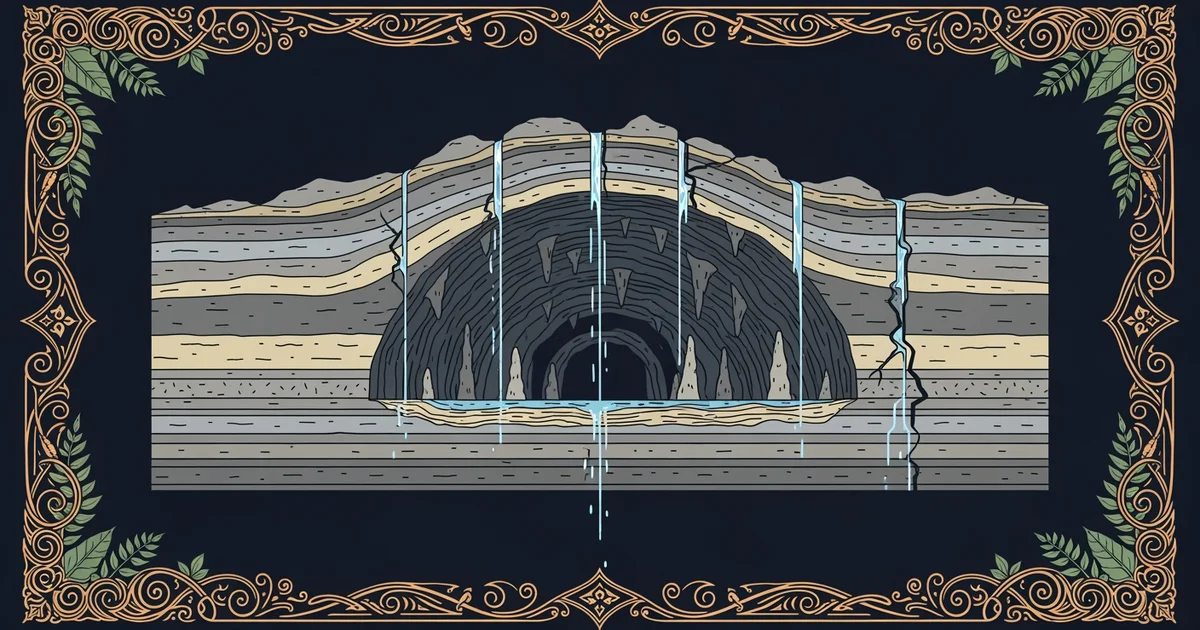
Geologists use the term porosity to describe the total amount of open space found within a rock mass. High porosity means the rock contains many tiny holes, cracks, or voids that can hold liquid or gas. When water encounters a highly porous rock, it spreads out and saturates the material like a sponge soaking up a spill. In contrast, low porosity rock acts like a solid wall, forcing water to stay on the surface or find specific cracks to travel through. This density difference is the primary factor that determines whether water will erode a cave system quickly or simply flow over the landscape without leaving a trace.
Key term: Porosity — the measure of open space within a rock or soil material that allows for the storage of fluids.
How Permeability Shapes Underground Geography
While porosity measures the space available, permeability defines how easily water can move through those connected spaces. A rock might have many holes, but if those holes are not connected, water cannot pass through to dissolve the stone. High permeability allows water to travel deep into the earth, where it can attack the bedrock from the inside out. Think of it like a crowded shopping mall during a holiday sale. If the hallways are wide and open, people move quickly toward the exits. If the hallways are blocked or narrow, the crowd stays stuck in place. Water behaves the same way when it tries to navigate the complex internal structure of different stone types.
To visualize how different materials influence water movement, consider these three common types of ground structures found in nature:
- Permeable limestone allows water to seep through its internal cracks, which slowly widens those pathways into larger tunnels over thousands of years.
- Dense granite acts as a barrier that prevents water penetration, meaning caves rarely form within this type of solid, non-porous igneous rock formation.
- Layered sandstone contains many small pores that hold water in place, but these pores are often too small to allow the rapid flow needed to create large caverns.
The Speed of Cave Development
Water needs a path to create a cave, and the permeability of the rock provides that necessary highway. When water moves through highly permeable rock, it carries dissolved minerals away, making the existing cracks wider and more efficient for future flow. This positive feedback loop means that the more water flows, the faster the cave grows. If the bedrock is too dense, the water cannot penetrate deep enough to begin the process of carving out a hidden world. Therefore, the specific internal structure of the rock determines the final shape and size of any potential cave system.
| Rock Type | Porosity Level | Permeability | Cave Formation Potential |
|---|---|---|---|
| Limestone | Moderate | High | Very High |
| Granite | Very Low | Very Low | Negligible |
| Sandstone | High | Low | Moderate |
This table illustrates why limestone is the primary home for most of the world's largest cave systems. Its unique combination of moderate porosity and high permeability allows water to infiltrate and dissolve the structure effectively. If you were building an underground tunnel, you would look for rock that lets water pass through easily while remaining soft enough to dissolve over time. Understanding these properties helps us predict where hidden worlds might exist beneath the surface of the earth.
The internal connectivity of rock pores acts as a highway system that determines how rapidly water can hollow out vast subterranean chambers.
Now that we understand how the bedrock structure influences cave growth, we must examine how water moves through the layers of soil before it ever reaches the stone.