
Fractures and Joint Systems
Imagine a massive concrete floor that develops thin, straight cracks after the building settles into the ground. These tiny gaps serve as the very first blueprints for the complex tunnels hidden deep beneath our feet. Before water can carve out a vast cave, it needs a specific path to follow through the solid rock. Without these initial structural openings, the water would simply sit on the surface or spread out in useless, shallow puddles. Nature relies on these hidden lines of weakness to build the foundations of every single underground world discovered by researchers today.
The Origin of Structural Cracks
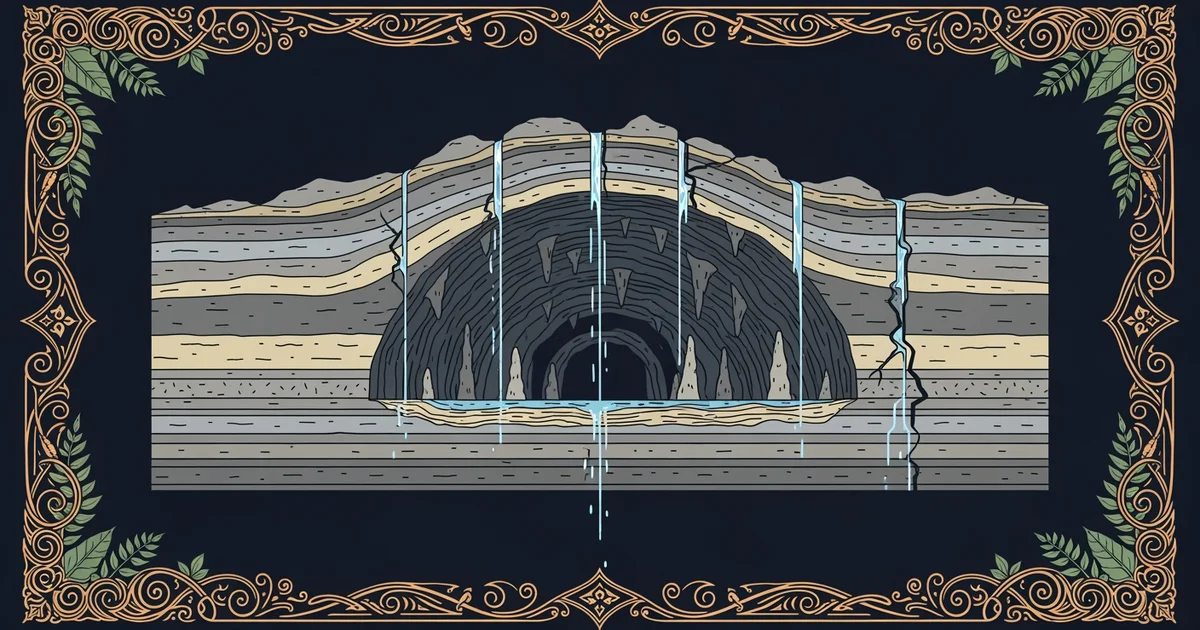
When massive tectonic forces shift the crust of the planet, the rock layers experience intense pressure. This stress causes the rigid stone to snap rather than bend, creating what geologists call fractures. These fractures act like microscopic highways for rainwater that is slightly acidic from the atmosphere. Because the rock is brittle, it snaps in predictable patterns that define the future shape of the cavern system. Think of this process like tearing a piece of thick paper along a pre-folded line to get a clean edge. The rock follows these lines of least resistance, allowing water to concentrate its flow into narrow, deep channels. If the rock remained perfectly solid without these breaks, the water would never find the depth required to create a hollow space.
Key term: Joint — a natural break or crack in rock where the two sides have not moved apart.
Once these fractures form, they often organize into complex networks known as joint systems. These systems consist of intersecting lines that cut through the bedrock in multiple directions across the landscape. The layout of these joints determines the final geometry of the cave tunnels that will eventually form over thousands of years. If the joints are straight and parallel, the cave will likely feature long, narrow corridors that look like hallways in a building. If the joints intersect at sharp angles, the resulting cave tunnels will form a grid pattern that mimics a city map. Water naturally flows into these intersections because they offer the easiest path for downward movement toward the water table.
How Rock Geometry Dictates Tunnel Shape
Water movement through these cracks is similar to how money flows through a business during a busy season. The business owner creates specific accounts or channels for the cash to travel through to reach the bank. If those channels are efficient, the money moves quickly and effectively without getting stuck in the wrong places. Similarly, water uses these joint systems to bypass the solid rock, focusing all its dissolving power on the narrow walls of the crack. This concentration of energy is what allows a tiny fracture to slowly widen into a massive tunnel over long periods of time.
| Feature Type | Physical Appearance | Impact on Cave Layout |
|---|---|---|
| Single Fracture | One straight line | Creates a narrow, linear passage |
| Parallel Joints | Multiple side-by-side lines | Produces long, repetitive tunnel rows |
| Intersecting Joints | Crisscrossing patterns | Forms a complex, grid-like cave network |
These structural patterns are essential because they dictate the entire layout of the underground network. The water does not choose its path randomly, but follows the pre-existing weaknesses provided by the earth itself. By studying the orientation of these joints on the surface, experts can often predict the direction of the tunnels hidden deep below. This relationship between surface cracks and deep tunnels shows how the history of the earth is written directly into the stone. Every turn in a cave tunnel represents a point where the water encountered a new fracture and decided to change its direction to follow the path of least resistance.
The structural cracks and joint systems within bedrock act as the essential plumbing network that allows water to penetrate and hollow out the interior of the earth.
The next Station introduces the saturation zone process, which determines how water accumulates in these fractures to dissolve the rock.