
Speleothem Growth Mechanics
Imagine a slow, rhythmic dance where every single drop of water leaves a tiny gift behind. Inside deep caves, this quiet process transforms bare rock into complex, beautiful sculptures over many centuries. These hidden structures grow because water picks up minerals while traveling through the ground above the cave ceiling. When this water finally reaches the open air of a cave, the chemistry of the environment changes instantly. This shift forces the water to release its cargo of minerals, building layers of stone one drop at a time.
The Chemical Process of Mineral Deposition
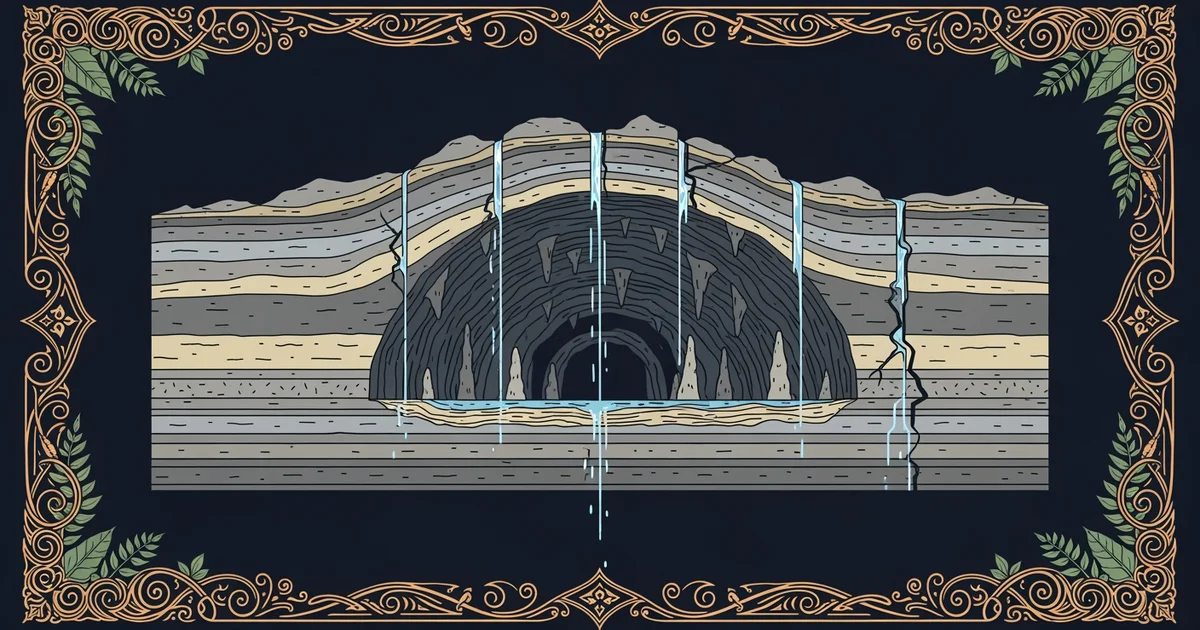
Water becomes a powerful sculptor as it seeps through soil and limestone layers toward the cave. As it moves, it absorbs carbon dioxide from the air and decaying plant matter in the soil. This mixture creates a weak acid that easily dissolves limestone, which is rich in calcium carbonate. When the water finally emerges from the ceiling, it encounters the drier air of the cave. The carbon dioxide escapes from the water droplet, much like bubbles leaving a glass of soda. Because the water can no longer hold as much dissolved mineral, it leaves a microscopic ring of solid material behind.
Key term: Speleothem — a secondary mineral deposit formed in a cave by the action of water, such as a stalactite or stalagmite.
This process functions like a slow-motion savings account where the cave acts as the bank. Every drop of water that falls is like a small deposit of wealth added to the floor or ceiling. If the water drips slowly, the mineral has time to build up on the ceiling, eventually forming a long, thin, hollow tube. If the water falls quickly or splashes on the ground, the minerals accumulate on the floor instead. Over thousands of years, these tiny, individual deposits stack up to create massive columns that reach from the floor to the ceiling.
Growth Patterns and Structural Variety
Different environmental conditions dictate exactly how these mineral deposits will take shape inside the dark cavern. You can compare this to how a candle grows as wax drips down the side of a burning wick. The shape depends on the speed of the drip and the concentration of minerals in the water source. We can categorize the most common forms based on their location and their specific growth habits within the cave system.
| Feature | Growth Location | Growth Direction | Primary Shape |
|---|---|---|---|
| Stalactite | Cave Ceiling | Downward | Pointed spike |
| Stalagmite | Cave Floor | Upward | Rounded mound |
| Column | Floor to Ceiling | Meeting in middle | Solid pillar |
These structures grow at remarkably different rates depending on the local climate and the amount of rainfall. In areas with high humidity and steady water flow, these formations expand much faster than in dry, arid regions. The minerals involved are usually calcite, which is a very stable form of calcium carbonate that resists erosion. As long as the water continues to flow, the sculpture grows, but it stops immediately if the water source dries up. This delicate balance shows how sensitive the underground world remains to changes in the surface environment above it.
- Water collects carbon dioxide from the soil and dissolves limestone rock as it travels downward.
- The water moves through cracks in the rock until it reaches the open air of a cave.
- Carbon dioxide leaves the water droplet, causing the dissolved minerals to solidify on the surface.
- Constant dripping over long timeframes builds up layers of calcite into distinct, solid shapes.
The slow release of dissolved minerals from dripping water creates complex stone formations that act as physical records of past environmental conditions.
But what does it look like when the water pressure inside these cracks changes the speed of the growth?
Want this with sources you can check?
Premium Learning Paths for Earth Sciences & Geography are researched against open-access libraries — PubMed, arXiv, government databases, and more — with their distinctive claims cited to real sources and independently checked.
See what Premium includes