
Hydraulic Pressure Effects
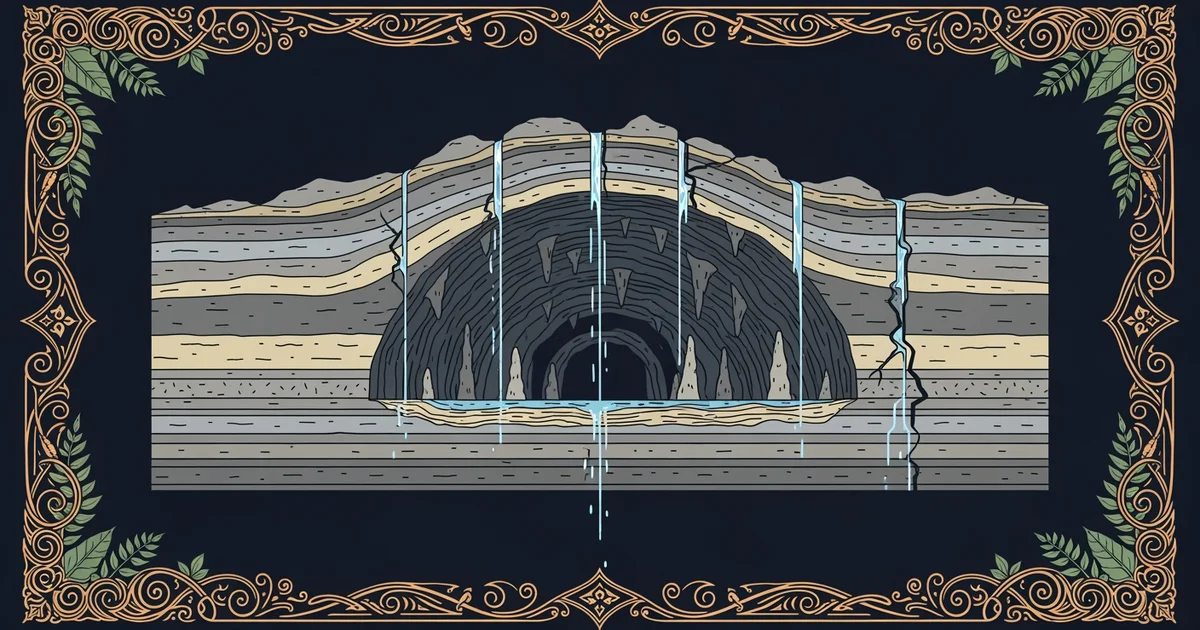
Imagine a small garden hose with a kink in the nozzle that forces water to spray out with intense power. This same physical principle governs how hidden underground caverns expand over vast stretches of geological time. When water finds a tiny crack in solid limestone, it does not merely trickle through the space. Instead, the weight of the water above creates significant force that pushes liquid into the smallest gaps. This process acts like a high-pressure drill that slowly carves out massive rooms from solid rock foundations.
The Mechanics of Pressurized Flow
Water moves through rock fissures because gravity pulls it downward toward the lowest possible point. When these paths become narrow or blocked by debris, the water accumulates and builds up immense hydrostatic pressure. This pressure is the force exerted by a fluid at rest or in motion against the walls of its container. Think of this like a household pipe system where a blockage causes the water to push outward against the metal walls. If the pressure becomes high enough, the water will force its way through any available opening regardless of size. This constant pushing ensures that even the smallest cracks are eventually widened into larger channels.
Key term: Hydrostatic pressure — the force exerted by trapped water against the surrounding rock surfaces within a confined tunnel system.
Once the water begins to flow through these tight spaces, it starts to dissolve the minerals in the rock. Limestone is particularly susceptible to this process because it reacts easily with slightly acidic groundwater. The pressure forces this acidic water deep into the stone, which accelerates the chemical breakdown of the bedrock. As the rock dissolves, the tunnel grows wider and allows even more water to pass through the space. This creates a feedback loop where higher volume leads to more pressure and faster erosion of the tunnel walls.
Factors Influencing Tunnel Expansion
The speed at which a cave system grows depends on several physical variables that interact within the underground environment. You can visualize these factors as an economic budget where water volume acts as income and rock hardness acts as a fixed expense. The following table highlights how different conditions change the rate of tunnel expansion over long periods of time:
| Variable | High Condition | Low Condition | Impact on Erosion |
|---|---|---|---|
| Water Flow | Rapid movement | Stagnant pools | High erosion rate |
| Rock Density | Soft limestone | Hard granite | Faster tunnel growth |
| Acid Level | High acidity | Neutral water | Increased dissolution |
These variables determine how quickly a cave system transforms from a series of tiny cracks into a vast, open cavern. When the water flow is rapid, the mechanical force of the liquid helps to physically break away loose sediments. This physical removal of material works alongside the chemical dissolution to clear out the tunnel paths. If the rock is soft, these processes happen much faster than they would in denser, more resistant stone layers.
- Flow velocity dictates how much energy the water carries, which allows it to transport larger pieces of rock debris out of the tunnel system.
- Fissure width determines the initial amount of pressure that can build up, as narrower openings create higher resistance to the moving water column.
- Mineral solubility defines how quickly the rock can be chemically broken down into smaller particles that the water can easily carry away.
These elements work in tandem to ensure that the underground world remains in a constant state of structural change. As the tunnels grow, the water finds new routes, which starts the process over in different locations. This cycle of building and widening is what creates the complex networks of caves we see today. The pressure remains the primary driver behind this slow but steady transformation of the solid earth.
The accumulation of water pressure forces fluid into narrow fissures, which accelerates both the chemical and physical erosion of rock to form large underground voids.
But what does it look like in practice when these tunnels finally collapse or change shape due to these forces?