
Future Exploration Frontiers
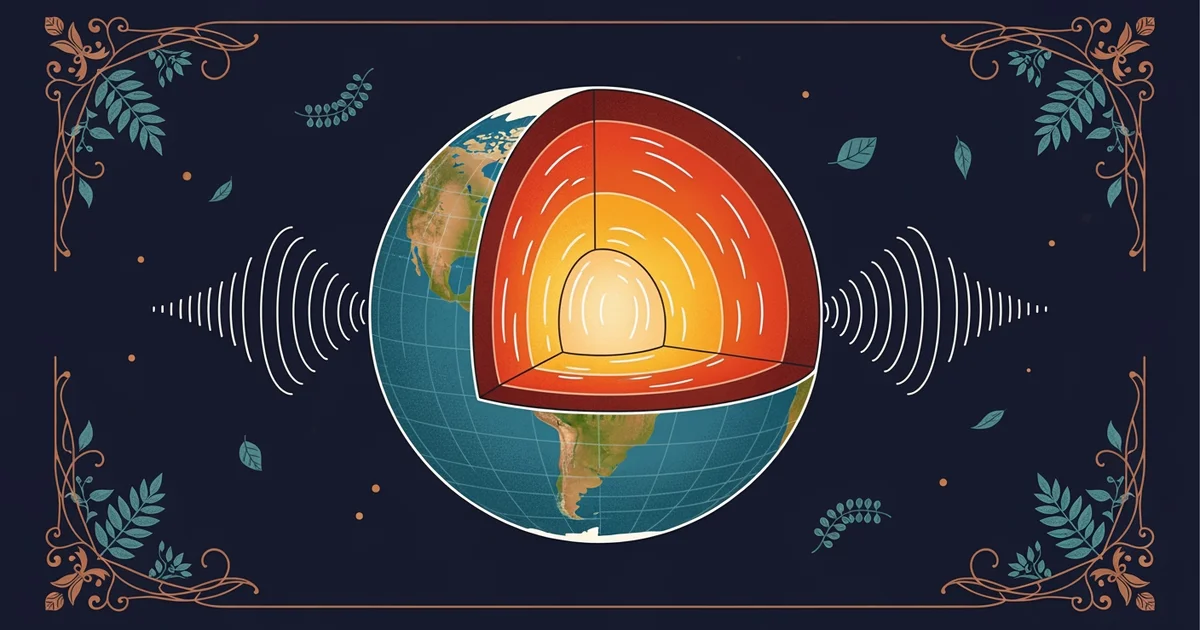
Imagine trying to map the entire interior of a locked vault while standing outside the heavy steel door. We have spent years using seismic waves to listen for echoes bouncing off deep rock layers, but this method is limited by the sheer density of the crust. As we push toward the final frontiers of Earth science, we must move beyond simple observation to active, direct sensing. The challenge lies in our inability to survive the extreme pressure and heat found just a few miles beneath our feet. We need new ways to reach these depths without relying on traditional drilling, which often fails under the immense stress of the mantle.
Advancing Deep Crustal Sensing
To overcome current limitations, researchers are developing autonomous probes designed to navigate the high-pressure environment of the lower crust. Think of these probes like tiny, robotic submarines designed for solid rock instead of liquid water. Just as a submarine survives the deep ocean by balancing internal and external pressure, these devices must use advanced materials to remain stable. These probes could carry sensors that measure thermal gradients and chemical composition in real time. By deploying a network of these probes, we can gather data that seismic waves simply cannot provide. This shift from passive observation to active exploration changes our understanding of how tectonic plates actually move.
Key term: Autonomous probes — self-guided robotic devices engineered to withstand extreme temperatures and pressures while collecting geological data in deep Earth environments.
We must also consider the role of geo-neutrino detection in mapping the hidden composition of our planet. These subatomic particles are produced by the decay of radioactive elements deep within the mantle. By placing sensitive detectors in deep underground labs, we can track these particles as they escape toward the surface. This process acts like an X-ray of the planet, allowing us to see the distribution of heat-producing elements without ever touching the core. Integrating this data with our existing seismic models helps solve the mystery of how Earth maintains its internal heat budget over billions of years. This combination of particle physics and geology provides a clearer picture of our planet than either field could offer alone.
Future Exploration Strategies
Future exploration will likely rely on a mix of robotic deployment and advanced particle detection. We can categorize these methods based on their primary function and the depth they aim to reach within the planet:
| Exploration Method | Primary Function | Depth Range | Target Data |
|---|---|---|---|
| Autonomous Probes | Direct sampling | Upper mantle | Chemical makeup |
| Neutrino Detectors | Particle mapping | Deep mantle | Heat distribution |
| Seismic Tomography | Wave reflection | Whole Earth | Density variations |
These methods do not compete with each other but rather build upon the foundation of our earlier work. Integrating seismic tomography with modern particle tracking allows us to see both the structure and the energy source of the planet simultaneously. This holistic approach addresses the core question of how we study hidden layers by combining remote sensing with targeted, in-situ measurements. We are no longer limited to guessing what lies beneath the surface based on wave echoes alone. Instead, we are building a multi-layered model that incorporates physics, chemistry, and advanced robotics to reveal the secrets of the deep interior.
Our reliance on remote sensing has historically kept us in the dark about the specific chemical reactions occurring near the core-mantle boundary. By shifting toward direct, autonomous exploration, we can finally test our theories about how the Earth generates its magnetic field. These future frontiers will require us to bridge the gap between theoretical models and physical reality. We must continue to push the boundaries of materials science to ensure our equipment survives the journey. As we advance, we gain a better appreciation for the complex machine that is our home planet.
Future exploration of the deep Earth requires moving from passive seismic observation to active, high-tech sensing methods that can withstand extreme environmental conditions.
Deep Earth exploration is a vital field that turns our planet into a laboratory for testing the limits of human engineering.