
Thermal Energy Transfer
Imagine you are holding a hot cup of coffee while sitting in a cold room. You feel the warmth moving from the mug into your palms because energy naturally flows toward cooler spaces. Our planet functions in a similar way by moving massive amounts of heat from the deep interior toward the surface. This process of moving energy is known as thermal energy transfer, and it determines how the layers of the Earth behave over time. Scientists study this flow to understand how the core maintains its heat despite being surrounded by cooler rock layers for billions of years.
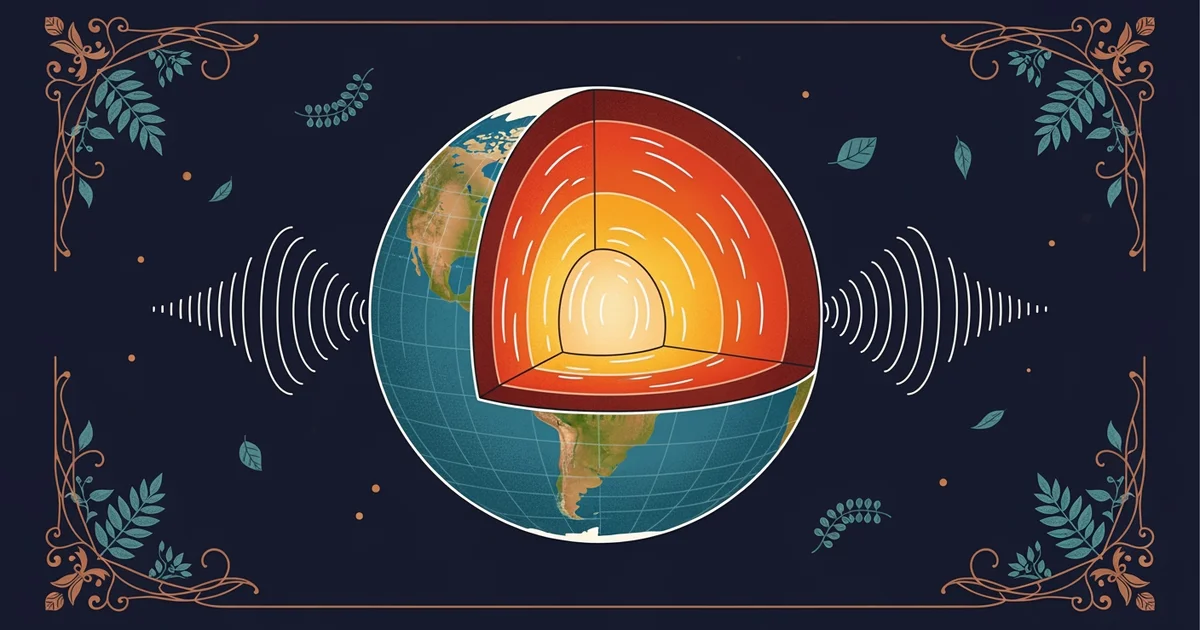
Mechanisms of Internal Heat Flow
When we look at the Earth, we see a complex machine driven by the movement of heat. The core serves as the primary furnace, releasing energy that must reach the crust to escape into space. This movement happens through several distinct physical processes that occur deep beneath our feet. Conduction happens when heat moves through solid rock by vibrating atoms, while convection occurs when hot, buoyant material rises and cooler, denser material sinks. Think of this like a boiling pot of thick soup where the heat at the bottom forces the liquid to cycle upward while the cooler top layers sink back down to be reheated.
Key term: Heat flux — the rate at which thermal energy moves through a specific area of the Earth's surface over time.
To measure this energy, experts calculate the heat flux across the crust. They use specialized sensors in deep boreholes to record how fast temperature changes as they move deeper into the ground. If the ground gets hotter very quickly as you descend, the heat flux is high. If the temperature changes slowly, the heat flux is low. By mapping these values across the globe, researchers create a thermal profile that reveals hidden geological activity. This data acts like a medical thermometer for the planet, showing where the interior is most active and where it remains relatively quiet.
Calculating Planetary Energy Budgets
Determining the total energy escaping the planet requires us to combine local measurements with global models. We must account for the different ways heat travels through various materials like mantle rock or metallic core fluids. The following factors influence how much heat reaches the surface:
- Thermal conductivity represents how easily a specific type of rock allows heat to pass through its internal structure.
- Mantle convection cycles move massive volumes of rock over millions of years, which carries heat much faster than simple conduction.
- Radiogenic decay provides a constant source of new heat from unstable elements trapped inside the rocky mantle and crustal layers.
We can organize these influences into a simple framework to understand the total planetary energy budget. This table shows how different layers contribute to the overall thermal state of the Earth.
| Layer | Primary Heat Source | Transfer Method | Impact on Surface |
|---|---|---|---|
| Core | Radioactive decay | Convection | Drives magnetism |
| Mantle | Residual heat | Convection | Moves tectonic plates |
| Crust | Solar energy | Conduction | Regulates surface life |
By comparing these values, we can estimate the core temperature without ever needing to visit it. We know the total energy arriving at the surface, and we know how much heat the mantle produces on its own. Subtracting the mantle's contribution from the total surface heat flux leaves us with the amount originating from the core. This calculation provides a reliable estimate of the core's intense heat, which remains roughly as hot as the surface of the sun. Understanding this balance is vital for predicting long-term changes in our planet's internal structure and magnetic field strength.
Thermal energy transfer acts as the primary engine for geological activity by moving heat from the core toward the crust through convection and conduction.
But how do we use these energy calculations to engineer new materials that can withstand the extreme conditions of the deep Earth?