
Forecasting Space Weather
Imagine you are tracking a massive storm headed toward your house while you have no way to see the clouds. Forecasting space weather requires similar skill because we must track invisible solar particles traveling through the dark vacuum of space. Scientists use complex models to predict when the Sun will release dangerous bursts of energy toward our planet. These predictions act like a weather report for the solar system, helping us protect the satellites and power grids that keep our modern world running smoothly. By synthesizing data from multiple points in space, we can anticipate the arrival of solar winds before they impact our delicate technological infrastructure.
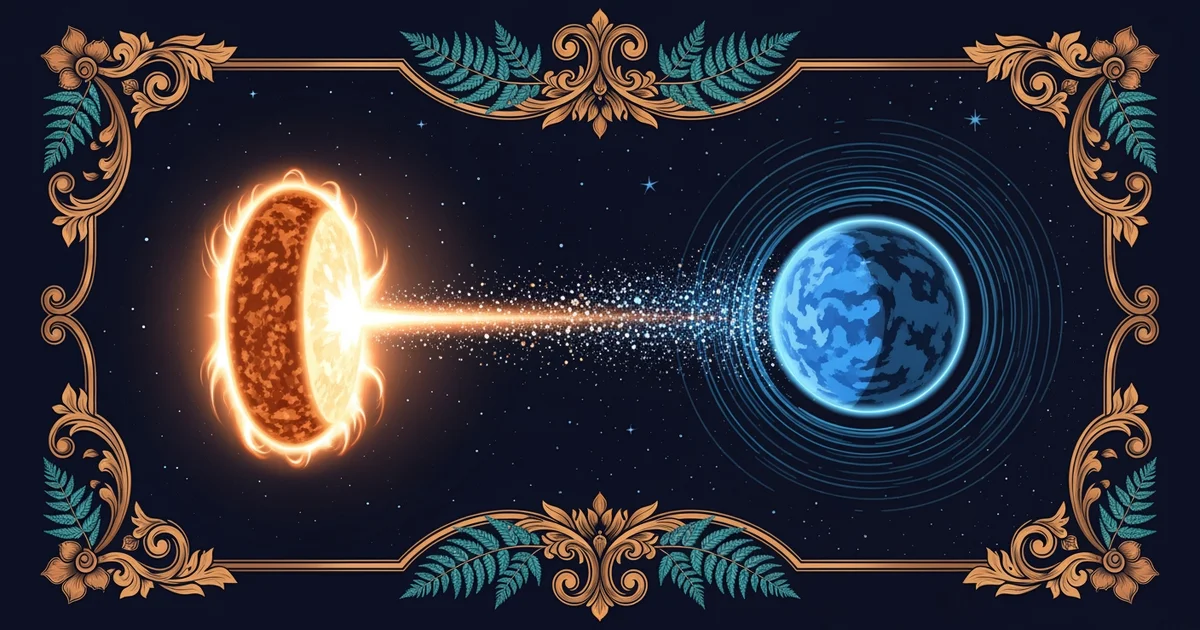
Data Collection and Solar Monitoring
Predicting space weather relies on constant observation of the Sun from various locations in deep space. Satellites positioned between the Earth and the Sun act as early warning stations for incoming solar activity. These probes measure the speed and density of the solar wind as it streams away from the solar surface. When a large eruption occurs, we detect the signature of the event through changes in magnetic field readings. This process is much like a bank monitoring its transactions to prevent fraud by spotting unusual patterns before they cause a major loss. By gathering these signals in real time, researchers can calculate the expected arrival time of a geomagnetic storm at our planet.
Key term: Coronal Mass Ejection — a massive burst of solar wind and magnetic fields released into space from the solar corona.
Once we detect a Coronal Mass Ejection, we must determine its trajectory and potential impact on our global systems. This stage involves using advanced computer simulations to map the path of the particle cloud through the solar system. These models account for the complex interactions between the solar wind and the magnetic environment surrounding the Earth. Understanding these interactions helps us manage the risks identified in our previous study of communication signal interference. If we can predict the intensity of the storm, engineers can take proactive steps to shield sensitive electronics from damage. The goal is to minimize the disruption caused by solar activity on our vital technological networks.
Predictive Modeling and Risk Assessment
Effective forecasting requires a structured approach to analyzing the potential severity of incoming solar events. Scientists categorize these storms based on their expected impact on Earth's magnetic field and power infrastructure. We use a standardized scale to communicate the level of danger to operators of power grids and satellite networks. The following table outlines how different storm intensities translate into operational risks for our modern technological systems:
| Storm Category | Impact on Power Grids | Impact on Satellites | Impact on Radio |
|---|---|---|---|
| Minor Storm | Weak voltage fluctuations | Minor drag on orbits | Weak signal fading |
| Moderate Storm | Possible voltage alarms | Possible orientation loss | High frequency blackouts |
| Extreme Storm | Widespread grid collapse | Permanent hardware damage | Total communication loss |
We must integrate these findings into our broader understanding of how the violent activity of our Sun impacts the safety and stability of our modern technological world. By combining historical data with current observations, we improve the accuracy of our models over time. This synthesis of information allows us to move beyond simple detection and into the realm of true predictive capability. We now face an open question regarding how we might improve our lead time for detecting the most intense solar eruptions. If we can extend our warning window, we can better safeguard the global systems that support our daily lives and technological future.
Predicting space weather involves synthesizing real-time solar observations with complex computer models to prepare our global infrastructure for incoming geomagnetic disturbances.
Building on our ability to forecast these solar storms, we will now examine the strategies required to ensure our future space weather resilience.