
Magnetic Reconnection Processes
Imagine snapping a tightly stretched rubber band and watching it release a sudden burst of energy. This simple action mimics the way magnetic fields in space snap and release massive amounts of power. When magnetic field lines move through the solar corona, they often become twisted and tangled like knotted yarn. Eventually, these lines break and reconnect into new shapes, releasing stored energy as heat and movement. This process, known as magnetic reconnection, serves as the engine for many violent events across our solar system. It acts like a cosmic slingshot, launching charged particles deep into space at incredible speeds. Understanding this mechanism helps us predict how solar activity impacts our delicate technological infrastructure on Earth.
The Mechanics of Magnetic Energy Conversion
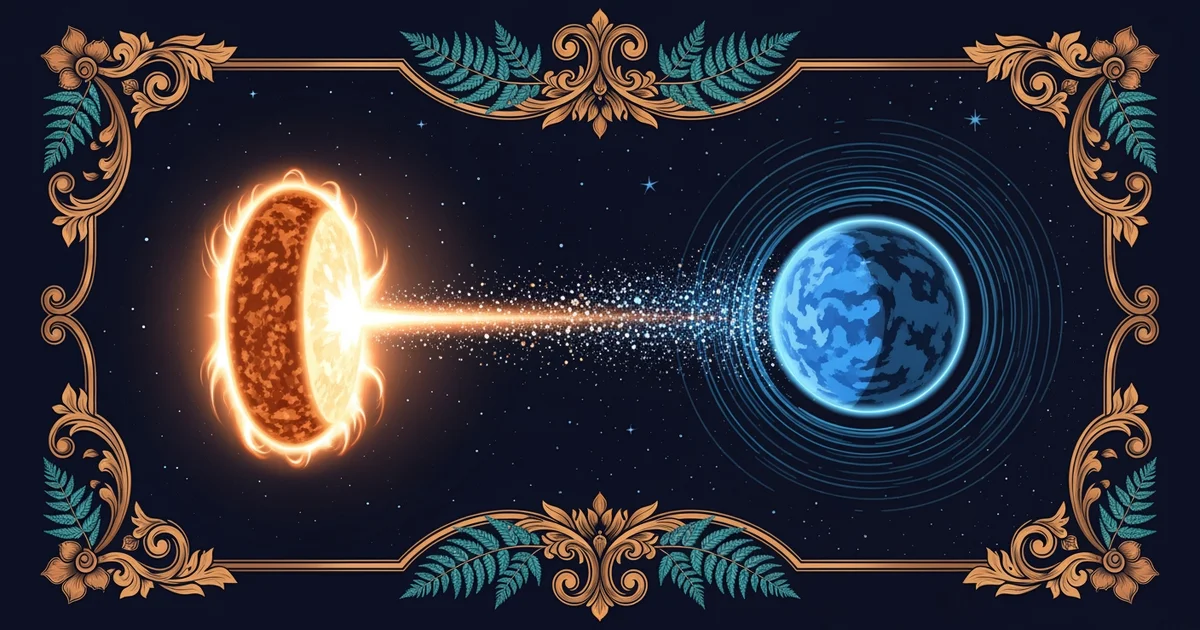
When magnetic fields move toward each other, they carry plasma that is trapped along their invisible lines. As these fields collide, they create a thin layer where the magnetic orientation suddenly shifts and changes. This layer acts like a dam holding back a vast river of potential energy waiting to flow. When the field lines finally snap, the stored magnetic energy converts instantly into kinetic energy and thermal heat. You can think of this transition like a bank vault door bursting open after a long, high-pressure standoff. The sudden release forces particles to accelerate outward, creating shockwaves that travel through the vacuum of space toward our planet.
Key term: Magnetic reconnection — the physical process where magnetic field lines in a plasma change their connectivity to release massive amounts of stored energy.
This energy conversion process follows a specific sequence of physical events that dictates the power of the outcome. The intensity depends entirely on how much tension exists within the magnetic fields before the snap occurs. Stronger fields hold more potential energy, leading to larger explosions when they finally break and reconnect. This energy release powers solar flares, which are bright flashes of light that appear on the surface of the Sun. Without this rapid conversion, the Sun would remain a much quieter and less active star in our galaxy.
Observing Reconnection in the Solar Environment
Scientists track these magnetic events by observing changes in the solar atmosphere using specialized satellite sensors. They categorize the different stages of reconnection to better understand how energy flows through the solar system. The process involves several distinct phases that describe how the magnetic field lines interact and eventually release their stored power:
- The approach phase involves two opposing magnetic fields moving toward each other while carrying trapped plasma.
- The diffusion region forms where the field lines break, allowing the plasma to flow in new directions.
- The outflow phase occurs when the newly connected lines snap back, accelerating particles away from the site.
- The final stabilization phase happens as the system reaches a new, lower energy state after the explosion.
These stages explain why we see sudden bursts of radiation followed by streams of high-speed solar particles. By studying these phases, researchers can build better models to predict when space weather might threaten our satellites. The following table highlights how different magnetic environments influence the speed and intensity of these reconnection events.
| Environment | Magnetic Tension | Particle Speed | Energy Output |
|---|---|---|---|
| Solar Corona | Very High | Extremely Fast | Massive |
| Solar Wind | Moderate | Fast | Moderate |
| Earth Magnetosphere | Low | Moderate | Low |
This table illustrates that the location of the reconnection event significantly changes the potential impact on Earth. Higher tension in the solar corona leads to much faster particles reaching our planet during storms. While the magnetosphere also experiences reconnection, the energy levels remain much lower than those seen near the Sun. This comparison helps experts distinguish between minor space weather events and major disruptions that could damage our global power grids.
Magnetic reconnection acts as a cosmic switch that converts stored magnetic tension into explosive kinetic energy and heat.
But what does it look like in practice when these particles finally reach the protective magnetic bubble of our planet?
Want this with sources you can check?
Premium Learning Paths for Astronomy & Space Exploration are researched against open-access libraries — PubMed, arXiv, government databases, and more — with their distinctive claims cited to real sources and independently checked.
See what Premium includes