
Geomagnetic Storm Basics
Imagine a sudden surge in electricity that forces your home power grid to reset without any warning. This phenomenon mirrors the way our planet reacts when intense bursts of solar energy strike our magnetic shield. Our Earth is protected by an invisible bubble called the magnetosphere, which usually deflects the constant stream of particles from the Sun. When the Sun releases a massive eruption, the incoming energy can overwhelm this natural barrier and create a geomagnetic storm. These storms are not weather events like rain or wind, but rather large-scale disturbances in the magnetic environment surrounding our world.
Understanding the Planetary Magnetic Shield
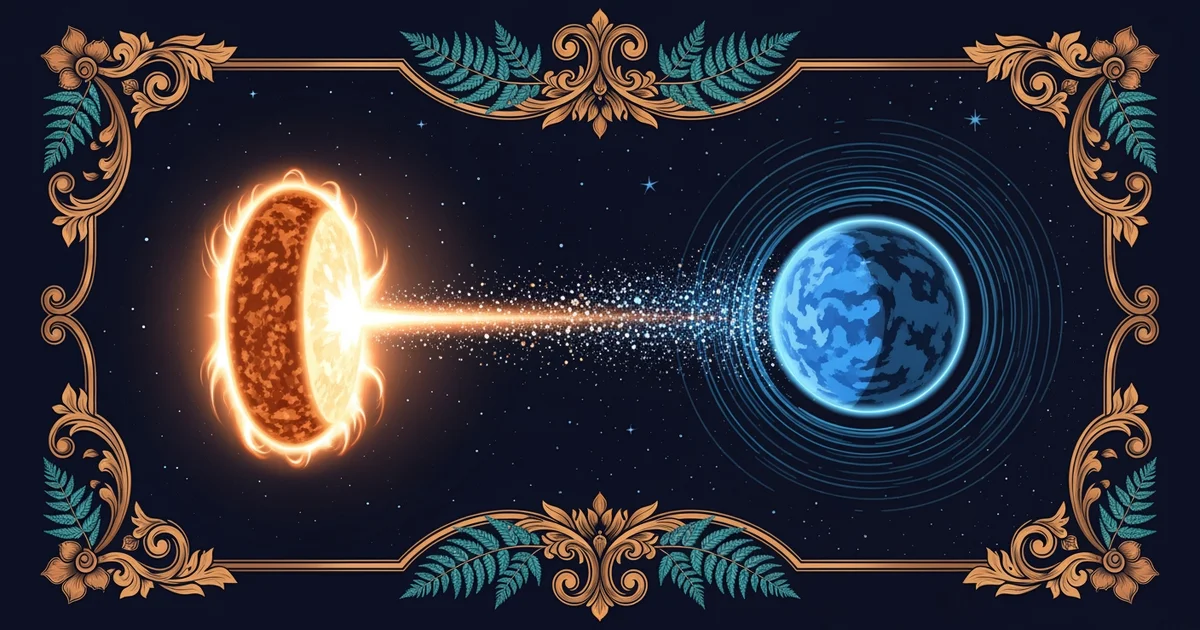
To grasp how these storms function, consider the magnetosphere as a massive, invisible fortress wall protecting a city. The Sun constantly bombards this wall with solar wind, a steady flow of charged particles moving through space at high speeds. Under normal conditions, the magnetic field holds strong and keeps the city safe from the harsh outer environment. However, when the Sun experiences a solar flare or a coronal mass ejection, the intensity of this bombardment increases significantly. The magnetic fortress must then absorb this excess energy, which causes the entire shield to oscillate or vibrate violently. This fluctuation in the field strength is the primary indicator that a geomagnetic storm is currently underway.
Key term: Geomagnetic storm — a temporary and intense disturbance of the planetary magnetic field caused by solar activity interacting with the magnetosphere.
When the magnetic field fluctuates, it creates secondary effects that can disrupt human technology on the ground. Think of the magnetosphere like a giant electrical circuit that powers our entire planet's magnetic safety system. If you pour too much voltage into a small circuit, the components often fail or behave in unpredictable ways. Similarly, when the magnetosphere receives too much solar energy, it induces electrical currents that flow into the ground and through power lines. These induced currents can overload transformers, cause satellite malfunctions, and even interfere with radio communications across the globe. The strength of these impacts depends entirely on how much energy the solar event carries toward our planet.
Measuring the Impact of Solar Disturbances
Scientists track these events by monitoring the intensity of the magnetic fluctuations over specific time periods. They use a standardized scale to determine if a storm is minor, moderate, or potentially catastrophic for modern systems. The following table outlines how these storms are generally categorized based on their observed effects on our orbital and terrestrial infrastructure:
| Storm Level | Magnetic Fluctuation | Primary Impact Area | Potential Risk |
|---|---|---|---|
| Minor | Low intensity change | Satellite operations | Minimal disruption |
| Moderate | Medium intensity shift | Power grid stability | Voltage fluctuations |
| Severe | High intensity surge | Global navigation | System-wide failure |
These categories help engineers prepare for potential outages before the solar energy even reaches our atmosphere. By watching the Sun, we gain a valuable head start on protecting our fragile technological infrastructure from these invisible magnetic waves. The interaction is a complex dance between the solar plasma and the magnetic field lines that wrap around our world. When these lines snap and reconnect, they release energy that fuels the storm and pushes particles toward the polar regions. This process creates the beautiful auroras we see in the sky, but it also serves as a stark reminder of the massive forces involved.
Understanding these basics allows us to see how dependent our modern life is on the stability of space. We rely on satellites for everything from global positioning to high-speed internet, all of which exist within this volatile magnetic environment. If we do not account for these storms, the results could be widespread failures in our communication networks. Learning to predict and manage these events is essential for the future of space travel and our technological society. We must continue to study the Sun to ensure our systems remain resilient against these powerful, invisible, and recurring cosmic events.
Geomagnetic storms occur when the solar wind energy overwhelms the Earth's magnetic field, causing widespread fluctuations that disrupt sensitive electronic technology.
The next Station introduces magnetic reconnection processes, which determines how the Sun transfers energy into the magnetosphere.