
The Solar Cycle Explained
Imagine you are watching a rhythmic pulse of a giant heart that beats once every eleven years. This massive cycle defines the activity of our Sun and dictates the environment of our entire solar system. You might notice your television or radio acting strange during specific times, which often links back to this hidden, powerful solar clock. By tracking this cycle, scientists can predict when our star will become restless and potentially disrupt our modern technological world.
The Nature of the Solar Cycle
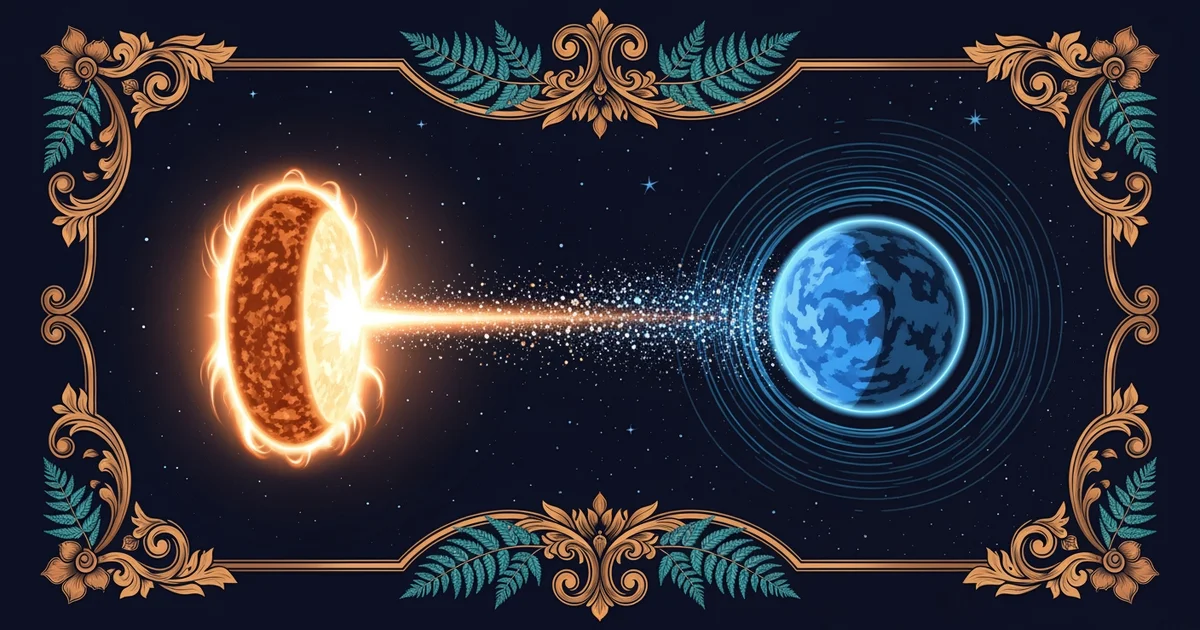
Our Sun operates on a predictable schedule known as the solar cycle, which lasts approximately eleven years on average. During this period, the magnetic field of the Sun undergoes a complete reversal of its polarity. This process is not smooth, as the magnetic field lines become twisted and tangled like a knotted ball of yarn. As these lines snap and reconnect, they release massive amounts of energy. This energy manifests as sunspots, solar flares, and intense bursts of radiation that travel across space toward our planet. Think of this cycle like a seasonal weather pattern on Earth, where the climate shifts from calm to stormy and back again. Just as you prepare for winter by stocking up on supplies, engineers prepare for peak solar activity by shielding sensitive satellites and power grids from potential electrical surges.
Key term: Solar cycle — the repeating eleven-year period during which the magnetic activity of the Sun rises to a maximum and falls to a minimum.
Tracking Solar Maximum and Minimum
To understand how the Sun behaves, researchers track two distinct phases within each cycle. The solar maximum represents the peak of magnetic activity, characterized by a high number of sunspots and frequent, violent solar explosions. Conversely, the solar minimum is the quietest phase where the Sun displays few sunspots and remains relatively stable for long stretches. These stages dictate the daily life of our orbital technologies. We can view the solar cycle as an economic boom and bust cycle for space weather. During the maximum, the Sun spends its energy lavishly, creating a high-risk environment for satellites. During the minimum, the Sun saves its energy, creating a safer, more predictable environment for deep space missions and long-term satellite operations.
| Phase | Activity Level | Magnetic State | Operational Impact |
|---|---|---|---|
| Solar Minimum | Low | Stable | Minimal interference |
| Transition | Rising/Falling | Unstable | Moderate risk |
| Solar Maximum | High | Turbulent | High risk of outages |
We can summarize the typical progression of these phases through the following steps:
- The cycle begins at the solar minimum, where the magnetic field is relatively orderly and quiet.
- Over several years, the internal rotation of the Sun twists the magnetic field into complex, tangled shapes.
- The activity reaches the solar maximum, leading to the highest frequency of sunspots and explosive solar events.
- The magnetic field finally undergoes a full reversal, which resets the cycle and begins a new decline.
Predicting these phases is vital for protecting the delicate electronics that run our modern global infrastructure. By monitoring the number of sunspots, experts can estimate the timing of the next peak with surprising accuracy. While we cannot stop the Sun from being active, we can certainly plan our technological activities to avoid the worst of the solar storms. This preparation ensures that our communication networks and electrical grids remain functional even when the Sun is at its most volatile state.
Understanding the eleven-year solar cycle allows us to anticipate periods of intense solar activity and protect our vital technological infrastructure from space weather interference.
The next Station introduces solar wind dynamics, which determines how these solar energy releases travel through space to reach Earth.