
Gliding Mechanics
When a pilot loses engine power mid-flight, the aircraft does not simply drop out of the sky like a stone. Instead, it begins a controlled descent that relies on the fundamental principles of aerodynamics to maintain forward motion. This is the essence of gliding mechanics, where the potential energy stored by altitude converts into the kinetic energy required for flight. In this scenario, the pilot must manage the energy trade-off to navigate toward a safe landing site. Much like a shopper managing a fixed budget, the pilot has a finite amount of altitude to spend before they reach the ground.
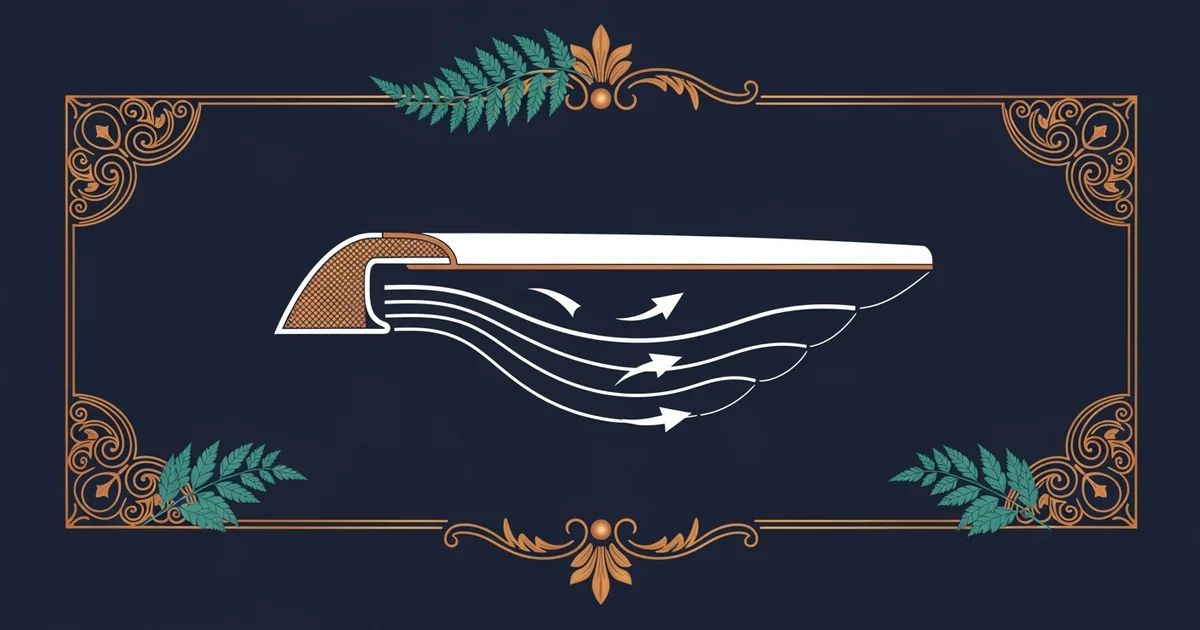
The Physics of Energy Exchange
Gravity acts as the primary force pulling the aircraft toward the earth, while the wings generate the necessary lift to sustain that flight path. By trading altitude for distance, the pilot maintains a constant airspeed that allows the control surfaces to remain effective. The efficiency of this exchange is defined by the glide ratio, which represents the horizontal distance traveled for every unit of vertical descent. If an aircraft has a ratio of 10 to 1, it will travel ten miles forward for every mile it loses in height. Pilots constantly monitor this relationship to determine if they can reach a specific target from their current position.
Key term: Glide ratio — the mathematical relationship between the horizontal distance covered and the vertical altitude lost during an unpowered descent.
Maintaining the optimal speed is critical because flying too fast increases drag, while flying too slowly risks a stall. The lift-to-drag ratio acts as the primary indicator of how efficiently the wing design cuts through the air during this descent. A higher ratio means the aircraft can stay aloft for a longer duration by minimizing the resistance encountered by the airframe. Engineers design wings to maximize this value, ensuring that the aircraft can glide as far as possible without any external thrust.
Evaluating Glide Performance
To understand how different wing designs perform, we can look at the variables that influence the descent rate. The total drag on the aircraft consists of parasite drag, which comes from the shape of the body, and induced drag, which is a byproduct of generating lift. The following table highlights how specific design choices impact the overall flight efficiency during a glide:
| Wing Feature | Primary Effect | Impact on Glide |
|---|---|---|
| High Aspect Ratio | Reduces induced drag | Increases efficiency |
| Smooth Surface | Reduces parasite drag | Increases speed |
| Large Wing Area | Increases total lift | Decreases sink rate |
When we apply these concepts, we see that a long, thin wing is usually better for maximizing distance. This is because it minimizes the vortices created at the wingtips, which are a major source of energy loss. A shorter, thicker wing might be better for high-speed maneuvers but will force the aircraft to descend much faster. Pilots must choose the best configuration based on whether they need to travel a long distance or navigate through tight spaces. This balance is a classic application of the energy conservation principles discussed in Station 11 regarding climb performance.
Efficiency in gliding is ultimately about managing the total energy state of the aircraft. By adjusting the pitch of the nose, the pilot shifts the balance between speed and distance to suit the current environment. If the pilot needs to clear an obstacle, they might trade some airspeed for a temporary boost in lift. If they need to reach a distant runway, they will adopt a more efficient speed that preserves their altitude for as long as possible. Understanding these mechanics ensures that pilots can safely navigate even when the engines are no longer providing power to the system.
The glide ratio serves as an energy budget that pilots manage by balancing forward velocity against the inevitable loss of altitude.
But this model breaks down when high-speed flight introduces compressibility effects that change how air flows over the wings.