
Thrust Production
Imagine you are driving a car on a highway and you suddenly push the accelerator pedal down hard. You feel an immediate surge of forward force that pushes your back into the seat as the engine works to increase your speed. Aircraft rely on this exact same principle of creating a powerful forward force to overcome the constant pull of air resistance. Without a reliable way to generate this forward motion, any flying machine would quickly lose its momentum and fall toward the ground. Generating this force is the primary task of the propulsion system found on every modern airplane.
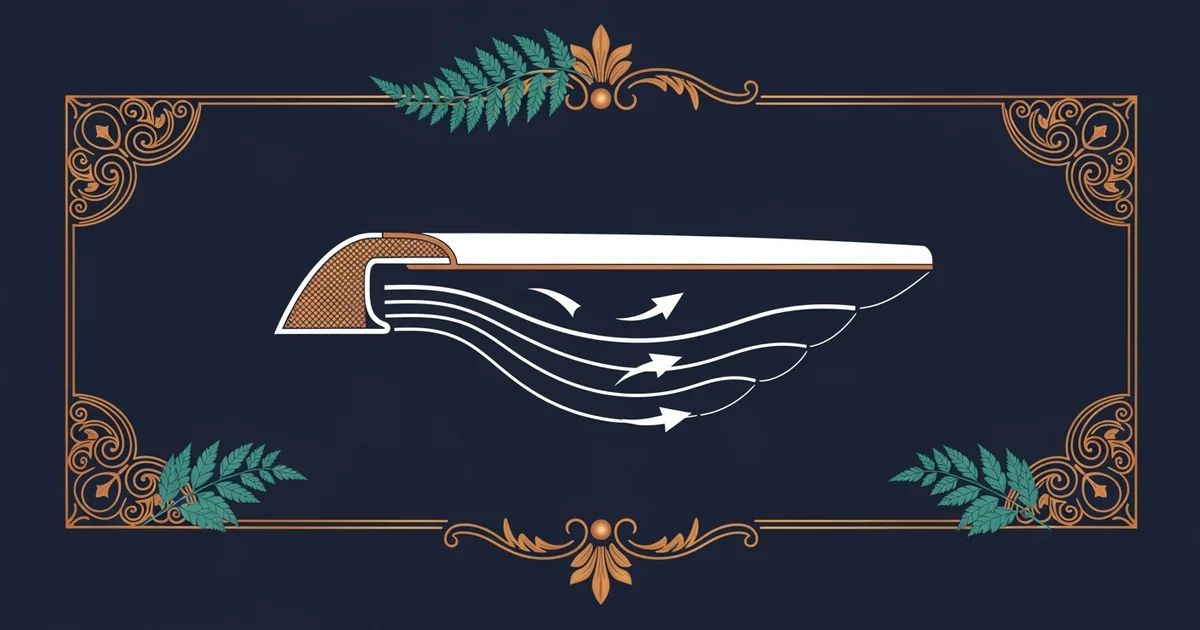
The Mechanics of Forward Motion
Propulsion works by applying the basic laws of motion to move a large mass of air backward. When an engine pushes a stream of air behind the plane, the air pushes the plane forward with equal intensity. This is similar to how a person standing on a skateboard throws a heavy medicine ball away from their body. As the ball moves forward, the person is pushed backward by the reaction force of the throw. Aircraft engines achieve this by taking in air, compressing it, and then blasting it out the back at high speeds.
Key term: Thrust — the force that propels an aircraft forward and overcomes the drag acting against the vehicle.
Most commercial aircraft use a jet engine to create this powerful forward movement through a continuous cycle of intake and exhaust. These engines draw in massive amounts of air from the front and squeeze it into a very small space. Fuel is then injected into this compressed air and ignited to produce an extremely hot explosion. This expanding gas rushes out the back of the engine at tremendous speeds. The rapid exit of these gases creates the reaction force that moves the heavy metal airframe through the sky.
Comparing Propulsion Methods
Engineers often choose between different types of propulsion based on the size and speed of the aircraft. While jet engines are ideal for high-speed travel, smaller planes often use propellers to achieve similar results. A propeller acts like a rotating wing that creates a pressure difference to pull the plane forward through the air. You can compare the primary differences between these two common systems by looking at how they move air to create necessary force.
| Feature | Jet Engine | Propeller System |
|---|---|---|
| Airflow | High velocity | Large volume |
| Efficiency | Best at speed | Best at low speed |
| Complexity | High parts count | Lower parts count |
Both systems share the same goal of moving air to produce the required force for flight. A jet engine focuses on creating a very fast stream of exhaust gases to push the plane. A propeller focuses on moving a wider column of air at a slower speed to generate a pull. Regardless of the method, the goal remains moving air backward to propel the aircraft forward.
To understand how these forces work together, consider that the engine must provide enough strength to counteract the drag forces we studied previously. If the engine produces more force than the drag, the plane accelerates. If the force equals the drag, the plane maintains a steady speed. Balancing these two forces is essential for safe and efficient flight across long distances. Engineers carefully design these systems to ensure they provide enough power for takeoff while remaining efficient during long cruises.
Thrust is the essential reaction force generated by pushing mass backward to propel an aircraft forward through the atmosphere.
The next Station introduces lift generation, which determines how the wings use airflow to overcome gravity and keep the plane aloft.