
Newtonian Motion
Imagine you are riding a bicycle on a flat road and suddenly decide to pedal much harder. You feel the bike surge forward instantly because your legs are providing the extra push needed to change your speed. This simple experience shows how movement works when you apply force to an object that has mass. Understanding these rules of motion helps engineers design planes that can lift off the ground and travel across the globe.
The Mechanics of Acceleration
When we talk about how things move, we look at the relationship between force, mass, and acceleration. A heavy metal plane needs a massive amount of force to move from a standstill to a high speed. This concept is captured by the formula , where stands for the total force applied to the object. The mass of the object is represented by , and the acceleration is shown by . If you want to increase the speed of a heavy craft, you must increase the force applied to it. Think of this like pushing a shopping cart through a grocery store aisle. An empty cart is easy to push, but a cart filled with heavy items requires much more effort to reach the same speed.
Key term: Acceleration — the rate at which an object changes its velocity over time by speeding up, slowing down, or turning.
Because planes have significant mass, they require powerful engines to generate the force necessary for takeoff. Without these engines, the plane remains stationary on the runway due to its own inertia. Inertia is the tendency of an object to resist changes in its current state of motion. To overcome this, the engines must push air backward with great intensity to create a forward reaction. This push creates the acceleration required to reach the speed needed for flight. The relationship between these variables is constant and predictable for every flying machine.
Balancing Forces in Flight
Once a plane reaches cruising speed, it must maintain a balance between the forces acting upon it. The engines provide the thrust needed to overcome drag, which is the air resistance pushing against the plane. If the pilot wants to go faster, they increase the thrust until the force exceeds the current drag. This imbalance causes the plane to speed up until the forces reach a new equilibrium point. You can track these interactions using a simple comparison of how different forces affect the movement of a craft through the air.
| Force Type | Direction | Effect on Motion |
|---|---|---|
| Thrust | Forward | Increases velocity |
| Drag | Backward | Decreases velocity |
| Gravity | Downward | Pulls toward ground |
These forces do not act in isolation, as they constantly pull and push against each other during every flight. A pilot manages these interactions to keep the plane steady while moving through the sky at high speeds. If the engines stop producing thrust, the drag will quickly slow the plane down and gravity will take over. This constant struggle between forces is why a plane must keep moving to stay aloft. Every change in speed is a direct result of one force becoming stronger than the others acting on the craft.
- Thrust provides the forward energy required to overcome the natural resistance of the surrounding air.
- Drag acts as a constant friction that tries to slow down the forward progress of the vehicle.
- Gravity pulls the massive metal structure toward the earth, requiring lift to keep the plane stable.
By carefully managing the engine power, a pilot can control the acceleration and velocity of the aircraft. This control is essential for safe travel and smooth landings in various wind conditions. Understanding these laws allows us to predict exactly how a plane will behave when the engines change their output. Every movement you see in the sky is the result of these basic physics principles working together in perfect harmony.
Objects change their velocity only when an unbalanced force is applied to overcome their inherent mass and resistance.
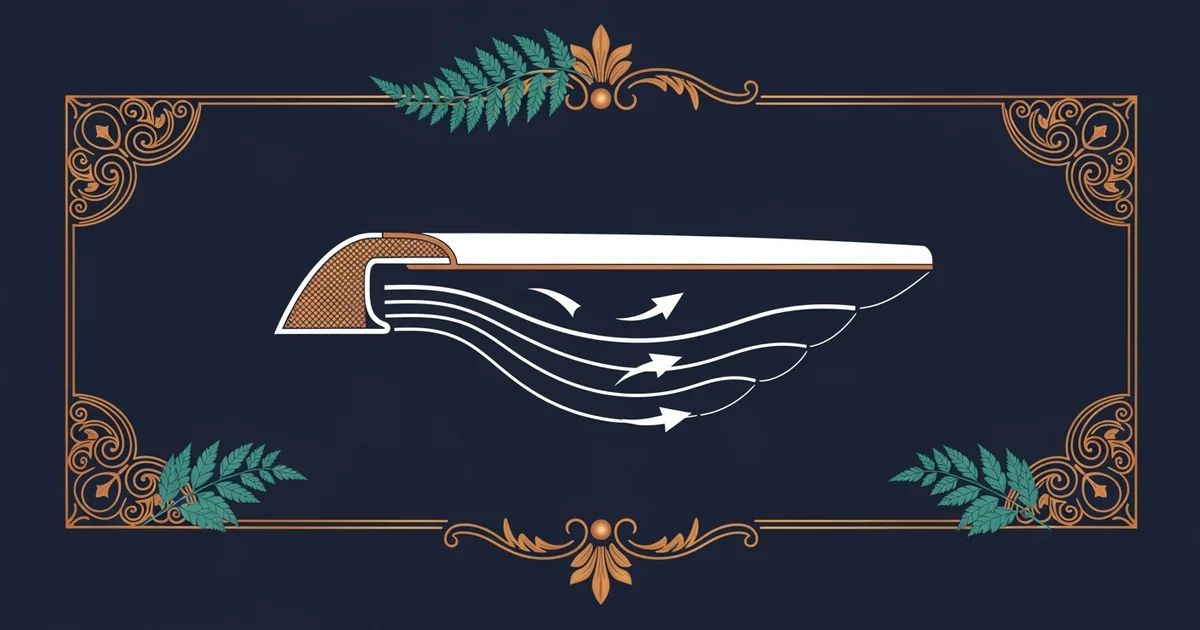
The way these forces interact with the shape of the wings will determine how the plane achieves lift.