
Control Surfaces
Imagine you are driving a car on a winding road during a heavy rainstorm. You turn the steering wheel to guide the car around a sharp curve in the road. An airplane pilot faces a similar challenge when navigating through the vast, invisible currents of the sky. Just as a driver uses a wheel to steer, a pilot uses mechanical flaps to change direction. These movable parts on the wings and tail allow the pilot to command the aircraft precisely. Without these surfaces, a plane would be unable to turn or adjust its pitch during flight.
Managing Movement Through Airflow
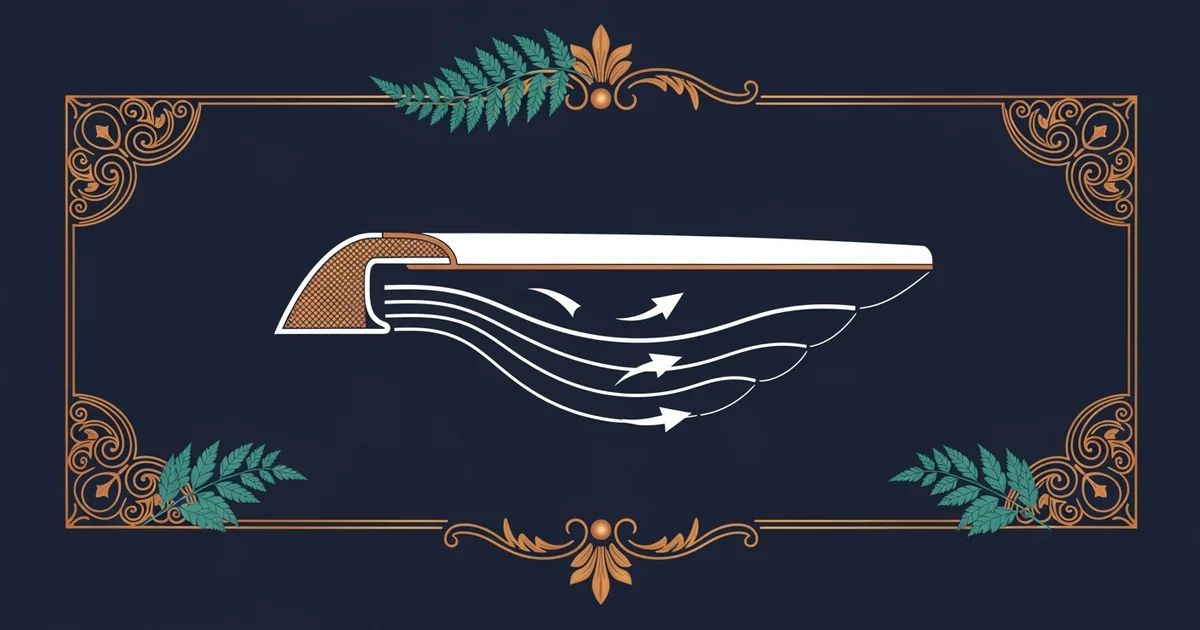
To change the orientation of the aircraft, pilots manipulate the ailerons located on the outer wings. When a pilot moves the control stick to the left, the left aileron moves upward while the right aileron drops. This action creates a difference in lift between the two wings, forcing the plane to bank. Think of this like using a paddle in a canoe to steer your path. By pushing against the water on one side, you force the boat to turn away. The air acts like the water in this analogy, providing the resistance needed to initiate a change in direction.
Key term: Ailerons — the hinged surfaces on the trailing edge of a wing that control roll.
Controlling the nose of the plane requires adjustments to the horizontal and vertical surfaces of the tail. The elevator, found on the horizontal stabilizer, manages the pitch of the aircraft during climbs or descents. When the pilot pulls back on the stick, the elevator moves upward, pushing the tail down and the nose up. This shift changes the angle of attack, allowing the plane to gain altitude efficiently. These surfaces work in harmony to keep the plane balanced while moving through the air at high speeds.
Coordinating Flight Control Surfaces
Pilots must coordinate these surfaces carefully to ensure smooth transitions between different flight attitudes. The interaction between these parts allows for complex maneuvers that keep the aircraft on its intended flight path. The following table highlights the primary functions of these essential flight components:
| Control Surface | Primary Axis | Movement Description | Effect on Aircraft |
|---|---|---|---|
| Ailerons | Roll | Opposite directions | Banks the aircraft |
| Elevator | Pitch | Up or down movement | Raises or lowers nose |
| Rudder | Yaw | Left or right pivot | Turns the fuselage |
Using the rudder is critical for maintaining coordination during turns, especially when flying at slower speeds. The rudder is a vertical surface attached to the back of the stabilizer that pivots left or right. When the pilot presses the foot pedals, the rudder moves, pushing the tail in the opposite direction. This action helps the nose align with the flight path, preventing the plane from slipping sideways during maneuvers. Pilots learn to balance these inputs to keep the flight smooth and comfortable for everyone on board.
Proper operation of these surfaces is the difference between a controlled flight and an unpredictable path. By adjusting the airflow over these parts, the pilot exerts influence over the massive metal frame. Each movement creates a pressure change, which translates into a physical shift of the aircraft. Mastering these controls requires practice, as the pilot must constantly react to changing wind conditions. Every small adjustment ensures the craft remains stable while moving through the sky. This mechanical dance of surfaces allows humans to navigate the atmosphere with surprising grace and total control.
Control surfaces allow pilots to manipulate aerodynamic forces to steer the aircraft across three distinct axes.
But what does it look like in practice when these surfaces fail to provide enough stability during flight?