
Stability Factors
Imagine you are balancing a long wooden ruler on the tip of your finger. If you shift your finger slightly away from the center point, the ruler tips over instantly because the weight is no longer supported correctly. Aircraft engineers face this exact same challenge when they design planes to remain steady in the air for hours. They must manage how forces interact across the entire body of the aircraft to ensure it stays level during flight. Stability is the ability of an aircraft to return to its original flight path after a sudden disturbance like a gust of wind.
Understanding Center of Gravity and Stability
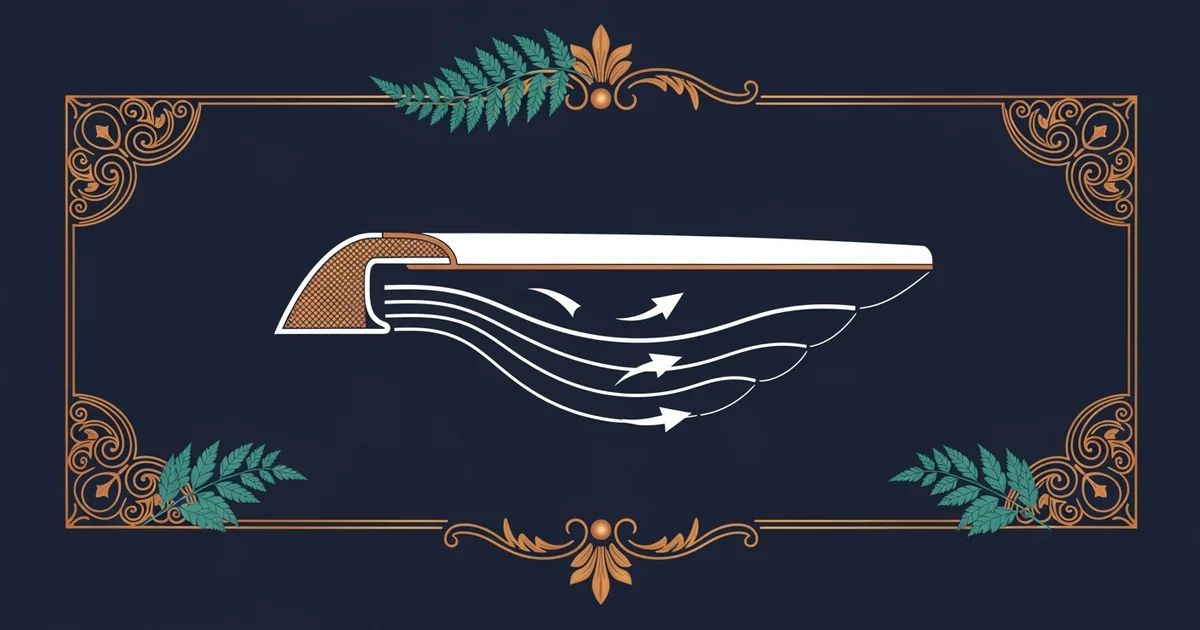
When we look at aircraft design, the center of gravity serves as the primary pivot point for all physical movements. This point represents the average location of all the weight distributed throughout the entire plane. If the center of gravity moves too far forward or backward, the plane becomes difficult to control. Engineers calculate this balance point carefully to ensure the aircraft remains naturally stable during normal flight operations. Think of it like a budget where you must balance income against expenses to stay out of debt. If your weight distribution is off, the plane will constantly try to tilt up or down, forcing the pilot to fight the controls continuously. Proper placement keeps the plane flying smoothly without constant manual corrections from the flight crew.
Key term: Center of gravity — the specific point where the total weight of an aircraft is considered to be concentrated for balance calculations.
To manage these forces, designers utilize specific components to keep the plane steady. These parts act like a self-correcting system that pushes the aircraft back into place if it tilts. The following list explains the primary factors that influence how an aircraft maintains its steady position in the sky:
- Horizontal stabilizers act like the tail feathers on an arrow to keep the nose pointed straight ahead by creating downward pressure that counters the natural tendency of the nose to pitch down.
- Wing dihedral involves angling the wings upward in a "V" shape to create a natural tendency for the plane to level itself out if it rolls to one side.
- Vertical fins provide directional stability by acting as a large sail that keeps the tail of the plane behind the nose during turns and gusts.
The Relationship Between Balance and Control
Once the plane is balanced, the relationship between the aerodynamic center and the center of gravity determines how the plane reacts to changes. The aerodynamic center is the point where all lift forces act on the wing structure. If the center of gravity sits in front of the aerodynamic center, the plane gains natural stability. This happens because the forces act like a lever that pulls the nose back up if it drops. If these two points align too closely, the plane becomes overly sensitive to every small movement. Engineers must find the perfect distance between these points to balance maneuverability with steady flight performance. The table below compares how different design choices affect the overall stability of an aircraft during various flight conditions.
| Design Feature | Stability Effect | Primary Function |
|---|---|---|
| Forward CG | High Stability | Resists sudden pitch changes |
| Aft CG | Low Stability | Increases maneuverability potential |
| Dihedral Wings | Roll Stability | Levels wings automatically in flight |
By adjusting these factors, engineers ensure the plane behaves predictably for the pilot. A stable plane acts like a heavy pendulum that naturally wants to hang straight down. When a gust hits, the plane tilts, but the design forces it to swing back to the center. This self-correcting nature is what allows modern aircraft to fly long distances without requiring constant attention to the flight controls. It turns a complex machine into a stable platform that handles the air with ease and grace.
Achieving flight stability requires precise alignment between the weight distribution and aerodynamic forces to ensure the aircraft naturally resists unwanted movement.
Now that we understand how stability keeps a plane steady, how do these forces change when the pilot needs to gain altitude?