
The Four Forces of Flight
Imagine you are standing on a windy beach while holding a flat piece of cardboard against the moving air. You feel the wind pushing the board backward, but you also feel it trying to lift the board upward if you tilt it just right. This simple feeling describes the constant battle occurring whenever an airplane travels through the sky to stay aloft. Massive metal objects remain in the air because they balance four specific physical forces that act upon them during every second of flight.
The Physics of Balanced Forces
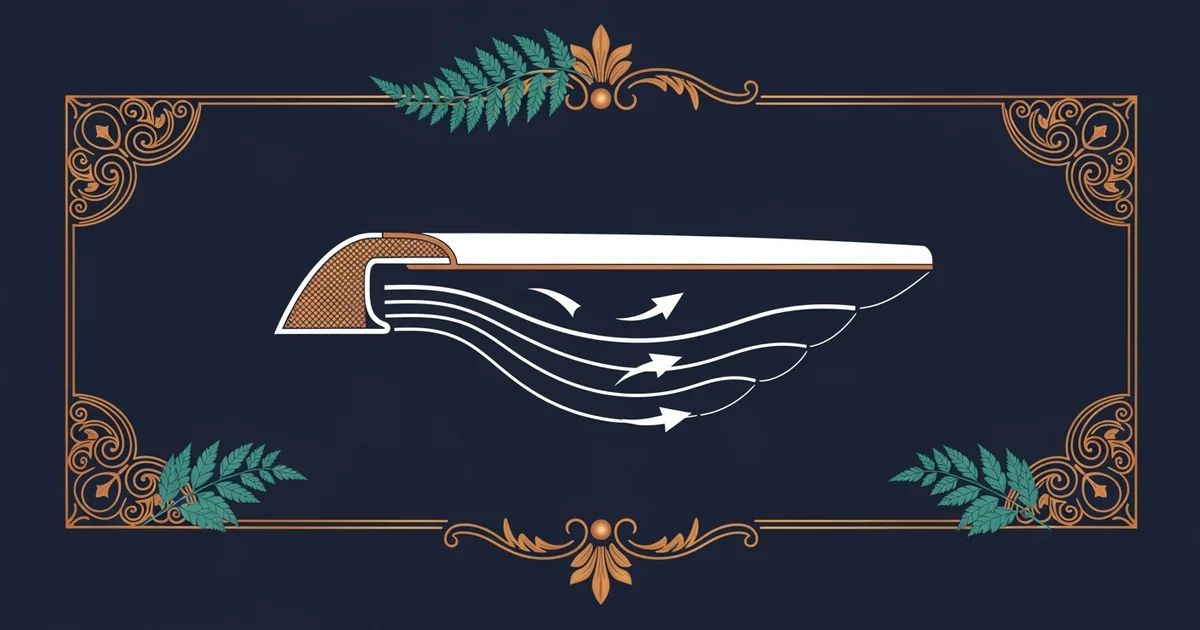
To understand how a plane flies, you must look at how these four forces push and pull in opposite directions. First, we have weight, which is the force of gravity pulling the aircraft toward the center of the Earth. Opposing this downward pull is lift, which is the upward force generated by the wings moving through the air. These two forces must stay in balance for an object to maintain a steady altitude. If the lift force becomes greater than the weight, the airplane will climb higher into the sky. If the weight becomes greater than the lift, the airplane will descend toward the ground.
Key term: Lift — the upward force created by air flowing over the wings of an aircraft.
Beyond the vertical forces, an aircraft must also manage the forces that control its horizontal movement through the air. The engine provides thrust, which is the forward force that pushes the aircraft through the atmosphere at high speeds. As the plane moves forward, it encounters drag, which is the resistance or friction caused by the air hitting the front of the plane. Think of thrust like the money you earn from a job, while drag is like the daily bills you must pay to keep your life moving forward. You need more earnings than bills to keep growing, just as a plane needs more thrust than drag to accelerate.
Understanding the Four Forces of Flight
These four forces interact in a complex dance that pilots must manage to keep the aircraft stable. When a pilot wants to fly level, they adjust the speed and wing angles so that all forces are perfectly balanced. The following table shows how these forces work in pairs to influence the motion of the aircraft during a typical flight:
| Force Pair | Direction | Primary Function | Result of Imbalance |
|---|---|---|---|
| Lift vs Weight | Vertical | Altitude control | Climbing or descending |
| Thrust vs Drag | Horizontal | Speed control | Accelerating or slowing |
When these forces are not equal, the plane changes its state of motion in the sky. If the engine provides more thrust than the amount of drag pushing back, the plane will move faster. As the plane speeds up, the wings can generate even more lift to overcome the weight of the heavy metal frame. This relationship explains why airplanes need to reach a high speed on the runway before they can leave the ground. Without enough speed, the wings cannot create enough lift to defeat the force of gravity holding the plane down.
Everything you learn in this path will help you understand how engineers design planes to handle these forces safely. By the end of this series, you will know exactly how air properties and wing shapes allow humans to travel across the globe in safety.
A flying aircraft stays aloft by balancing the upward pull of lift against the downward pull of weight while managing the forward force of thrust against the backward resistance of drag.
You are now ready to explore how the invisible properties of air molecules provide the raw energy needed to generate these powerful forces.