
Planetary Comparison
Imagine you are holding a spinning coin on a table, watching as its energy fades and it wobbles toward a final rest. Planets operate much like this coin, where their internal heat acts as the momentum keeping their geological systems active and vibrant. While Earth remains a dynamic world with shifting plates and active volcanoes, our neighbors tell a different story of cooling and stillness. By comparing these worlds, we can see how the hidden physical forces inside our planet shape the world we walk upon every single day.
Geologic Activity and Internal Heat
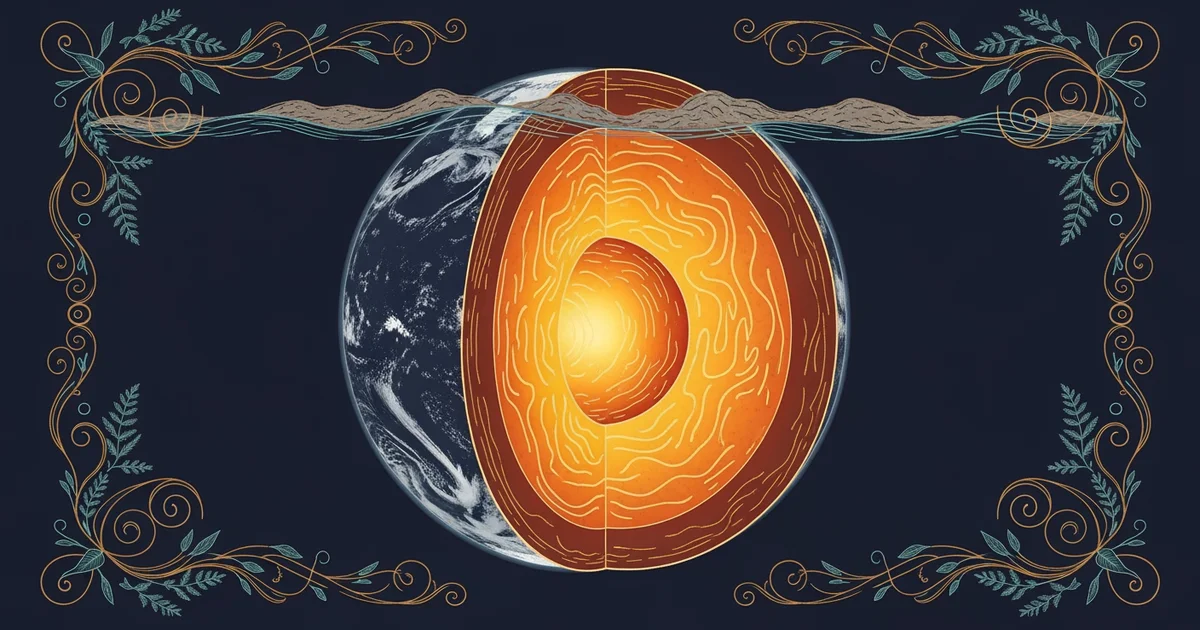
Earth maintains a complex interior because it generates and retains enough heat to drive the movement of molten rock. This process, known as planetary differentiation, allows heavy materials to sink toward the center while lighter materials form the outer crust. When we compare this to Mars, we see a world that cooled much faster due to its smaller size and lower mass. Because Mars lacks the internal engine required to recycle its surface, it remains geologically quiet today. Think of Earth like a large, thick soup that stays warm for hours, while Mars is like a small cup of coffee that loses its heat rapidly in a cold room.
Key term: Planetary differentiation — the process by which a planet separates into distinct layers like a core, mantle, and crust based on density.
This difference in cooling rates directly dictates the presence of magnetic fields and active plate tectonics. Earth possesses a liquid outer core that generates a protective magnetic field through the movement of iron. Mars lost its global magnetic field billions of years ago, leaving its surface vulnerable to harsh solar winds. Without that internal heat, the geological clock of a planet essentially stops ticking, turning a once-active world into a frozen museum of its own ancient past.
Comparing Terrestrial Surface Evolution
To understand why our planet evolved differently, we must look at the specific traits that define the terrestrial worlds in our solar system. The following table highlights the primary differences in how these planets manage their internal energy and surface features:
| Planet | Surface Status | Magnetic Field | Primary Driver |
|---|---|---|---|
| Earth | Highly Active | Strong | Convection |
| Venus | Mostly Dormant | Negligible | Volcanism |
| Mars | Geologically Dead | Absent | Cooling |
These differences show that size is a major factor in how long a planet stays geologically alive. Larger planets have more radioactive material to fuel their interiors, which keeps their mantles soft and mobile for longer periods. Smaller bodies lose their heat into space much faster, causing their outer layers to harden into a solid, unmoving shell. This hardening process prevents the recycling of elements, which is a vital step for maintaining a stable atmosphere and supporting life.
We can see that the physical forces of gravity and heat are the primary architects of planetary landscapes. These forces interact with the material composition of a planet to determine if it will remain a living world or become a stagnant rock. When we look back at our study of natural hazard modeling, we realize that Earth’s hazards are simply symptoms of this internal heat trying to escape. If Earth were as small as Mars, our mountains would not grow, and our oceans would not circulate in the same way. The hidden engine beneath our feet is the reason our world remains a changing and evolving environment rather than a static sphere.
Planetary evolution is determined by the balance between internal heat retention and the physical size of the world.
The next phase of our journey explores how humanity will use these geophysical principles to navigate the future of planetary exploration.