
Seismic Wave Propagation
When a massive earthquake strikes, the ground beneath your feet transforms into a moving, rhythmic wave. You might feel like you are standing on a boat rocking gently upon the ocean.
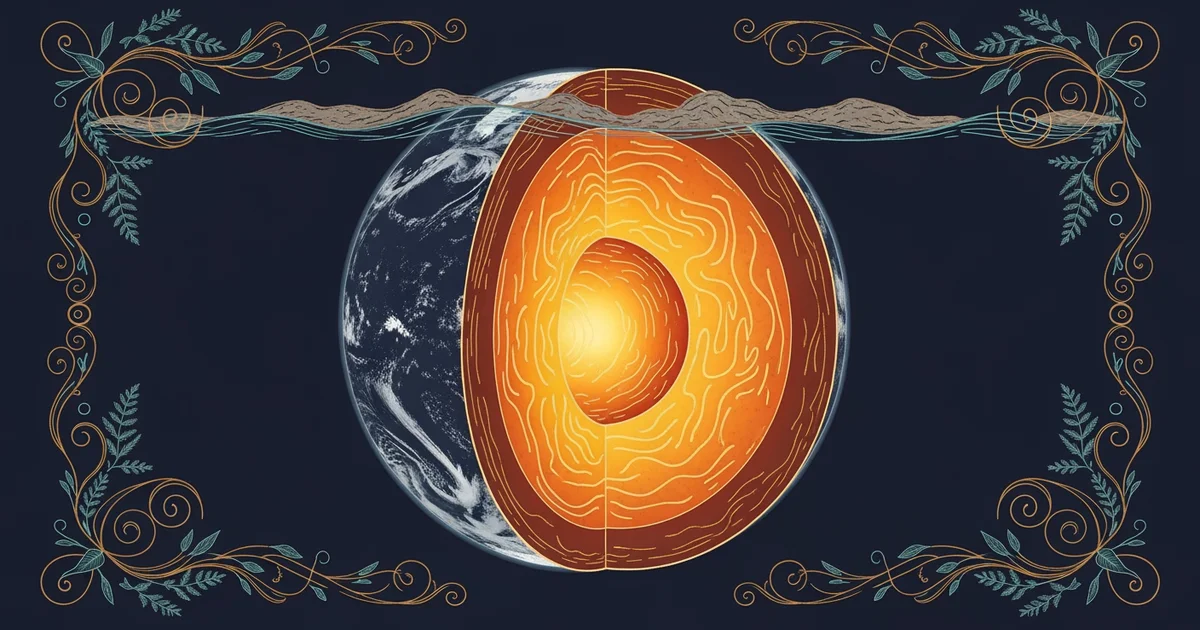
Understanding Seismic Energy Transmission
Energy from internal planetary shifts must travel through solid rock to reach the surface layers. These vibrations are called seismic waves, and they move through the Earth like ripples in a pond. Just as a stone thrown into water creates a disturbance that travels outward, energy from a quake radiates in all directions from the source. The speed of these waves depends entirely on the density and elasticity of the material they encounter. Denser, stiffer rock allows waves to travel much faster than loose, soft soil or molten layers. Because the Earth has many distinct internal layers, these waves constantly change speed as they cross boundaries between different materials. Think of this process like a runner moving from a paved track onto deep, soft sand. The runner must exert more effort and slow down significantly when the surface becomes less stable and harder to navigate. In the same way, seismic pulses encounter resistance when moving through various geological layers, which forces them to change their velocity and direction. Scientists study these shifts to map the hidden structure of the deep interior.
Key term: Seismic waves — the vibrations produced by earthquakes that carry energy through the Earth's interior and surface layers.
Analyzing Wave Behavior Through Boundaries
When these waves encounter a boundary between two different materials, they do not simply pass through unchanged. They may reflect back toward the source or refract, which means they bend as they enter the new material. This refraction is crucial for understanding how energy moves from the hot core toward the outer crust. The interaction between wave energy and material properties follows specific physical patterns. We can categorize how these waves behave using the following three primary physical interactions:
- Reflection occurs when a wave hits a dense boundary and bounces back like a ball hitting a wall.
- Refraction happens when a wave passes into a new medium and changes its speed and its path.
- Attenuation describes how the wave loses energy and becomes weaker as it travels through the thick material.
Each of these processes provides a unique data point that helps researchers calculate the composition of the planet. If the wave encounters a liquid layer, it may stop entirely or shift its vibration mode. This behavior allows us to confirm that the outer core is liquid because certain wave types cannot travel through it. By measuring the time it takes for pulses to arrive at different stations, we build a picture of the interior. The density of the rock dictates how quickly the energy reaches the sensors on the surface. If the rock is packed tightly, the wave moves efficiently and arrives with higher energy levels. If the rock contains many gaps or pockets of gas, the wave loses velocity and arrives much later. This constant interplay between energy and matter is what allows us to see the invisible layers beneath us.
| Wave Type | Movement Style | Travel Medium | Primary Characteristic |
|---|---|---|---|
| P-Waves | Compression | Solid and Liquid | Fastest arrival speed |
| S-Waves | Side-to-Side | Solids only | Cannot pass through liquids |
| Surface | Rolling motion | Surface only | Causes most destruction |
Understanding these differences helps us predict how energy will impact structures on the surface. When waves move from deep, fast rock into shallow, loose sediment, they often amplify and cause more intense shaking. This amplification is why buildings on soft ground often experience more damage than those on solid bedrock. The physics of the ground determines the outcome for everything built upon it.
Seismic waves act as planetary probes that reveal the internal composition of the Earth by changing speed and direction whenever they hit a boundary between different materials.
The next Station introduces magnetic field origins, which determines how the internal movement of molten iron shapes the protective shield around our planet.