
Defining Geophysics
Imagine you are standing on solid ground, yet deep beneath your feet, massive slabs of rock are moving at the speed your fingernails grow. You might feel like the earth is perfectly still, but the planet is a dynamic machine driven by intense heat and pressure from within. Understanding these hidden movements allows us to predict where earthquakes occur and how mountains rise over millions of years. This field of study is known as geophysics, and it serves as the lens through which we view the complex inner workings of our home world.
The Physical Laws Governing Planetary Structure
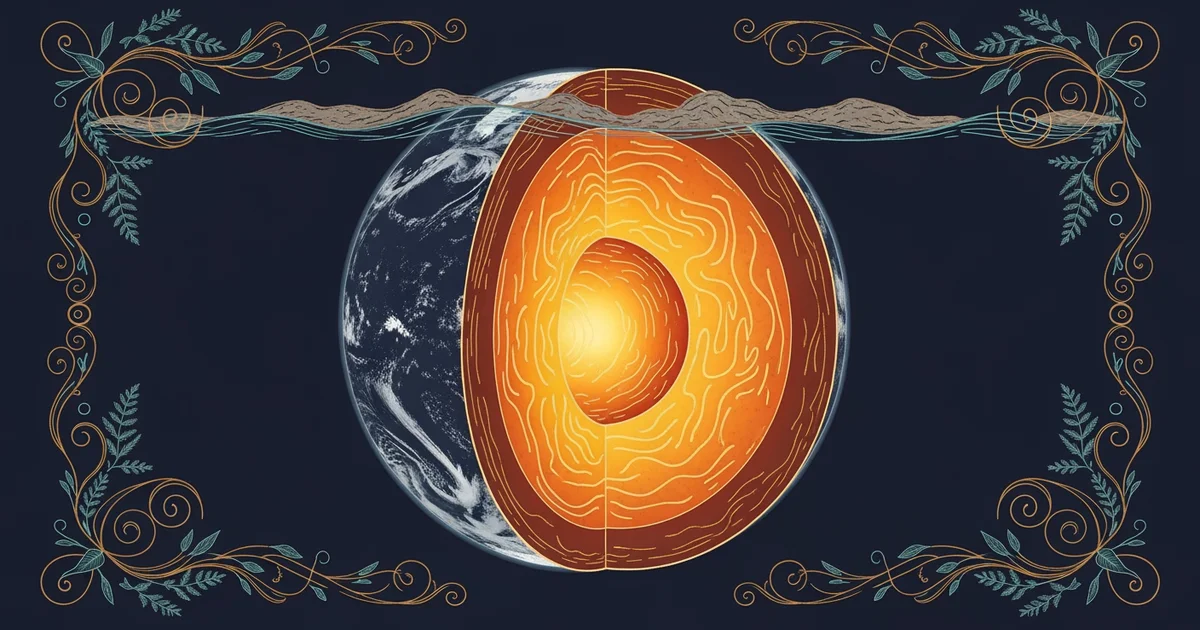
Geophysics applies the fundamental rules of physics to study the entire planet, from the thin crust to the burning core. Scientists use these laws to explain why the earth behaves like a giant, slow-moving heat engine. Just as you might study the flow of water through pipes to understand plumbing, geophysicists track the flow of energy through the earth to map its hidden layers. They measure gravity, magnetic fields, and seismic waves to see what is happening miles below the surface. By applying these concepts, researchers can determine the density and composition of materials that no human has ever touched directly.
Key term: Geophysics — the branch of earth science that uses physical principles and quantitative methods to study the internal structure and dynamic processes of the planet.
These researchers rely on specific physical properties to build models of the interior. They look at how different materials respond to stress and heat over vast periods of time. Think of the earth like a massive, slow-moving ball of cold taffy that is being heated from the center. The heat makes the inner layers behave like a thick liquid, while the outer layers remain brittle and rigid. This difference in behavior is what causes the crust to break into plates, which then slide over the softer, hotter rock beneath them.
Tools for Measuring Internal Forces
To understand these processes, scientists rely on several key methods that allow them to "see" through the ground without digging. These techniques rely on how energy travels through different types of rock and metal. By measuring these signals, they can create a clear picture of the planet's anatomy.
- Seismic waves act like an ultrasound for the planet, as they travel through the earth and change speed or direction when they hit different types of rock layers.
- Magnetic field mapping helps identify the movement of molten iron in the outer core, which generates the protective magnetic shield that surrounds our entire planet.
- Gravity measurements detect variations in the density of underground features, allowing researchers to spot large mountain roots or deep ocean trenches hidden beneath the surface.
These methods provide the data needed to understand the forces shaping our world. Each measurement acts as a piece of a giant puzzle. When researchers combine these pieces, they can see the full picture of the planet's internal structure. This approach transforms abstract physical laws into a concrete map of the earth's interior. Without these tools, we would remain blind to the massive forces that determine the safety and stability of the ground we walk upon every day.
Connecting Physics to Planetary Evolution
The study of these forces is not just about the present, as it also reveals the history of our planet. By understanding how heat moves from the core to the surface, we can trace how the earth has cooled and changed since its birth. This cooling process drives the movement of tectonic plates, which in turn creates new land and recycles old rock. This cycle is essential for maintaining the conditions that allow life to flourish on the surface. We are essentially living on the cooling skin of a giant, active thermal machine.
| Process | Physical Basis | Resulting Feature |
|---|---|---|
| Convection | Heat transfer | Plate movement |
| Magnetism | Fluid motion | Protective shield |
| Elasticity | Wave travel | Seismic imaging |
This table summarizes how basic physical processes translate into the observable features of our world. By mastering these connections, we learn how the interior dictates the surface environment. This knowledge is the foundation for everything we will explore in the coming stations of this path. This entire learning journey will provide you with a comprehensive understanding of how the hidden physical forces inside our planet shape the world we walk upon every single day.
Geophysics uses the laws of energy and motion to decode the hidden structural history and active mechanical processes of our planet.
The next step in our journey will take us deeper into the specific zones of the planet as we explore the layered earth.