
Tectonic Plate Motion
Imagine a massive conveyor belt that moves continents across the surface of a giant, hot sphere. You might think the ground beneath your feet is solid and fixed, but it actually drifts slowly over time. This constant shifting creates the landscapes we see, from tall mountain ranges to deep ocean trenches. Our planet acts like a giant heat engine, using internal energy to move its outer shell. This process defines the very structure of the world we walk upon every single day.
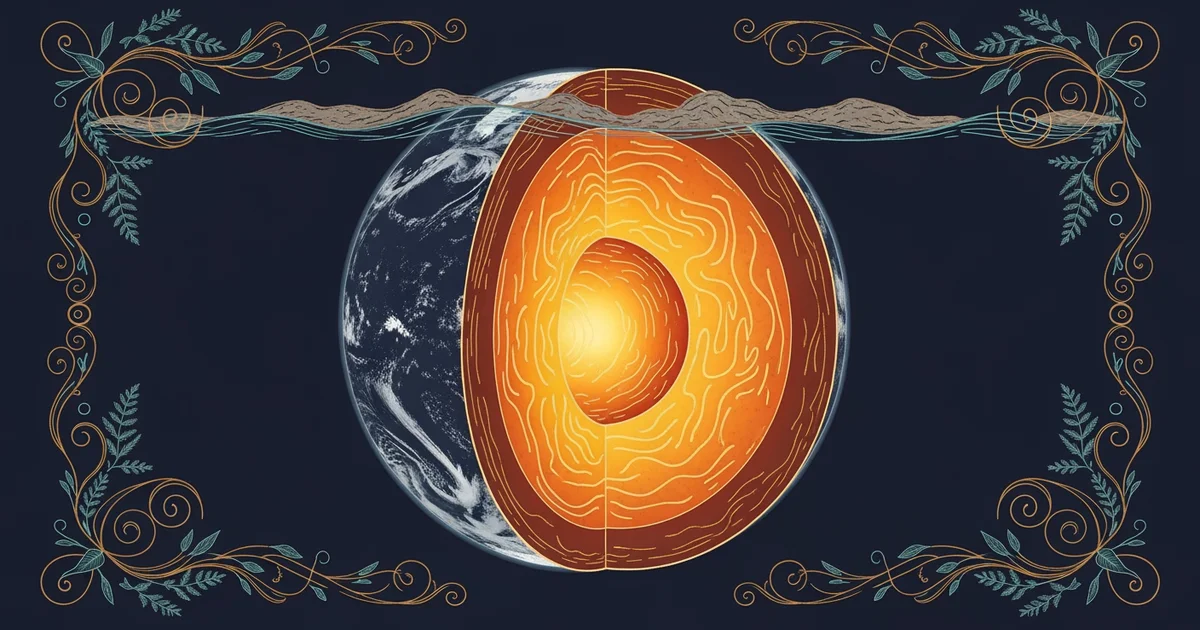
The Mechanics of Lithospheric Movement
Earth possesses a rigid outer layer called the lithosphere, which breaks into several large, distinct sections. These sections, known as tectonic plates, float atop a hotter and more ductile layer called the mantle. Think of this arrangement like a heavy wooden raft floating on a thick, slow-moving pool of warm syrup. The raft does not stay in one spot because the syrup beneath it churns from internal heat. This movement happens because the planet must release heat from its core to the cold surface. As the mantle material rises, cools, and then sinks, it drags the plates along with it in a slow dance.
Key term: Lithosphere — the rigid, outermost shell of our planet that includes the crust and the upper mantle.
This motion relies on specific physical forces that pull and push the plates across the globe. You can visualize these forces as two distinct methods of movement that keep the plates in constant, slow motion. Without these forces, our planet would become geologically quiet and lose its dynamic shape over time. Scientists identify two primary mechanisms that drive this massive, slow-motion engine:
- Slab pull occurs when a cold, dense plate edge sinks into the mantle, dragging the rest of the plate behind it like a heavy chain falling off a table.
- Ridge push happens at mid-ocean ridges where new, hot material rises and pushes the older, colder plate material away from the center.
These mechanisms work together to keep the global conveyor belt moving at the speed of human fingernail growth. While the movement feels invisible, it shapes the geography of our entire world over millions of years.
Understanding Force Interaction
When we look at how these forces interact, we see a complex balance of gravity and thermal energy. The density of the plate material plays a vital role in determining how fast these sections move. Older plates often become colder and denser, making them sink more easily into the mantle at subduction zones. This sinking action creates the primary pull that drives plate motion across the planet's curved surface. The following table compares how these forces influence the movement of the large tectonic plates:
| Force Mechanism | Primary Driver | Location of Action | Effect on Plates |
|---|---|---|---|
| Slab Pull | Gravity | Subduction zones | Pulls plate down |
| Ridge Push | Gravity/Heat | Ocean ridges | Pushes plate away |
| Mantle Drag | Convection | Plate base | Friction movement |
Each force contributes to the overall kinematics of the plates in different ways. Ridge push provides a slight outward force at the spreading centers where new crust is born. Meanwhile, slab pull acts as a much stronger force that pulls the plate into the mantle depths. Together, these forces ensure that the lithosphere remains in a state of constant, slow change. By studying these interactions, we learn why the Earth's surface looks the way it does today. These forces act as the invisible hands that build mountains and carve out the deep ocean basins.
Tectonic plate motion is driven by gravity and thermal energy that pull and push the lithosphere across the planet.
The next Station introduces crustal deformation, which determines how these moving plates change the shape of the surface.