
Harmonics and Overtones
When you strike a single guitar string, you hear one primary pitch but also a hidden chorus of higher, quieter notes. This complex mixture of frequencies creates the unique character of every sound you hear in music.
The Physics of Natural Vibrations
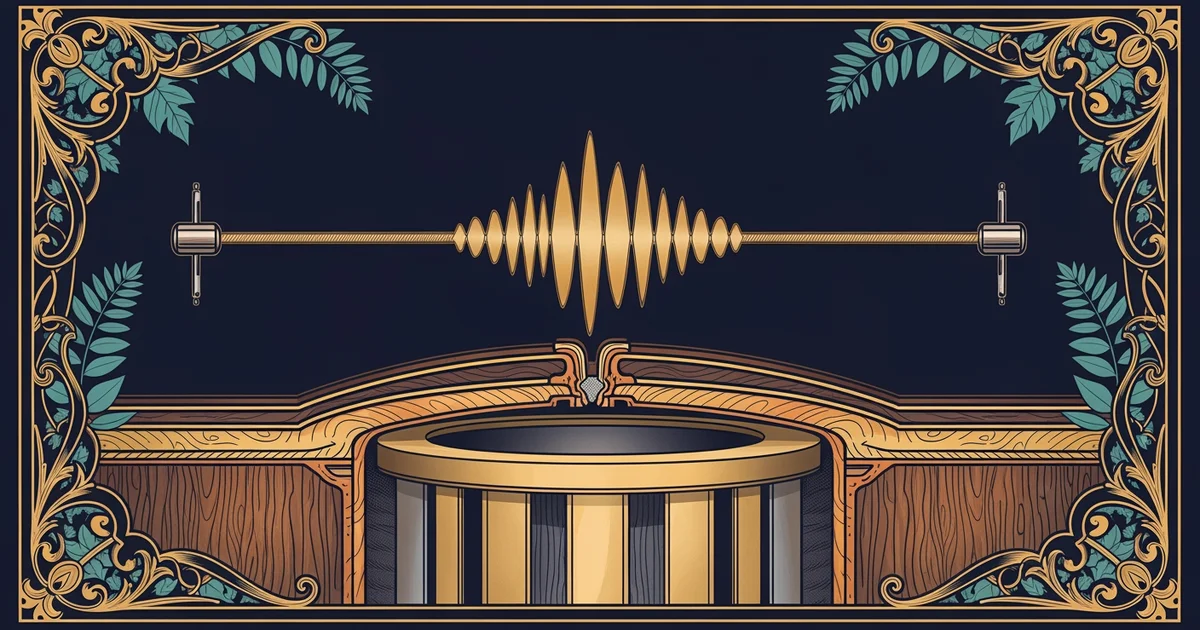
When a string vibrates, it does not move as one simple, straight line from end to end. Instead, the string divides itself into smaller segments that vibrate simultaneously at different speeds. The entire length of the string creates the lowest and loudest note, which musicians call the fundamental frequency. While this main vibration happens, the string also vibrates in halves, thirds, and quarters at the same time. These smaller, faster vibrations produce higher pitches that blend into the main note to define its specific tone color. Without these extra layers of sound, every instrument would sound like a flat, boring electronic beep.
Think of a vibrating string like a large, heavy rope tied to two sturdy wooden posts. If you shake the rope, you might create one large wave that travels the full length of the span. If you shake your hand faster, you can create two smaller waves that bounce back and forth between the posts. You can even create three or four smaller waves if you move your hand with enough speed and precision. Every one of these waves exists on the rope at the same time, adding complexity to the movement. The string behaves exactly like this, creating a rich stack of sounds that our ears perceive as a single, musical note.
Understanding the Harmonic Series
This predictable stack of higher frequencies is known as the harmonic series, which provides the blueprint for musical harmony. The first harmonic is the fundamental, while the second harmonic vibrates at twice the frequency. The third harmonic vibrates at three times the speed, and the fourth at four times the speed. This mathematical relationship continues upward, creating a ladder of pitches that always sound pleasant when played together. Because these frequencies share a common mathematical root, our brains easily group them into one cohesive musical sound.
Musicians often describe these additional layers as overtones, which give each instrument its distinct personality. A trumpet sounds bright and piercing because it emphasizes high-frequency harmonics, while a flute sounds soft because it lacks those sharp, upper layers. You can see how different instruments distribute this energy in the following table:
| Instrument | Dominant Harmonic | Sound Quality Description | Primary Use Case |
|---|---|---|---|
| Flute | Fundamental | Pure, hollow, and soft | Classical melodies |
| Electric Guitar | Mixed Harmonics | Bright, biting, and sharp | Rock and pop leads |
| Cello | Low Harmonics | Warm, deep, and resonant | Orchestral bass |
By adjusting how a string is plucked or how air flows through a tube, players can change which harmonics are loudest. This control allows a musician to shape the texture of their sound in real time. When you listen to a recording, your brain is actually decoding these hidden layers to tell the difference between a piano and a violin.
Key term: Harmonics — the series of higher frequency vibrations that occur naturally above a fundamental note to create the specific tone color of an instrument.
Understanding these layers helps you realize that a single musical note is actually a complex chord. When you learn to listen for these subtle overtones, you begin to hear the true mechanics of how music is built. This knowledge transforms your listening experience from passive hearing into active, analytical appreciation of the art.
The unique texture of every musical sound comes from the specific blend of higher frequency harmonics that vibrate alongside the main fundamental note.
But what happens to these vibrations when the sound begins to fade away after the initial strike?