
String Instrument Mechanics
When you pluck a guitar string, the vibration creates a musical note that rings out clearly. You might wonder how a simple piece of metal or nylon produces such a precise sound. The secret lies in the physical properties of the string and how much force pulls it tight. Every string instrument relies on this basic principle to define the notes you hear during a performance.
The Physics of String Tension
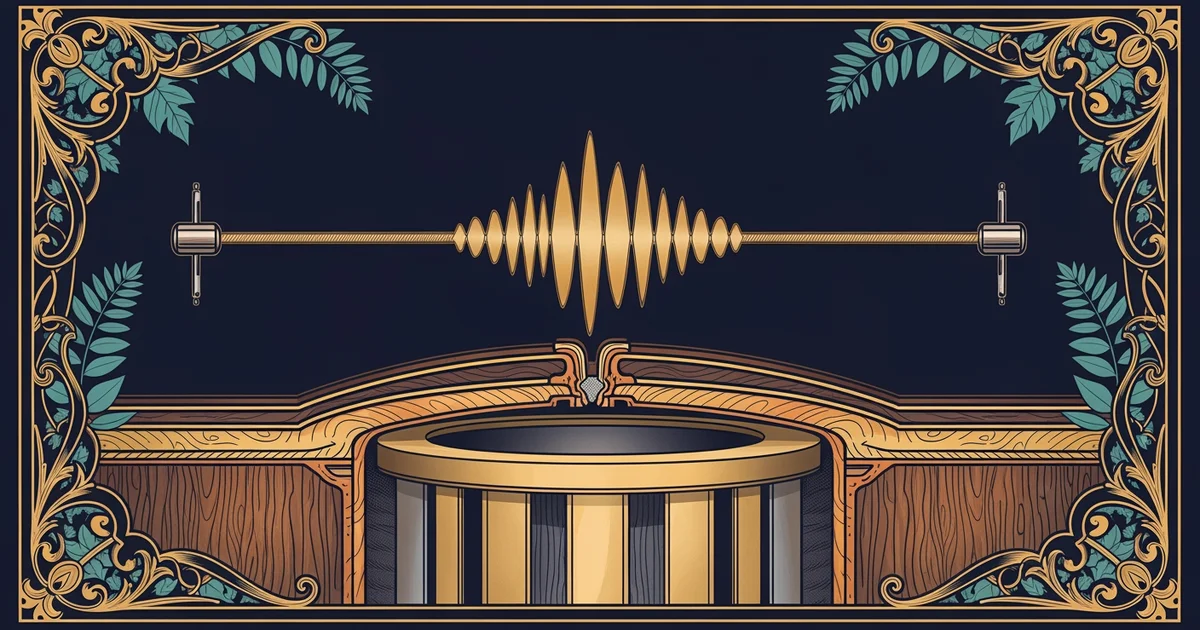
To understand how strings create sound, you must consider the role of tension. Tension is the pulling force applied to a string that keeps it straight and tight across the instrument. When you turn a tuning peg, you increase the tension, which forces the string to vibrate at a faster rate. A tighter string completes more cycles per second, which your ears perceive as a higher pitch. Think of it like a garden hose that is stretched across a yard. If the hose is loose and sagging, it does not hold a firm shape. If you pull the hose until it is very tight, it becomes rigid and reacts quickly to any movement. A string functions in a similar way, where the tightness dictates how fast the energy travels back and forth along its length.
Key term: Tension — the physical force applied to a string that determines how tightly it is pulled between two fixed points.
Once the string is under tension, its mass and length also influence the final sound. A thicker string has more mass, which makes it move more slowly than a thin string. This is why the lowest strings on a bass or guitar are much heavier than the high strings. Even if you apply the same amount of tension to both, the heavy string will vibrate slower because it has more weight to move. The combination of these three factors—tension, mass, and length—allows musicians to create a full range of musical notes. You can adjust the tension to fine-tune the pitch, but the physical construction of the string sets the overall range of the instrument.
Measuring Vibration and Pitch
When you change the tension, you are essentially changing how much energy is required to set the string in motion. A high-tension string requires a stronger pluck to start vibrating, but it produces a much clearer and sharper tone. If the tension is too low, the string will wobble loosely and produce a dull, buzzing sound instead of a musical note. This relationship is predictable and follows strict rules of physics that instrument builders use to design their creations.
| String Type | Tension Level | Pitch Tendency | Vibration Speed |
|---|---|---|---|
| Light Gauge | Low | Lower | Slower |
| Medium Gauge | Moderate | Mid-range | Moderate |
| Heavy Gauge | High | Higher | Faster |
Understanding these mechanics helps you predict how an instrument will behave before you even touch it. If you move from a light string to a heavy string, you must increase the tension to maintain the same pitch. This is why professional musicians often choose their strings based on the specific sound they want to achieve. The mechanical properties of the instrument act as a foundation for every melody, harmony, and chord you hear in a song. By mastering the relationship between these physical forces, you gain a deeper appreciation for how instruments transform simple motion into complex art.
The pitch of a string instrument is determined by the balance of tension, mass, and length acting upon the vibrating string.
The next Station introduces air column resonance, which determines how hollow bodies amplify these string vibrations.