
Vibration and Frequency
A guitar string hums with life when you pluck it, but have you considered why that movement creates a specific musical note? The secret lies in the way physical energy turns into the precise patterns of sound we perceive as music.
Understanding Cycles and Pitch
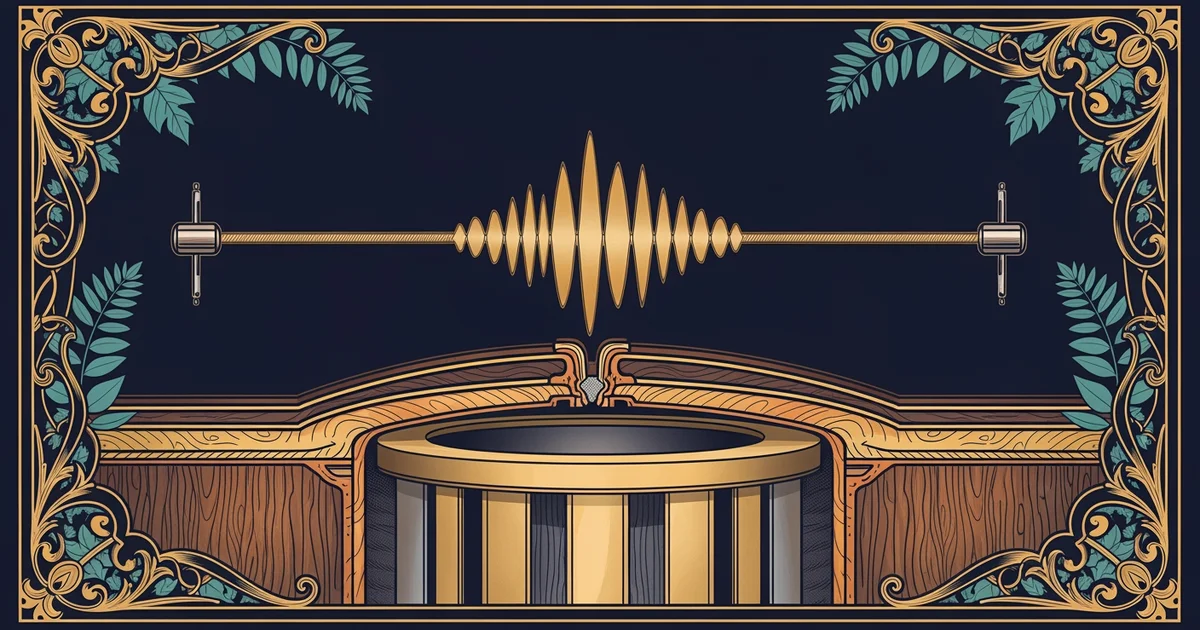
When you pluck a string, it moves back and forth in a rapid, repeating motion. This motion is called a vibration, and it serves as the foundation for all musical sound. Each complete back-and-forth movement is known as a cycle. The speed of these cycles determines the pitch you hear. If the string vibrates quickly, the cycles happen in rapid succession, producing a high-pitched sound. If the string vibrates slowly, the cycles occur less often, resulting in a low-pitched tone. Think of this like a runner circling a track. The faster the runner completes each lap, the more laps they finish in a single minute. In sound, the number of cycles completed in one second is called the frequency. We measure this frequency in units that tell us how many times the air pressure pulses against our ears every second.
Connecting Frequency to Musical Notes
To see how this works in practice, imagine the strings on a standard acoustic guitar. Each string has a different thickness and tension, which changes how fast it can vibrate. A thicker string has more mass, so it moves more slowly and creates a lower frequency. A thinner string moves with greater ease, leading to a higher frequency and a higher pitch. Musicians use tuning pegs to adjust the tension of these strings, which directly changes the frequency of the vibration. When you tighten a string, you force it to complete more cycles per second, effectively raising the pitch. This relationship is consistent across almost every acoustic instrument. Whether you are playing a piano, a violin, or a flute, you are simply manipulating the rate of vibration to create the notes you desire.
Comparing Vibration Rates
To visualize how different frequencies create distinct musical experiences, consider the following table of common vibration characteristics:
| Pitch Type | Vibration Speed | Musical Result | Physical Feel |
|---|---|---|---|
| Low Pitch | Slow Cycles | Bass Notes | Heavy rumble |
| Mid Pitch | Medium Cycles | Middle Notes | Balanced tone |
| High Pitch | Fast Cycles | Treble Notes | Sharp clarity |
This table shows that as the number of cycles increases, the nature of the sound changes from a deep, heavy rumble to a sharp, clear tone. You can think of this like an engine in a car. A slow, idling engine produces a low-frequency hum, while a racing engine produces a high-frequency whine. The physical movement of the parts inside the engine dictates the sound you hear, just as the vibration of a string dictates the note you hear on a guitar.
The Role of Air Pressure
Beyond the instrument itself, these vibrations must travel through the air to reach your ears. As the string vibrates, it pushes against the air molecules surrounding it. This creates a series of ripples, similar to what you see when a stone hits a pond. These ripples are actually waves of changing air pressure. Your ears detect these pressure changes and send signals to your brain. Your brain then interprets these signals as musical pitch. Without the air to carry these vibrations, the sound would never reach the listener. The frequency of the string is perfectly mirrored by the frequency of the air waves. This means the number of cycles per second remains constant as the sound moves from the instrument to your ears. This consistency allows us to identify the same note regardless of how far away the instrument is from where we are standing.
Musical pitch is simply the human perception of how fast a physical object vibrates every second.
Next, we will explore how energy moves from your fingers into the instrument to start this process.