
Air Column Resonance
When you blow air across the opening of a glass bottle, you hear a clear, steady tone that changes if you add water. This simple act reveals the hidden physics of wind instruments, where the air inside the tube acts as the true source of sound. While the player provides the energy, the shape and length of the internal space determine the specific pitch you hear. Understanding how this air behaves inside a confined space is the secret to mastering every woodwind and brass instrument.
The Nature of Standing Waves
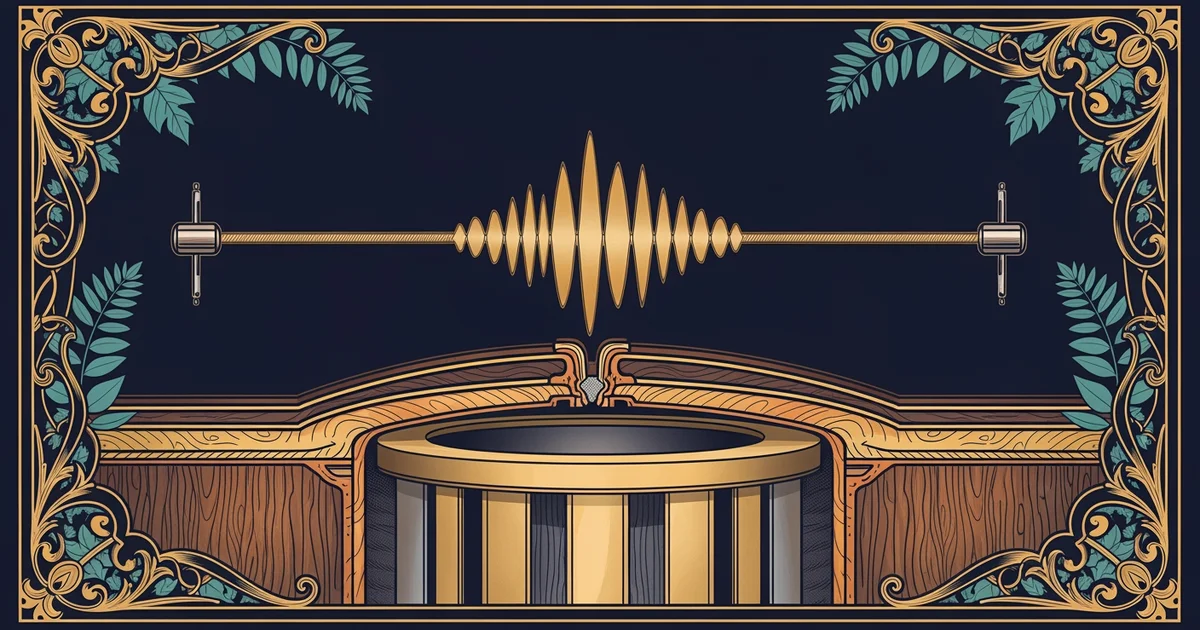
Inside any wind instrument, the air behaves like a living, vibrating structure that reacts to your breath. When you blow into the instrument, your air creates a pressure wave that travels down the tube until it hits an opening. This wave reflects off the end of the tube and travels back toward the player, meeting the incoming air. When the timing is perfect, these opposing waves overlap to create a standing wave, which is a stable pattern of motion. Think of this like a jump rope held by two people, where the rope seems to stay in one place while moving rapidly. The air inside the tube does not move forward like a breeze, but instead pulses in a fixed pattern that our ears perceive as a single, musical note.
Nodes and Antinodes in Tubes
To control the pitch, the player must change where these waves form by opening or closing specific holes. Within the standing wave, there are points called nodes, where the air remains perfectly still and does not vibrate at all. Conversely, there are spots called antinodes, where the air particles move with the greatest amount of force and displacement. By opening a hole in the side of a flute, the player forces a new node to form at that exact location. This effectively shortens the path the air can travel, which forces the wave to vibrate faster and produce a higher pitch. You can visualize this as a series of invisible anchors inside the tube that hold the sound wave in place.
Key term: Standing wave — a stationary vibration pattern created when two identical waves move in opposite directions and overlap.
The Physics of Resonance
Resonance occurs when the frequency of your breath matches the natural vibrational frequency of the air column. Just as a child on a swing needs a push at the right moment to go higher, the air needs consistent energy to sustain its oscillation. If you blow too hard or too soft, the air column fails to lock into its resonant state, and the sound becomes breathy or unstable. Every instrument has a specific length that dictates which frequencies it can naturally amplify and sustain. This is why a longer tube, such as a tuba, creates a deep, low rumble, while a short tube, like a piccolo, produces a high, piercing whistle.
| Instrument | Tube Length | Pitch Range | Resonance Style |
|---|---|---|---|
| Piccolo | Very Short | Very High | Fast vibration |
| Clarinet | Medium | Mid-range | Complex waves |
| Tuba | Very Long | Very Low | Slow vibration |
Shaping the Sound Column
The way we manipulate these air columns allows for the incredible variety of sounds we hear in an orchestra. When a player presses a key, they are not just blocking a hole, but are actively redefining the geometry of the instrument. This adjustment shifts the location of the nodes and antinodes, allowing the musician to navigate the scale with precision. Because the air column acts as a physical filter, it highlights certain frequencies while silencing others, giving each instrument its unique voice. Mastering this connection between breath and geometry turns a simple tube into a tool for complex musical expression.
Musical pitch is determined by the physical length of the vibrating air column and the precise placement of nodes within that space.
The next Station introduces percussion dynamics, which determines how impact force dictates the character of sound.