
Energy Transfer Basics
Imagine pressing a piano key and watching the hammer strike the string inside the wooden case. That simple movement is the start of a complex chain reaction that produces every musical note. You provide the physical effort, which the instrument translates into a precise, vibrating sound wave. This process of moving energy from your body into the air is the foundation of all musical performance. Understanding how this movement happens helps you see why different instruments create such distinct and unique sonic textures.
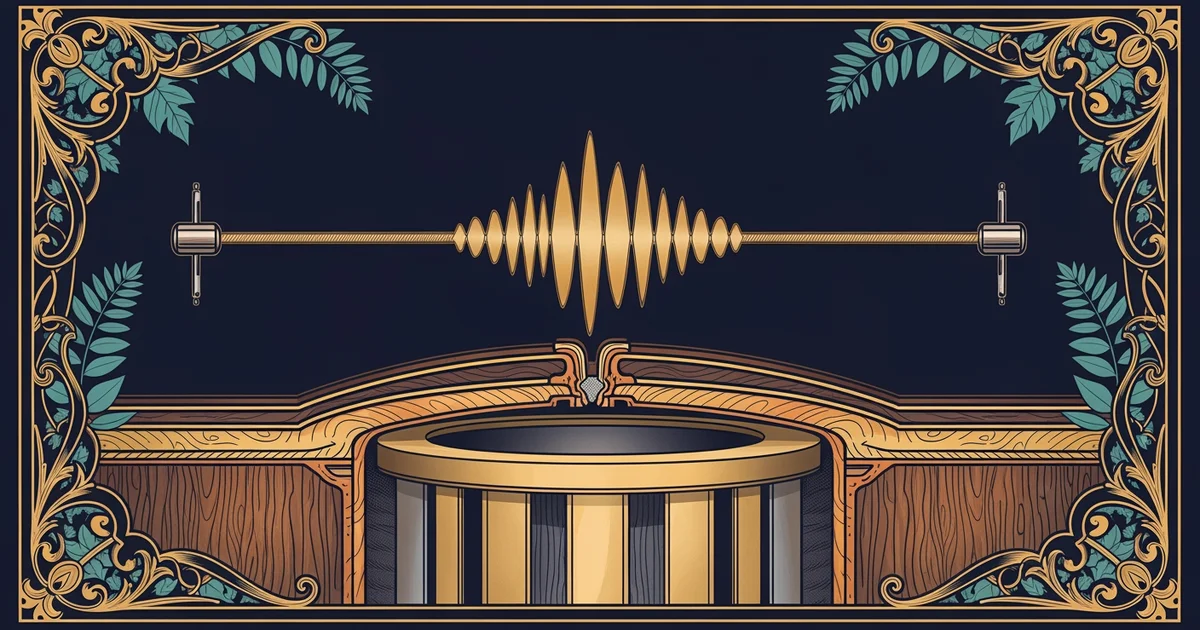
The Mechanics of Kinetic Energy
When you interact with an instrument, you are performing a basic act of kinetic energy transfer. Kinetic energy is the energy of motion that you generate when you strike, pluck, or blow into a device. Your fingers or breath act as the initial source of power that sets the internal components into motion. Think of this like pushing a heavy shopping cart in a busy grocery store aisle. You apply force to the handle, which transfers your energy into the cart to make it roll forward across the floor. In music, your force moves the parts of the instrument, which then forces the surrounding air to move in waves.
Key term: Kinetic energy — the form of energy that an object or a person possesses due to its motion.
Once the instrument receives your energy, it must convert that physical motion into a steady vibration. This conversion is essential because simple physical movement does not create sound on its own. The instrument acts as a bridge that takes your short, sharp burst of energy and sustains it. By forcing the material to vibrate at a specific rate, the instrument ensures the energy does not just disappear. Instead, it transforms your effort into a consistent wave that travels through the room toward the listener.
Moving Energy Through the Air
After the instrument begins to vibrate, it needs a way to push that energy into the atmosphere. This is where the body of the instrument functions like a megaphone for the internal vibrations. The vibrating part, such as a string or a reed, is often too small to move enough air alone. The larger body of the instrument amplifies these tiny movements by vibrating in sympathy with the source. This creates a larger surface area that can push against the air molecules with much greater force.
To see how this energy moves, consider these three stages of physical transfer:
- Your physical input provides the initial energy that starts the mechanical motion within the instrument.
- The internal components vibrate to turn your blunt force into a structured and rhythmic wave pattern.
- The outer shell of the instrument transfers these vibrations to the air to create audible sound.
Each stage is necessary to ensure that the energy you provide reaches the ears of an audience. If any part of this chain fails, the sound will be weak, muffled, or completely absent.
Energy Efficiency and Sound Quality
Not all of the energy you put into an instrument makes it into the air as sound. Some of the energy is lost to friction or heat as the parts rub against each other. High-quality instruments are designed to minimize this loss so that more of your effort becomes music. When you play efficiently, you allow the instrument to do the heavy lifting of moving the air. This balance between your effort and the instrument design defines the character of the sound you hear every day.
| Instrument Type | Energy Source | Primary Vibrator | Air Interface |
|---|---|---|---|
| Stringed | Finger pluck | Metal string | Wooden body |
| Percussion | Hand strike | Stretched skin | Hollow shell |
| Wind | Lung breath | Thin reed | Metal column |
This table shows how different instruments manage the same basic energy transfer using different physical designs. Each type of instrument relies on a specific interface to bridge the gap between your body and the surrounding air. By changing how you apply your energy, you can control the volume and tone of the resulting sound waves.
Musical sound is simply the result of your physical energy being captured and amplified by an instrument to create waves in the air.
Now that we understand how energy moves, we can explore how string instruments use tension to control the pitch of those vibrations.