
The Role of Amplification
A quiet acoustic guitar produces a thin sound that barely fills a small room. When the same strings vibrate over a hollow wooden body, the sound becomes rich and loud. This transformation happens because the instrument uses clever physics to project energy into the air. You might notice that striking a guitar string alone creates almost no volume at all. The string is too thin to push enough air molecules to reach your ears. It requires a partner to turn those tiny vibrations into a sound we can hear. This process is known as acoustic amplification and it relies on the shape of the instrument.
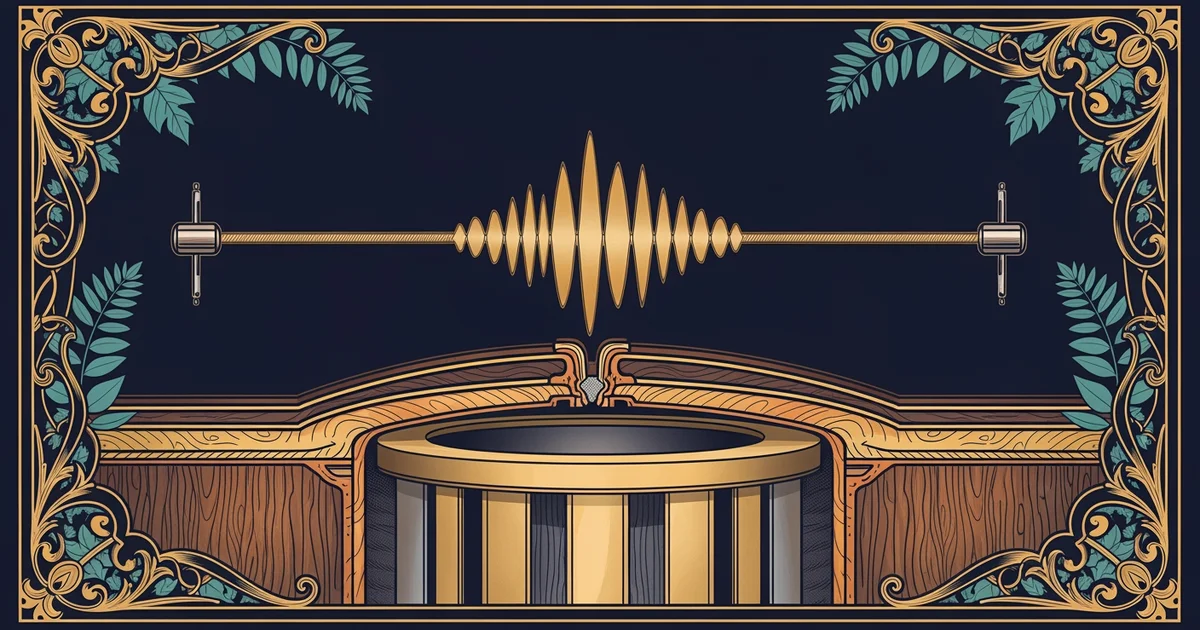
The Function of Resonance Chambers
Most stringed instruments feature a hollow space known as a resonance chamber to boost volume. This space acts like a megaphone for the vibrations created by the strings. When the string vibrates, it sends energy through the bridge into the wooden top. The top of the instrument vibrates in sympathy with the frequency of the string. This larger surface area pushes against more air than the thin string ever could. Think of it like a megaphone at a rally that allows your voice to carry across a large crowd. Without the megaphone, your voice stays trapped near your mouth. The chamber captures the sound energy and forces it to travel outward toward the listener.
Key term: Resonance — the process where an object vibrates at its natural frequency because of an external force.
How Air Movement Creates Volume
Sound is simply a wave of pressure moving through the air around us. A string by itself creates a wave that is very weak and narrow. By attaching that string to a large wooden box, the vibration spreads out. The air inside the box also begins to move in a coordinated way. This air eventually pushes out through the sound hole to join the main wave. The total volume increases because the instrument moves a much larger mass of air. This is the same reason why a grand piano sounds much louder than a small ukulele. The piano has a massive soundboard that acts as a giant speaker for every single note.
| Instrument Part | Physical Role | Effect on Sound |
|---|---|---|
| String | Initial source | Creates frequency |
| Bridge | Energy transfer | Moves vibrations |
| Soundboard | Surface area | Pushes large air |
| Hollow body | Air chamber | Boosts low tones |
We can summarize the way these parts work together to create music:
- The player strikes a string to create a specific pitch through rapid movement.
- The bridge carries this kinetic energy down into the body of the instrument.
- The large wooden surface vibrates to push a significant amount of air molecules.
- The internal air chamber reinforces these waves to create a full, rich tone.
This sequence ensures that the initial energy from your finger does not simply fade away. Instead, the instrument captures and multiplies that energy until it fills the entire room. Every material used in the construction of the body changes the final quality of the sound. Harder woods tend to reflect sound waves more sharply than softer, porous materials. This is why professional instruments are crafted with such precise attention to their internal geometry. The goal is always to maximize the efficiency of the energy transfer from string to air.
A hollow instrument uses its large surface area and internal air to turn tiny string vibrations into audible sound waves.
But how do these vibrations create the complex patterns we recognize as musical notes?
Want this with sources you can check?
Premium Learning Paths for Music & Performing Arts are researched against open-access libraries — PubMed, arXiv, government databases, and more — with their distinctive claims cited to real sources and independently checked.
See what Premium includes