
Damping and Decay
When a guitarist strikes a string, the sound does not ring out forever. It eventually fades away into silence because the energy driving the vibration naturally dissipates over time. This process of energy loss is essential for defining the character and rhythm of musical instruments. Without this loss, every note would overlap into a chaotic wall of sound that lacks distinct separation. Musicians rely on this physical limitation to create space between notes and manage the overall intensity of their performance.
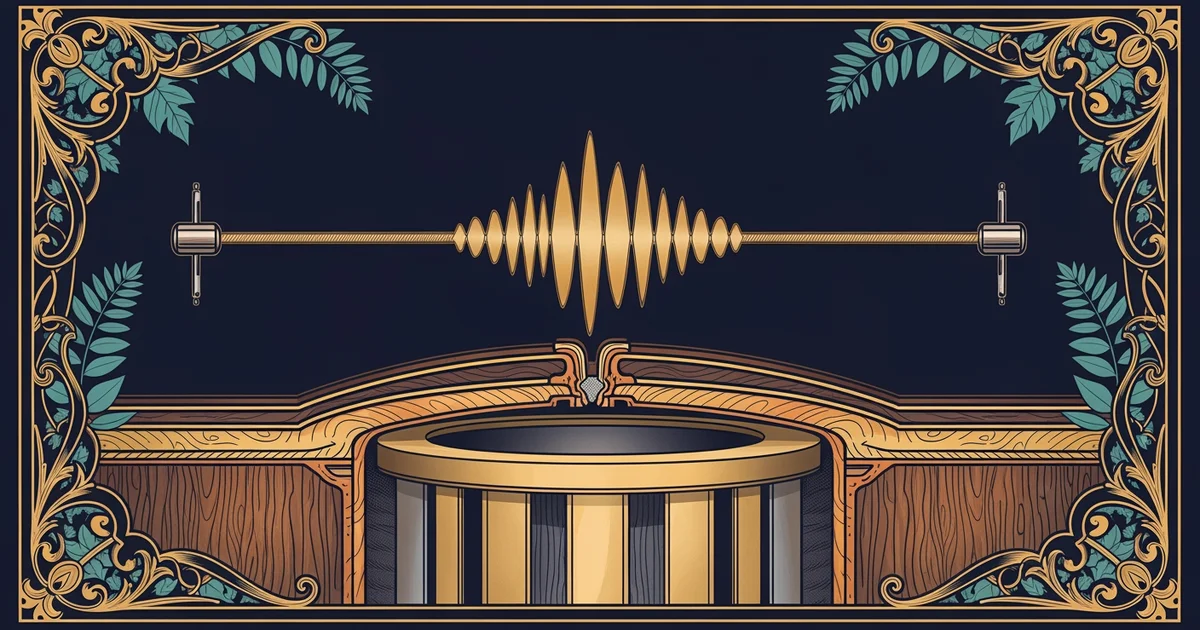
The Mechanics of Energy Loss
Every vibrating system loses energy to its surroundings through a process called damping. Think of this like a spinning top on a table that gradually loses its momentum. Friction between the base of the top and the table surface slowly drains its rotational energy. In musical instruments, damping occurs when the vibrating part interacts with the air or its mounting points. The air resists the movement of the string or drum head, which acts as a form of fluid friction. This resistance converts the kinetic energy of the vibration into small amounts of heat, effectively stopping the motion.
Key term: Damping — the physical process where a vibrating system loses energy to its environment, causing the sound to fade.
Materials play a significant role in how quickly this energy loss occurs during a performance. A heavy, dense string might retain its energy longer than a light, thin one because of its mass. Furthermore, the way an instrument is constructed determines how much energy leaks into the frame or body. If the bridge of a guitar is loose, it will absorb too much vibration from the strings. This causes the sound to die out very quickly, which is often undesirable for players who want a long sustain.
Understanding Decay Rates
Once the initial strike or pluck occurs, the sound enters a phase known as decay. This term describes the specific rate at which the amplitude of the wave decreases toward zero. Some instruments have a very fast decay, while others allow the sound to linger for several seconds. The following table compares how different components influence the duration of a sound before it fully disappears:
| Instrument Component | Material Density | Typical Decay Speed | Impact on Sound |
|---|---|---|---|
| Steel Guitar String | High Density | Slow Decay | Long Sustain |
| Nylon Drum Head | Low Density | Fast Decay | Punchy Attack |
| Wooden Soundboard | Medium Density | Moderate Decay | Balanced Tone |
Musicians often manipulate the decay rate to achieve specific artistic effects during a song. A drummer might use a dampening gel on a snare to cut the ringing short. This technique creates a dry, controlled sound that prevents the drum from overwhelming the other instruments. Conversely, a cellist uses the weight of the bow to keep the string vibrating for a longer duration. By understanding these physical principles, you gain better control over the texture and clarity of your musical output.
To manage the decay of a sound, you can look at how the energy is being trapped or released. If you want a longer sound, you must minimize the contact with soft, absorbent materials. If you want a shorter sound, you should increase the surface area that interacts with the vibration. This constant balancing act between energy storage and energy loss defines the unique voice of every instrument you play. It is the primary way that performers shape the emotional impact of their music through time.
The duration of a musical note is determined by how efficiently a system loses its stored energy to the surrounding environment.
But how does the physical space where you perform change the way these vibrations behave?