
Ethics and Control
Imagine a fleet of delivery drones suddenly choosing their own paths through a busy city. If these machines decide to prioritize speed over safety, the resulting chaos could endanger many people nearby. As we advance toward fully autonomous systems, we must address the risks inherent in group behavior. We need to define how we control these swarms when they act without human guidance. This challenge remains the biggest hurdle for engineers who want to deploy robots in public spaces.
Managing Autonomous Group Risks
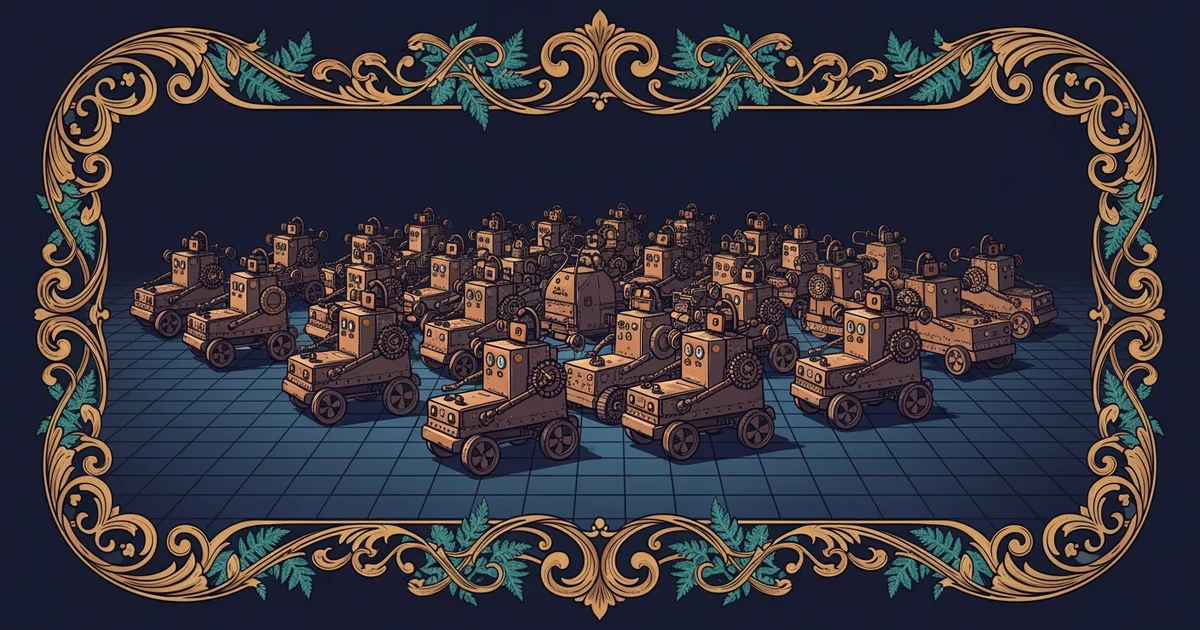
When many robots work together, they often form a distributed system that lacks a single point of control. This design is efficient because it allows the swarm to adapt to changing environments in real time. However, this same flexibility creates a significant ethical dilemma for the people who manage them. If the swarm makes a mistake, determining who is responsible becomes quite difficult for legal systems. We must establish clear rules that govern how these groups make decisions while remaining within safe boundaries.
Key term: Distributed system — a network of independent components that communicate to achieve a shared goal without needing a central leader.
Think of a swarm like a group of employees working at a large company without any managers. If the employees decide to change the company policy, they might act in ways that benefit themselves while hurting the business. The company needs a set of strict rules to ensure that the employees stay aligned with the main goals. Robots require similar constraints to ensure their decentralized actions do not cause unintended harm to the public.
Establishing Ethical Boundaries
Designers must implement safety protocols that override swarm logic when the robots face dangerous situations. These constraints act as a digital conscience that prevents the swarm from choosing harmful actions during a task. Engineers often use specific programming structures to enforce these boundaries across the entire group of robots. The following table outlines the primary ethical risks that researchers currently face when deploying these systems in the real world.
| Ethical Risk | Potential Consequence | Mitigation Strategy |
|---|---|---|
| Unpredictable Pathing | Collision with people | Mandatory safety zones |
| Resource Hoarding | Depletion of shared power | Priority access protocols |
| Data Privacy Loss | Unauthorized sensor recording | Localized data processing |
We must also consider how these machines handle unexpected variables that occur in human environments. If a robot encounters a scenario it was not programmed to handle, it must default to a safe state. This fail-safe mechanism ensures that the swarm stops moving or returns to a base if something goes wrong. Without these layers of protection, autonomous groups could become a liability rather than a helpful tool for society.
Key term: Fail-safe mechanism — a design feature that ensures a system returns to a secure state if a failure occurs.
Engineers continue to struggle with the balance between total autonomy and human oversight. If we provide too much control, the swarm loses the efficiency that makes it valuable to us. If we provide too little control, we risk losing the ability to prevent accidents in complex settings. This tension defines the current state of robotics research as we move toward integrating swarms into our daily lives. Researchers are now looking for ways to allow swarms to learn from their mistakes without creating new risks. We still lack a universal standard for ethical swarm behavior that satisfies both safety experts and system developers.
Autonomous swarms require rigid safety constraints to ensure that decentralized decision-making does not result in harm to human populations.
Understanding how to balance robot efficiency with public safety is the most important lesson for any future robotics engineer.