
Future Trends
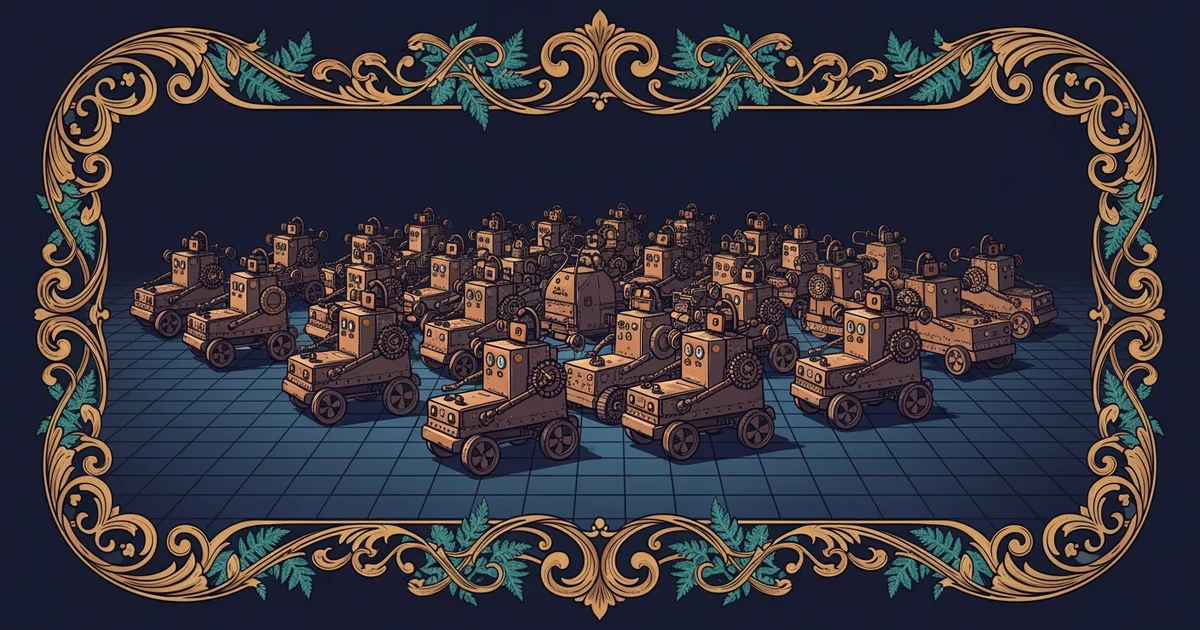
Imagine a fleet of tiny robots clearing debris from a disaster zone while communicating like a school of fish. These machines do not wait for human commands because they share information through a collective network of sensors. Future advancements will allow these systems to perform tasks that are currently impossible for large, single robots to manage alone. By scaling down individual size and scaling up group intelligence, engineers create robust systems that adapt to changing environments in real time. This evolution marks a shift from simple automation toward highly flexible, distributed intelligence that mimics natural biological behaviors.
The Evolution of Distributed Systems
To understand how these swarms grow, we must look at how they manage information across large groups. Early models relied on rigid patterns, but future trends favor emergent behavior, where complex global patterns arise from simple local rules. Think of this like a busy city traffic flow where drivers move smoothly without a central stoplight controller. Each driver reacts only to the cars immediately nearby, yet the entire city experiences a coordinated, efficient movement. As technology improves, these swarms will integrate advanced machine learning to refine their local rules without needing constant updates from a central server. This allows for rapid deployment in unpredictable settings where communication signals might be weak or blocked.
Key term: Emergent behavior — the phenomenon where complex, intelligent patterns arise from the simple local interactions of many individual agents.
Future Industrial Applications
As we look forward, two major industries stand to gain the most from this shift in robotic coordination. First, the agricultural sector will use swarms to manage crops with extreme precision. Instead of large tractors, thousands of tiny robots will monitor soil health and remove weeds individually. Second, the logistics industry will adopt swarm tech to manage massive warehouse inventories. These robots will navigate tight spaces to sort goods faster than any human or traditional automation system could achieve. The following table highlights how different sectors will utilize these autonomous swarms to gain operational efficiency.
| Industry | Primary Task | Benefit of Swarm Tech |
|---|---|---|
| Farming | Crop care | Reduces chemical use |
| Logistics | Sorting goods | Increases throughput |
| Mining | Data mapping | Improves worker safety |
These applications show that swarm technology is moving past the experimental phase and into practical, real-world utility. By focusing on decentralized control, engineers can ensure that if one robot fails, the entire mission does not collapse. This resilience is the backbone of future robotic reliability in high-stakes environments like underwater exploration or deep space construction. We are moving toward a future where robots operate as a single, fluid organism rather than a collection of separate tools.
- Precision agriculture will utilize swarms to target specific plants, which drastically reduces the need for broad-spectrum chemicals that often harm the local ecosystem.
- Autonomous logistics will rely on swarm coordination to manage warehouse traffic, ensuring that robots avoid collisions while maximizing the speed of package delivery cycles.
- Environmental monitoring will employ swarms to map large, dangerous areas, allowing researchers to collect data in places where human access is physically impossible or unsafe.
These improvements prove that the foundational question of our path is being answered through better connectivity. We no longer need a central leader because the collective intelligence of the swarm provides a stronger, more flexible solution for complex problems. By combining the lessons from previous stations on construction swarms and basic coordination, we see that the future is decentralized. This approach creates a system where the group is always smarter than the sum of its parts. As we integrate these technologies, we must ensure that the rules governing these swarms remain transparent and safe for human interaction. The path ahead requires us to balance this technical power with careful oversight to maintain control over such vast, autonomous networks.
Future swarm technology will shift from rigid programming to flexible, decentralized systems that solve complex industrial problems through collective local intelligence.
The next phase of our journey explores the critical ethics and control measures required to manage these powerful autonomous systems safely.