
Search and Rescue
When a massive earthquake struck the city of Christchurch in 2011, rescue teams faced unstable buildings that were too dangerous for human entry. This real-world crisis highlights the need for automated systems that can explore hazardous rubble without risking human lives. The challenge is to deploy a group of small machines that act as a single unit to map the area. This approach relies on swarm intelligence, a concept first introduced in Station 1, where decentralized agents cooperate to achieve collective goals.
Designing Effective Search Strategies
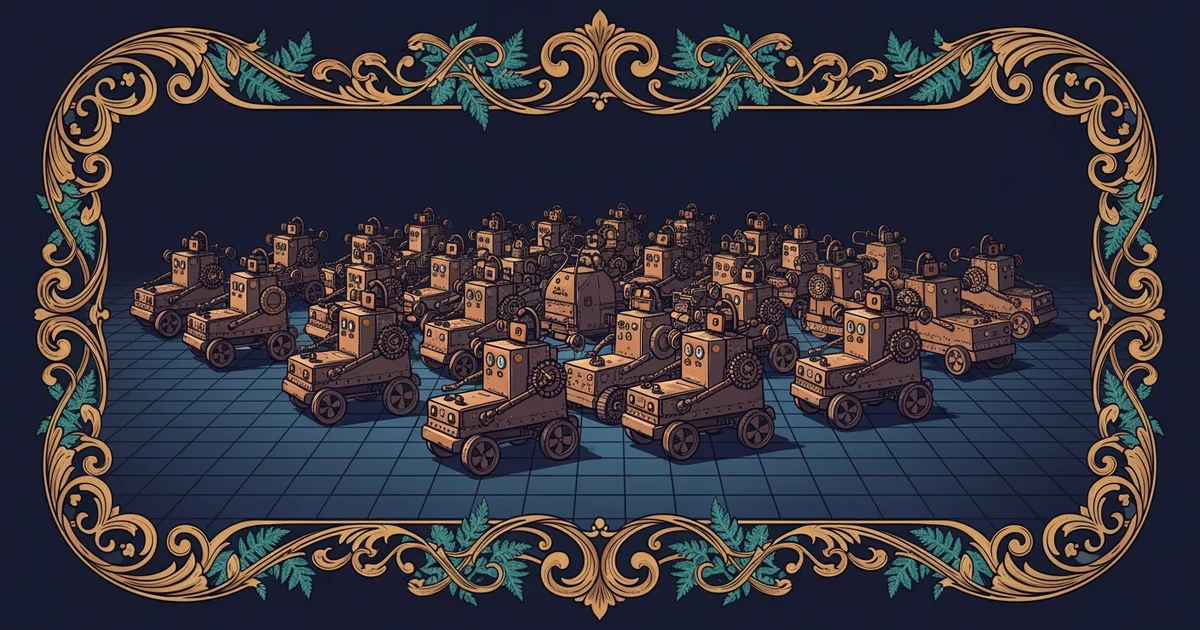
To navigate a disaster site, a swarm must distribute itself efficiently across the unknown terrain to maximize coverage. Each robot uses sensors to detect obstacles while sharing its location with its immediate neighbors. This process is similar to a group of delivery drivers who divide a large city into zones to ensure every package arrives on time. By dividing the labor, the swarm avoids overlapping efforts and ensures that no area remains unsearched. The robots maintain a specific distance from each other to form a dynamic grid that expands as they move deeper into the ruins.
Key term: Swarm intelligence — the collective behavior of decentralized, self-organized systems that work together to solve complex problems without a central leader.
These robots must also handle unexpected changes in the environment, such as shifting debris or blocked pathways. If one unit fails, the remaining robots must adjust their positions to cover the gap in the search grid. This flexibility is essential for maintaining a reliable map of the disaster site. The swarm follows a set of simple rules that govern how they interact with their peers and the environment. These rules allow the group to maintain its shape even when the terrain becomes difficult or unpredictable.
Coordinating Movements in Hazardous Zones
Coordinating a swarm requires a reliable way to process data from multiple sources simultaneously. The robots use distributed sensing to gather information about the environment and then relay that data to the rest of the group. This method ensures that the entire swarm has a consistent understanding of the disaster scene without needing a central server. The following list explains how the swarm manages information during the search process:
- Local communication allows robots to share their current coordinates with nearby peers to ensure they maintain proper spacing during movement.
- Dynamic path planning enables the swarm to update its route in real-time when sensors detect a new obstacle or a structural collapse.
- Collective mapping combines individual sensor inputs into a single, unified digital model that rescue teams can use to identify safe paths.
| Feature | Function | Benefit for Rescue |
|---|---|---|
| Proximity | Sensing | Prevents collisions |
| Messaging | Sharing | Updates the map |
| Feedback | Adjusting | Maintains coverage |
The table above shows how different features contribute to the overall success of the swarm. By balancing these functions, the robots can operate effectively in environments where visibility is low or communication signals are weak. This is an application of the robustness testing principles from Station 10, ensuring that the system remains functional even under extreme stress. As the robots move, they continuously refine their understanding of the site to provide the most accurate data for human rescuers. The ultimate goal is to create a seamless flow of information that translates into actionable insights for saving lives.
Coordinated swarm navigation relies on simple, local interactions to build a complex, global map of a dangerous site.
But this model breaks down when communication interference prevents robots from sharing their location data with the rest of the group.