
Human Impact on Caves
In 1999, visitors to the Lascaux cave complex inadvertently altered the delicate internal atmosphere by simply breathing, which triggered a rapid growth of invasive fungal colonies on the ancient walls. This event highlights how even minor human presence acts as a massive disruption to a stable, isolated environment that has existed for thousands of years. Just as a bank vault remains secure only when the seal stays intact, a cave system relies on its physical isolation to maintain its internal climate and structural integrity. When humans enter these spaces, they introduce heat, moisture, and foreign particles that the cave cannot naturally filter or process over time.
The Fragility of Subterranean Ecosystems
Human activity often causes physical damage that goes far beyond simple surface-level wear and tear on rock formations. When researchers or tourists walk through these sensitive networks, they often leave behind lint, skin cells, and bacteria that settle into the damp environment. These materials provide a sudden, concentrated food source for microorganisms that would otherwise struggle to survive in such nutrient-poor zones. This phenomenon functions like an accidental nutrient dump into a clear mountain lake, where the sudden influx of waste causes an algae bloom that chokes out native life. The resulting biological growth can chemically etch the limestone surfaces, permanently damaging delicate structures that took millions of years to form in silence.
Key term: Anthropogenic impact — the total sum of environmental changes caused by human activity, ranging from physical damage to chemical contamination of natural systems.
Beyond biological contamination, the physical act of exploring often leads to the direct destruction of fragile mineral deposits. Many stalactites and stalagmites are composed of thin, brittle layers that shatter under the weight of a heavy boot or a careless hand. Once these formations break, they cannot regrow in a human timeframe, as the mineral-rich water drips at an incredibly slow pace. This loss of structural variety changes how air and water move through the chambers, effectively altering the very environment that created the cave in the first place. The damage is irreversible, turning a complex geological masterpiece into a barren, hollowed-out shell of its former self.
Pollution Risks to Underground Water Tables
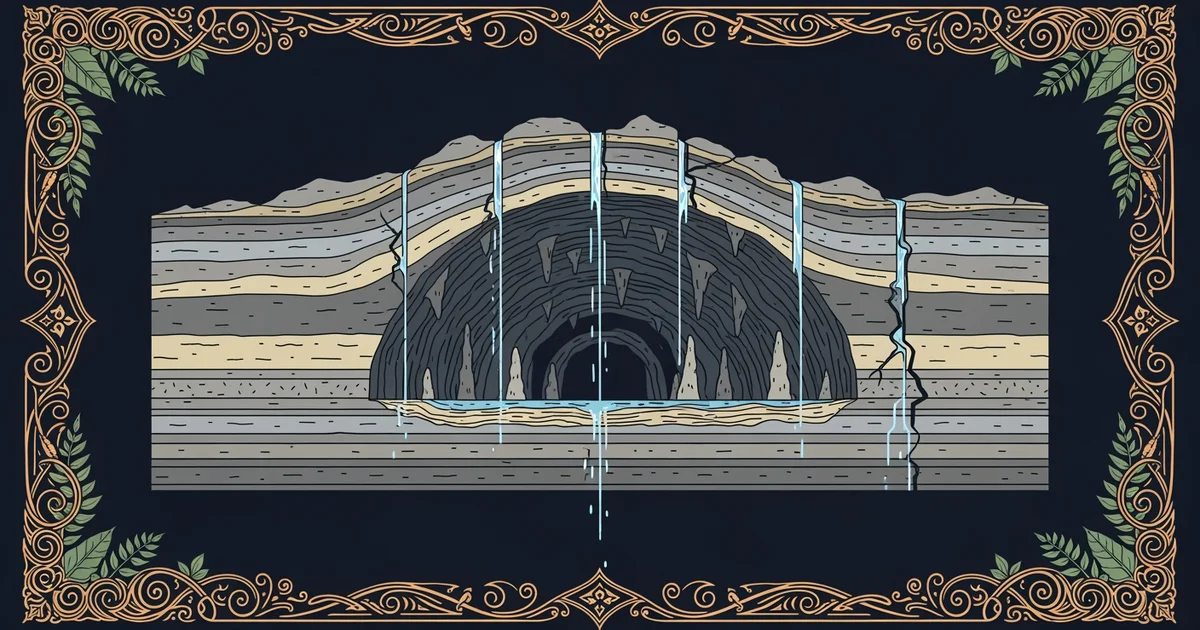
Human impact reaches its most dangerous level when surface pollutants seep into the subterranean water tables that feed cave systems. Chemicals from industrial runoff, agricultural fertilizers, or household waste can easily travel through cracks in the surface rock and settle into the groundwater. These pollutants do not just sit there; they dissolve the surrounding limestone at an accelerated rate, which weakens the ceiling and floor of the cave. This process is similar to pouring acid into a concrete foundation, where the structural strength of the building slowly vanishes as the material dissolves into a liquid state. This hidden degradation creates significant collapse risks for the entire cave network.
| Pollutant Type | Primary Source | Effect on Cave Stability |
|---|---|---|
| Industrial oils | Factories/Roads | Coats surfaces, blocks water flow |
| Fertilizers | Farms/Lawns | Triggers rapid, damaging mold growth |
| Waste runoff | Septic systems | Introduces bacteria that erode limestone |
Managing these risks requires a strict understanding of how surface activities dictate the health of the deep underground. When we change the chemistry of the water entering the cave, we change the rate at which the cave evolves or collapses. Protecting these spaces involves limiting access and monitoring the water quality above the site to ensure that no harmful substances reach the delicate interior. We must treat these systems as closed loops where every single drop of water and every breath of air carries a lasting consequence for the future of the cave.
Human activities disrupt the delicate environmental balance of cave systems by introducing foreign nutrients and pollutants that accelerate structural decay and biological contamination.
But this model of human impact becomes much more complex when we attempt to map these networks without leaving a single trace behind.