
Erosion Management
During the 1930s, massive dust storms stripped the topsoil from the American Great Plains, turning productive farmland into a barren wasteland. This environmental disaster showed how quickly the earth loses its life-sustaining layer when protective cover is removed from the ground surface.
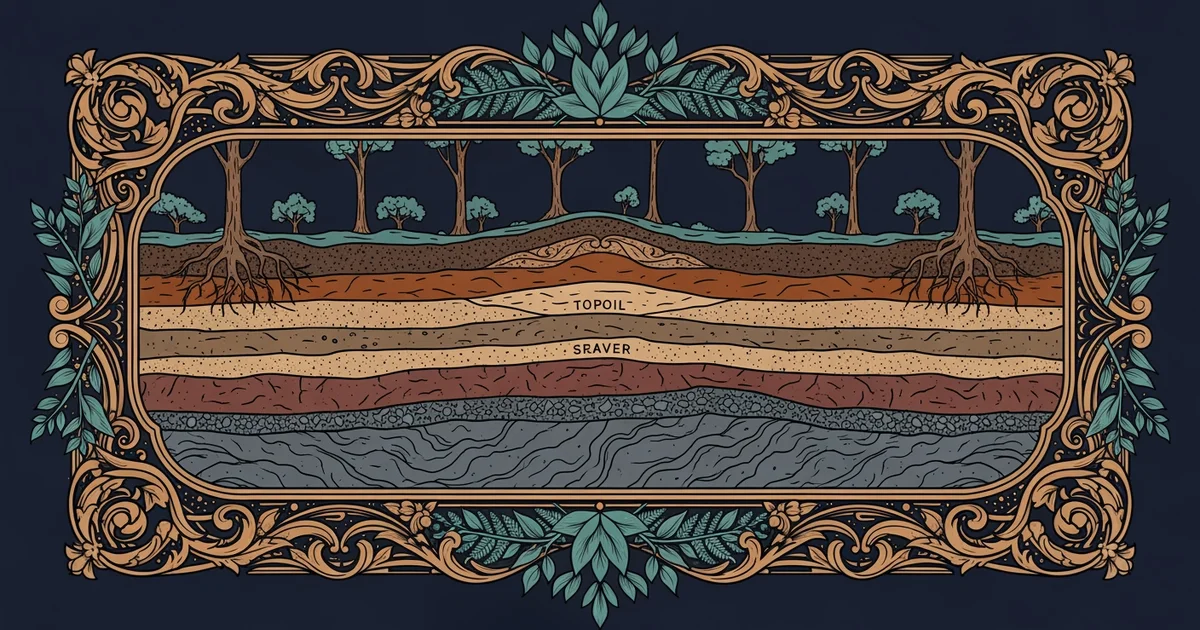
Strategies for Soil Protection
To prevent such loss, scientists use erosion management to keep soil anchored in its place despite wind or water forces. Think of your topsoil as a bank account where you deposit nutrients through organic matter and withdraw them through crop harvests or erosion. If you withdraw too much without replenishing the balance, the account eventually hits zero and leaves you with nothing. By using physical barriers and biological covers, we can stop the soil from moving away from the area where it is needed most. These strategies act like a lock on a vault, ensuring that the valuable resources remain secure within the field rather than washing into nearby streams.
Key term: Erosion management — the set of techniques used to prevent or reduce the loss of topsoil caused by wind, water, or human activity.
Effective management requires a layered approach that addresses the specific needs of the landscape. One primary method involves changing the physical shape of the land to slow down the speed of moving water. When water flows downhill at high speeds, it gains the energy to pick up soil particles and carry them away. By creating obstacles or changing the slope, we force the water to move slowly, allowing it to soak into the ground instead of carving deep channels into the earth. This process mimics the natural resistance provided by dense forests that once covered much of the land.
Implementation of Control Measures
Land managers often combine several techniques to ensure that the soil remains stable throughout the changing seasons. The following methods are frequently used to protect fields from severe weather events:
- Contour plowing involves planting crops in rows that follow the natural curves of the land, which creates mini-dams that capture water and prevent it from gaining speed.
- Cover cropping utilizes plants that grow during the off-season to provide a protective canopy, which shields the soil surface from the direct impact of heavy raindrops.
- Terracing reshapes steep slopes into a series of flat steps, effectively reducing the length of the incline to stop water from building up enough force to move soil.
These practices work together to maintain the integrity of the critical zone, which we first explored in the early stages of this path. By applying these methods, we ensure that the soil continues to regulate the global water supply as intended. The table below compares these common techniques based on their primary function and the type of erosion they target most effectively.
| Technique | Primary Function | Targets |
|---|---|---|
| Contour Plowing | Slows water flow | Water erosion |
| Cover Cropping | Protects surface | Wind and water |
| Terracing | Reduces incline | Water runoff |
Selecting the right strategy depends on the local climate and the specific slope of the terrain. A farmer in a flat, windy region might prioritize cover crops to stop soil from blowing away, while someone on a steep hillside would need terraces to keep the dirt from sliding downward. Each choice requires careful planning to ensure that the ecological balance of the area is maintained over the long term. Proper application of these tools prevents the degradation of the ground, ensuring that the land remains productive for future generations who rely on these resources for food and water. When we manage the land with these goals in mind, we create a sustainable foundation that supports life across the entire local ecosystem.
Effective erosion management relies on slowing the movement of water and wind to preserve the vital topsoil layer essential for life.
But these management strategies often face new challenges when industrial runoff introduces chemical pollutants into the soil structure.