
Biogeochemical Cycles
Imagine a giant bank vault that holds the world's supply of carbon, constantly shifting its contents between the air, the water, and the ground beneath your feet. While many people think of carbon as just a gas in the sky, the true magic happens inside the soil where living things trade nutrients like currency in a global market.
The Engine of Nutrient Exchange
Because plants need carbon to build their structures, they pull carbon dioxide from the air and push it down into the soil through their roots. This process acts like a massive deposit into a savings account, where the carbon is stored as organic matter for long periods. Microbes living in the soil act as the bank tellers, breaking down this organic matter to release energy for their own survival. When these microbes process the carbon, they return it to the soil in forms that other plants can easily absorb. This cycle ensures that nutrients do not stay locked away forever but instead circulate to support new growth. Think of this process like a local economy where money must keep moving to keep the town alive. If the money stays stuck in one vault, the entire system eventually stops growing and starts to wither away. By moving carbon through different layers, the soil regulates how much life can flourish above the surface.
Key term: Biogeochemical cycles — the natural pathways by which essential elements move through the earth, air, and living organisms to maintain life.
Carbon Movement in Soil Layers
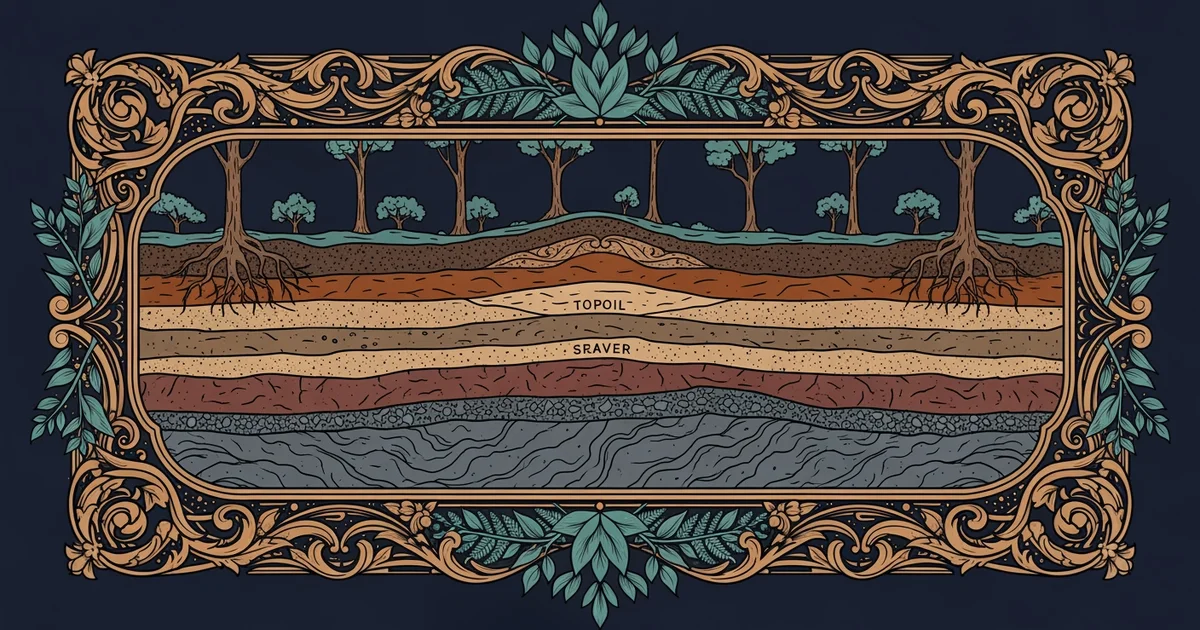
The movement of carbon through soil layers is not random, as it follows a specific path dictated by the density of life and the availability of water. As organic material falls onto the surface, it forms a layer of debris that slowly decays into richer soil components. Below this top layer, roots and fungi create complex networks that transport carbon deep into the earth. This structural organization allows the soil to act as a filter, trapping carbon while releasing necessary minerals back to the plants. The efficiency of this movement depends on the health of the soil and the balance of its inhabitants.
To understand how these components interact, we can look at the primary roles played by different soil participants:
- Plants capture solar energy to convert atmospheric carbon into solid sugars, which they then transport downward to feed the root systems.
- Fungi extend the reach of roots by creating vast underground webs, allowing for the efficient transfer of carbon and nutrients across wide areas.
- Bacteria decompose the complex organic matter, turning it into simpler chemical forms that plants can easily take up during the growing season.
Balancing the Global Carbon Budget
Since the soil holds more carbon than the atmosphere and all plants combined, even tiny changes in soil health have massive impacts on the global climate. If the soil becomes too dry or too hot, the microbes might stop working, which traps carbon in a stagnant state and prevents plants from getting the fuel they need. This disruption is similar to a bank closure that prevents citizens from accessing their savings during a crisis. When the cycle slows down, the entire ecosystem loses its ability to recover from environmental stress, leading to a decline in biodiversity. Keeping this cycle healthy requires a careful balance of moisture, temperature, and organic diversity within the soil structure.
| Process | Action | Resulting Change |
|---|---|---|
| Photosynthesis | Carbon capture | Increased soil carbon storage |
| Decomposition | Nutrient release | Available plant food production |
| Respiration | Gas emission | Return of carbon to atmosphere |
By managing our land usage, we can help maintain the speed of these cycles and ensure that the soil continues to serve as a stable foundation for the climate. Understanding how these elements move allows us to protect the resources that sustain life on our planet.
Biogeochemical cycles function as a continuous economic system where carbon and nutrients are constantly recycled to sustain the health of the entire planet.
The next Station introduces soil mineralogy, which determines how the physical structure of the earth influences the storage capacity of these vital nutrients.