
Nutrient Flux Modeling
Imagine you are tracking a single drop of rain as it travels through a forest floor. This tiny traveler carries dissolved minerals that feed the trees and plants growing above. When water moves through soil, it acts like a delivery driver bringing essential packages to the roots. If the driver moves too fast, the plants might miss their delivery entirely. If the driver gets stuck in traffic, the plants might starve while waiting for their shipment. Scientists study this movement to understand how the ground manages vital resources for life.
Understanding Soil Nutrient Transport
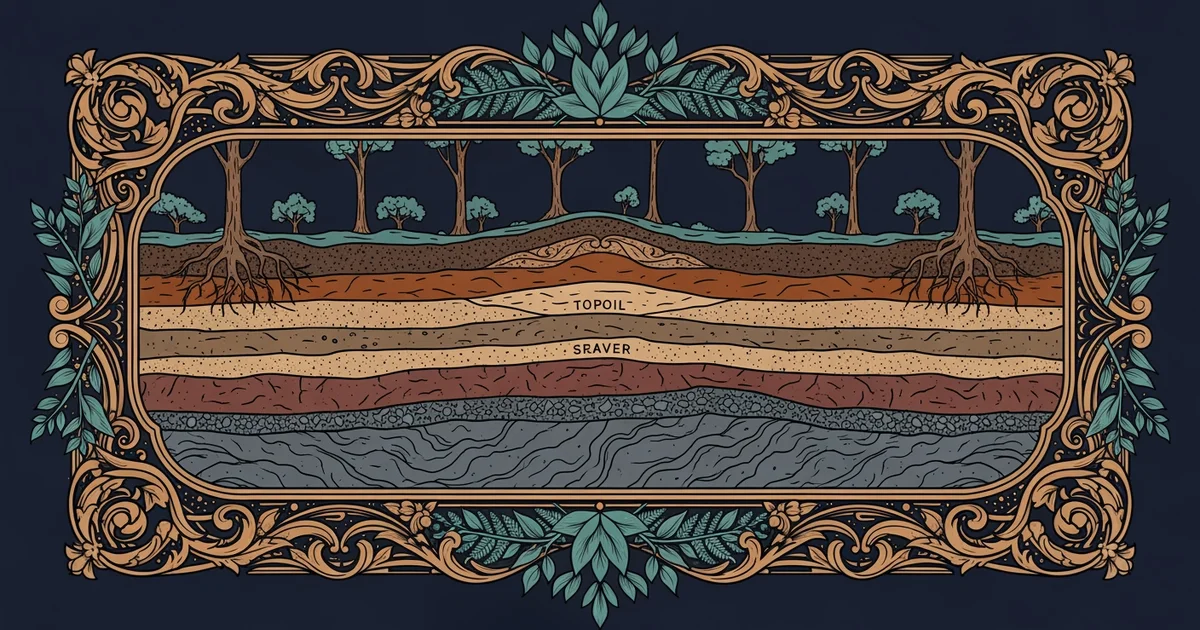
Nutrient flux modeling helps us predict how chemical elements move through the layers of the earth. Researchers view the soil as a complex system where water serves as the primary transport vehicle. When rain falls, it picks up minerals from decaying leaves or weathered rocks. This mixture then travels downward through the soil pores toward the groundwater. By measuring the speed and concentration of these minerals, we create a map of nutrient flow. This process is much like a bank managing its daily cash flow to ensure that every account receives its necessary deposits on time.
Key term: Nutrient flux — the rate at which chemical elements move through a specific area of the soil over a set time period.
Modeling this movement requires us to account for how different soil types hold onto nutrients. Some soils act like a sponge, soaking up minerals and releasing them very slowly over time. Other soils are like a sieve, allowing water and nutrients to pass through without much delay. We use mathematical equations to represent these physical traits. When we change one variable, such as the amount of rainfall, we can see how the entire system reacts. This allows us to predict how ecosystems might change if the climate becomes much wetter or drier.
Applying Models to Ecosystem Health
Effective models must consider how biological activity influences the movement of these chemical substances. Plant roots actively pull nutrients from the water as it passes through the soil profile. Microbes also consume these minerals, which can either store them or release them back into the soil. We represent these interactions using a series of balance equations that track gains and losses. This approach ensures that we do not lose track of any nutrients as they cycle through the environment.
| Process | Impact on Nutrients | Speed of Change |
|---|---|---|
| Leaching | Removes minerals | High speed |
| Uptake | Stores minerals | Medium speed |
| Fixation | Traps minerals | Very slow |
We must also understand how human activities like farming or construction alter these natural pathways. When we add fertilizers, we increase the concentration of nutrients in the soil water. This can overwhelm the natural capacity of the soil to filter or store these elements. Our models help us see when these systems reach a breaking point. By identifying these limits, we can better manage land to prevent pollution and keep plants healthy.
There are three main factors that determine how quickly nutrients move through the earth:
- Soil porosity describes the size and number of empty spaces between soil particles — larger spaces allow water to move quickly, while smaller spaces create resistance that slows down the flow of dissolved minerals.
- Chemical adsorption occurs when nutrient ions stick to the surface of clay particles — this process acts as a temporary storage mechanism that prevents minerals from washing away during heavy rain events.
- Biological demand represents the rate at which living organisms absorb nutrients from the soil solution — when demand is high, the concentration of available minerals drops rapidly because the plants consume them.
By combining these factors, we build a picture of how the ground regulates the supply of life-sustaining elements. This science is essential for protecting water quality and supporting the growth of forests and crops alike. We continue to refine these models to capture the complexity of the natural world more accurately. Each update brings us closer to understanding the hidden mechanics of our planet.
Nutrient flux modeling quantifies how water transports chemical building blocks through soil to sustain plant growth and maintain ecosystem balance.
But what does it look like in practice when we observe these flow patterns in a real forest?