
Defining the Critical Zone
Imagine you are standing in a garden and digging your hands into the loose, dark soil. You might view this dirt as simple ground, but it actually functions as a complex, living machine that sustains every living thing on our planet. This thin outer layer of Earth is where rock, soil, water, air, and living organisms interact in a delicate balance. Scientists call this vital area the Critical Zone, and it serves as the essential stage for all life on Earth. Without this thin, active layer, our planet would lack the resources needed to support plants, animals, or human civilization.
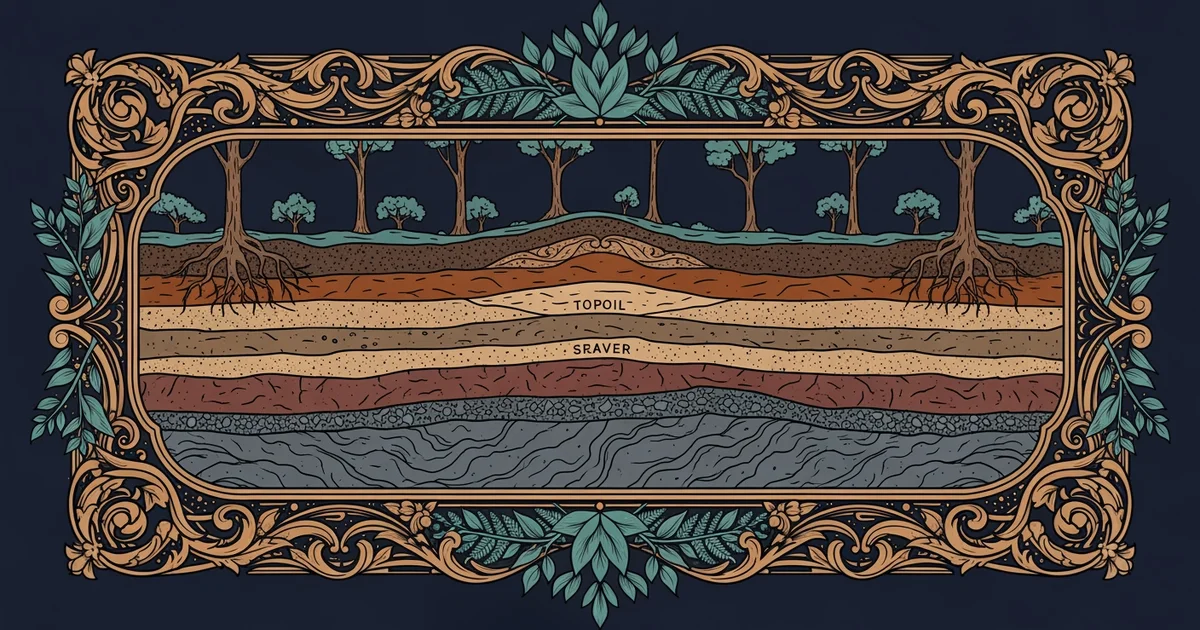
Understanding the Boundaries of the Critical Zone
To define this zone, we must look at the vertical space extending from the tops of the tallest trees down to the deepest groundwater. This region acts like a global filter, processing materials and energy to keep the environment stable and healthy. It is not just a static shell of rock, but a dynamic system that changes through constant chemical and physical processes. Think of the Critical Zone like a busy international airport where incoming flights represent energy and water, while outgoing flights represent nutrients and recycled gases. Just as an airport requires constant management of its gates, runways, and terminals to function, the Critical Zone manages the flow of resources to keep the biosphere running smoothly. By studying this specific depth, we learn how Earth regulates its own health.
Key term: Critical Zone — the thin, heterogeneous near-surface layer of Earth where complex interactions between rock, soil, water, air, and living organisms occur.
This zone is defined by its ability to sustain life through the recycling of essential elements like nitrogen and carbon. It captures rain, filters it through layers of sediment, and stores it in underground pockets for future use. This process is similar to a household budget where you must carefully manage your limited income to cover all your monthly expenses. If you spend too much at once without saving, you eventually run out of money and face a crisis. Similarly, the Critical Zone manages the Earth's natural capital by storing and releasing water and nutrients at a pace that plants and animals can survive on.
The Components of the Earth's Surface System
We can organize the primary components of this system to better understand how they interact to maintain global stability. These parts do not work in isolation but rely on each other to perform the critical tasks that keep our climate in check.
| Component | Primary Function | Interaction Type |
|---|---|---|
| Atmosphere | Provides gases | Exchange of air |
| Vegetation | Captures energy | Biological growth |
| Soil/Regolith | Stores nutrients | Physical breakdown |
| Groundwater | Distributes water | Chemical transport |
Every part of this list plays a specific role in keeping the system balanced and productive for all living species. The vegetation captures sunlight to create food, while the soil provides the physical structure needed for roots to hold firm. Meanwhile, the groundwater acts as a delivery system, moving dissolved nutrients from the soil into the plants that need them to grow. This movement of materials is the heartbeat of the Critical Zone, ensuring that nothing goes to waste and that the environment remains fertile. When these parts work in harmony, they create the stable conditions we rely on for our food, clean water, and breathable air. Understanding these connections helps us see how even small changes in one area can affect the entire system’s performance.