
Hydrology Basics
Imagine you are pouring a glass of water onto a dry sponge sitting on your kitchen counter. You watch as the water vanishes into the tiny holes, moving deeper until the entire sponge feels heavy and wet. This simple act mirrors how our planet manages water, as the ground beneath us acts like a massive, natural sponge. When rain falls from the sky, it does not just sit on the surface, but instead begins a journey through the soil layers. This movement is the foundation of life, as it cleans our water and fills the underground storage systems we rely on daily.
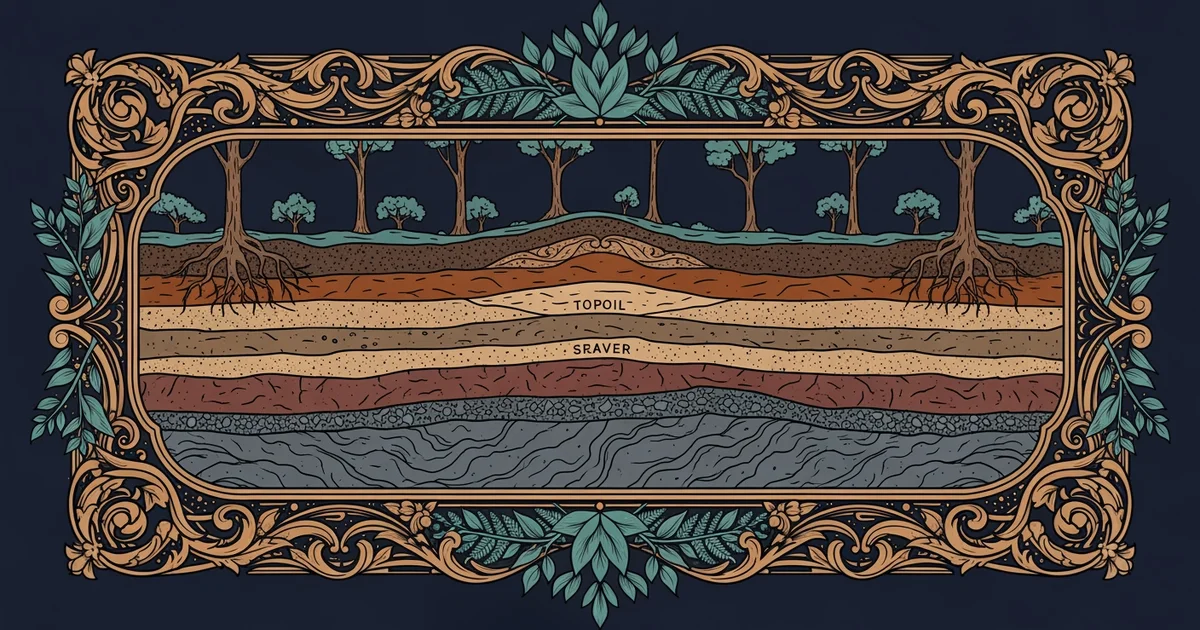
The Path of Water Through Soil
Water moves through the earth in a process called infiltration, which describes how liquid enters the soil surface. Gravity pulls the water downward, while the spaces between soil particles act like a series of interconnected pipes. If the soil has large gaps, like sand, water travels through it very quickly. If the soil is made of tight clay, the water moves much slower because the pores are too small. Think of this like trying to pour water through a pile of marbles versus a pile of flour. The marbles allow for fast movement, while the flour creates a barrier that slows the flow down significantly.
Key term: Infiltration — the natural process where water on the ground surface enters the soil to become groundwater or soil moisture.
Once the water enters the ground, it encounters different layers that change its speed and direction. The top layer is usually full of organic matter and roots, which help absorb moisture and hold it in place. As water moves deeper, it reaches the zone of saturation, where every tiny hole is completely filled with liquid. This is how underground reservoirs, or aquifers, are formed over many years of rainfall. These reservoirs act like a bank account for the planet, storing water so that we can use it during times when the sky does not provide rain.
Factors Influencing Water Movement
Several physical conditions determine how much water the ground can actually hold at any given time. These factors ensure that the land stays healthy and productive for plants and animals alike.
- Soil texture determines how large the gaps are between particles, which directly controls the speed of water movement through the earth.
- Vegetation cover acts as a shield that breaks the force of falling rain, allowing the ground more time to soak up the moisture.
- Slope steepness forces water to run off the surface instead of soaking in, which can lead to erosion and less water reaching the deep layers.
When we look at how different materials affect this process, we can see why some areas flood while others stay dry. The following table shows how soil composition changes the way water behaves during a heavy storm.
| Soil Type | Pore Size | Infiltration Rate | Water Retention |
|---|---|---|---|
| Sand | Large | Very Fast | Low |
| Silt | Medium | Moderate | Medium |
| Clay | Tiny | Very Slow | High |
This table illustrates that while clay holds water well, it does not let it pass through quickly. Sandy soil is the opposite, as it lets water pass through easily but cannot hold onto it for very long. Understanding these patterns helps us manage our land, especially when we want to protect our water supply or grow food. The movement of water is not just a random event, but a highly organized system that keeps our world functioning correctly. By studying these pathways, we learn how to better protect the thin layer of earth that sustains all life above it.
Water moves through the ground by using soil pores as a natural filtration system that stores and cleans our vital resources.
The next step involves looking at how this water moves through living things and chemical cycles to sustain our global environment.