
Pollutant Transport
When a industrial spill occurs near a river, the chemicals do not simply vanish into the water stream. Instead, they move through the complex layers of soil and rock that surround the river bank. This process of movement is a critical challenge for environmental scientists working to protect our local water supplies. We must understand how these substances travel to prevent long-term damage to the environment and human health. This movement is a core part of the earth system we studied in the first station of this learning path.
Understanding Contaminant Pathways
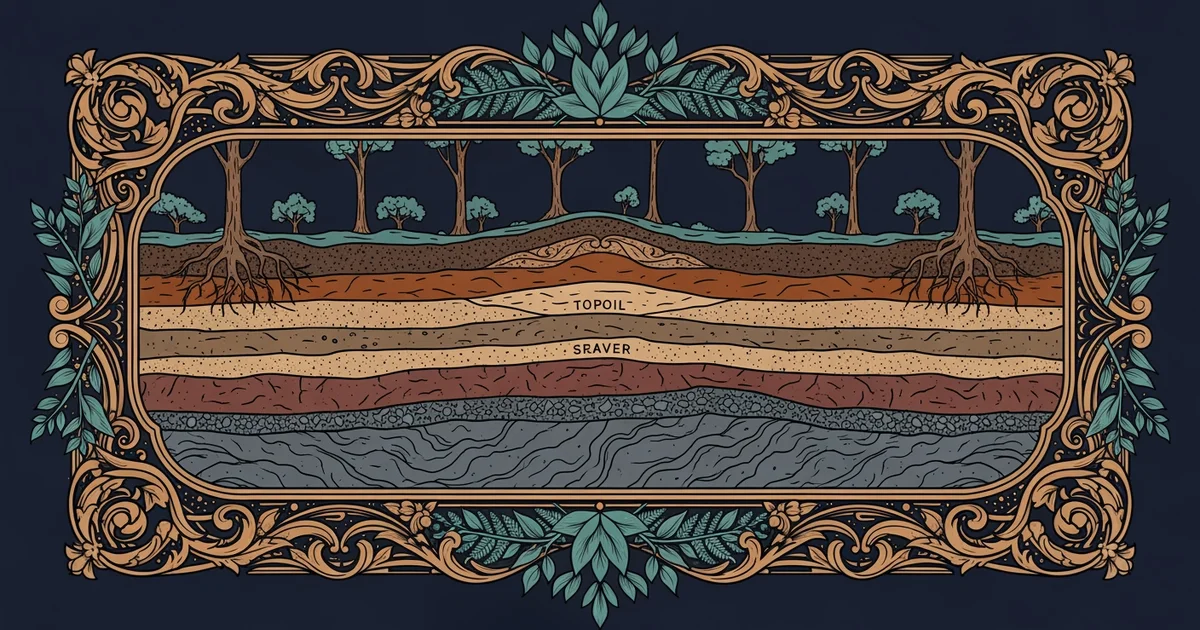
Contaminants move through the ground by following the path of least resistance through the soil structure. This movement is often described as a plume, which represents the spread of a chemical through groundwater or soil pores. Think of this like pouring ink into a thick sponge and watching it slowly spread out from the center point. The ink does not stay in one spot, but rather moves through the open spaces inside the sponge material. Similarly, pollutants travel through the tiny gaps between soil particles as water pushes them downward or sideways through the earth.
Key term: Plume — a body of contaminated groundwater or soil that moves through an aquifer or soil layer over time.
Several factors determine how fast a plume moves and where it eventually ends up in the environment:
- Soil porosity allows liquids to move through the ground by providing open spaces for water flow between solid particles.
- Chemical solubility dictates whether a substance dissolves into the water or sticks to the soil surface during its journey.
- Hydraulic gradient creates the force that pushes water and dissolved chemicals from higher elevation areas toward lower discharge points.
These factors work together to create a complex map of movement that scientists must track carefully to manage risks effectively.
Managing Soil Interactions
Once a chemical enters the soil, it interacts with the physical components of the ground in several ways. Some chemicals bind tightly to clay particles, which effectively slows their transport and keeps them near the surface. Other chemicals remain dissolved in the water, which allows them to travel quickly through sandy soils that have larger gaps. This difference in behavior is crucial for predicting how far a spill might travel from its original source location. Experts use these observations to decide where to place monitoring wells and how to contain the spread of the material.
| Feature | Influence on Movement | Primary Effect |
|---|---|---|
| Clay content | High binding capacity | Slows migration |
| Sand content | High pore space | Increases speed |
| Organic matter | Chemical adsorption | Traps pollutants |
This table illustrates how different soil compositions directly change the behavior of a moving plume. When we look at a site, we must account for these variations to determine the risk level for the local water supply. If the soil has high clay content, the threat of rapid spread is lower than in sandy areas. By mapping these soil types, we can create better models for predicting the future path of any detected contamination.
Understanding these pathways is essential for maintaining the health of the thin layer of life-sustaining earth beneath our feet. We must learn to track these invisible movements to protect the resources that all living things rely upon for survival. Every spill provides data that helps us build better defenses against future environmental threats to our soil and water.
Contaminant transport is a predictable process governed by the physical properties of soil and the movement of water through the ground.
But this model becomes difficult to manage when human development changes the natural drainage patterns of the landscape.