
Future Earth Scenarios
Rising sea levels and shifting climate patterns force us to rethink how we build our future cities. Imagine trying to renovate a house while the foundation itself is slowly sinking into soft, unstable mud. This is the exact challenge we face when planning for a changing planet where the physical ground and weather are constantly in motion. We must look at how human activity interacts with natural cycles to predict where we can safely thrive in the decades ahead.
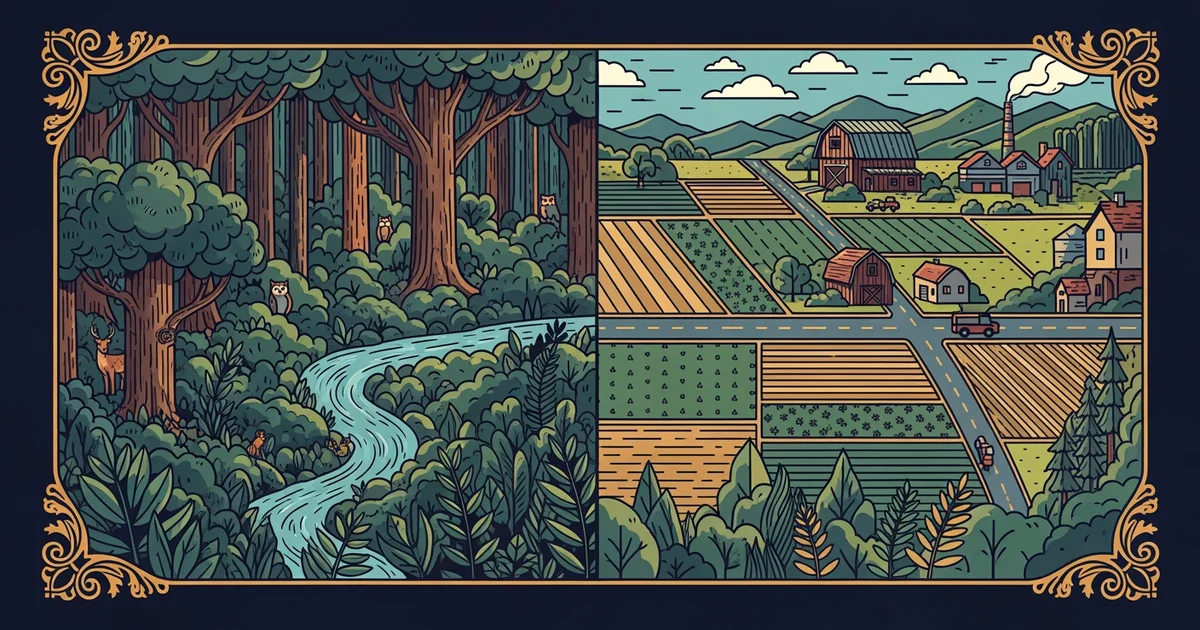
Modeling Global Landscape Shifts
Predictive modeling acts like a weather forecast for the entire planet over many years. Scientists use complex computer programs to simulate how land use and climate change alter our physical geography. These models track variables like forest loss and urban growth to show us potential outcomes for the next century. By analyzing these data points, we can see if our current expansion strategies will lead to sustainable growth or environmental collapse. Think of this process like managing a personal budget where you track every dollar spent to avoid future debt. If we spend our natural resources faster than they can recover, the planet faces a long-term deficit that no technology can easily fix.
Key term: Predictive modeling — the use of statistical data and computer simulations to forecast future environmental states based on current trends.
When we apply these models, we observe how land management decisions ripple across continents and oceans. We have learned that small local changes, such as clearing a forest for a new neighborhood, often cause massive shifts in regional water cycles. This demonstrates the interconnected nature of our world where every local action contributes to a global outcome. We must balance our need for housing with the requirement to protect the natural systems that keep our environment stable and livable.
Future Scenarios for Human Settlements
Future landscapes will depend heavily on the choices we make regarding infrastructure and resource management today. We can categorize these potential futures based on how well we integrate human needs with the natural world. Consider the following scenarios for how our landscapes might evolve over the coming years:
- Adaptive urban design involves building cities that can move or change as water levels rise — this approach treats the landscape as a flexible partner rather than a static base.
- Managed retreat focuses on moving human settlements away from high-risk coastal zones before disaster strikes — this strategy prioritizes long-term safety over the short-term value of waterfront property.
- Regenerative land use seeks to restore damaged ecosystems while building new structures — this method ensures that human growth actually improves the health of the local environment.
These strategies highlight the tension between our desire for stability and the reality of a changing planet. We must choose paths that allow for growth without destroying the very land that supports our existence.
| Scenario Type | Primary Goal | Landscape Impact | Risk Level |
|---|---|---|---|
| Adaptive | Resilience | High flexibility | Moderate |
| Retreat | Safety | Low disturbance | Low |
| Regenerative | Restoration | High improvement | Very Low |
By comparing these approaches, we see that the most successful future involves a mix of these different strategies. We cannot rely on just one solution to solve the complex problems of a changing global landscape. Instead, we must use a diverse toolkit to manage our interactions with the physical world effectively. This requires constant observation and a willingness to adjust our plans as new data becomes available. We are essentially the architects of our own environment, and the blueprints we draw today will define the world for those who follow us.
Future landscape stability depends on our ability to align human urban development with the natural limits of our planet.
Understanding how we reshape the earth is the first step toward building a sustainable future for everyone.