
Sustainable Planning
Imagine city streets designed like living organisms that breathe, filter water, and recycle energy to support every resident efficiently. Modern urban growth often ignores these natural cycles, leading to environmental stress that compromises our long-term health and stability.
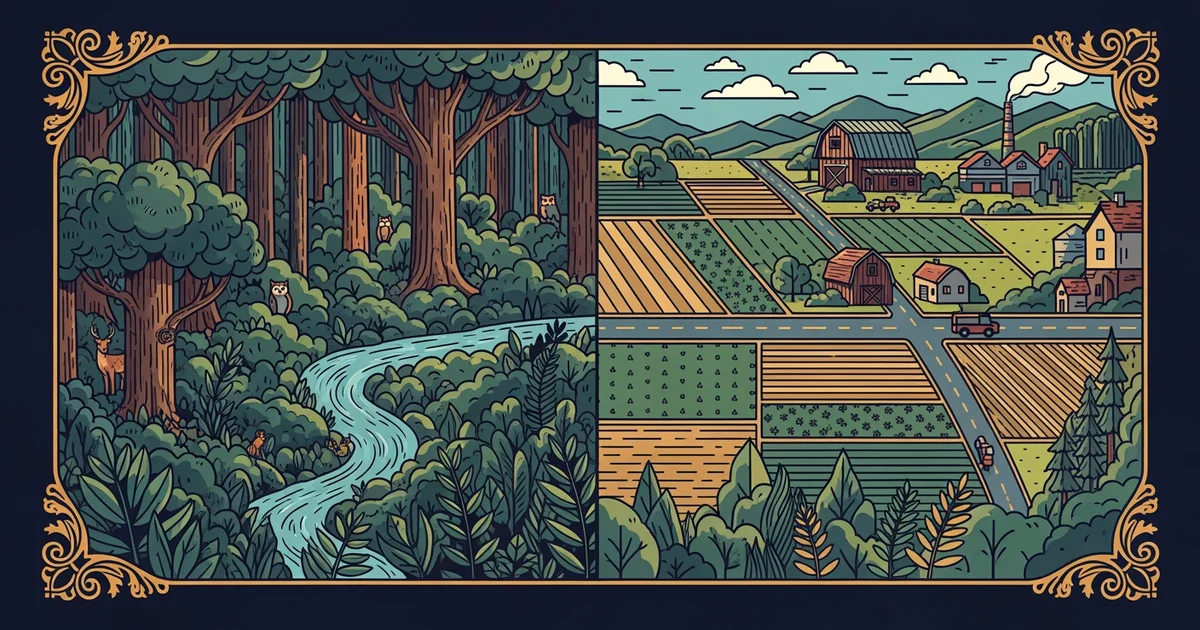
Principles of Sustainable Development
To build better cities, planners must prioritize Sustainable Planning by integrating human needs with environmental preservation. This approach moves beyond simple construction to consider the entire life cycle of a building or a neighborhood. Think of a city like a household budget where every resource spent must eventually be replaced or renewed to avoid bankruptcy. If we consume energy and materials without replenishment, the system fails over time. Sustainable planning treats land as a finite asset rather than an infinite resource for expansion. By focusing on density and efficiency, we reduce the footprint of our homes and roads. This strategy ensures that future generations inherit a functional and productive landscape instead of a depleted one. Planners use these core strategies to balance growth with ecological limits:
- Mixed-use zoning integrates residential, commercial, and recreational spaces to minimize transportation needs and maximize daily efficiency.
- Green infrastructure utilizes natural systems like wetlands or parks to manage stormwater runoff and reduce urban heat island effects.
- Adaptive reuse converts existing structures for new purposes instead of demolishing them to reduce waste and preserve local character.
Integrating Ecological Systems
Building on these foundations requires a shift in how we view the relationship between built environments and nature. Previous stations discussed restoration ecology and anthropogenic landscape changes, which highlights why we must stop viewing human activity as separate from the natural world. If we continue to ignore the biological reality of our surroundings, we risk creating isolated zones that require massive energy inputs to survive. Sustainable planning bridges this gap by mimicking natural patterns of growth and resource distribution within the grid. This integration helps mitigate the negative impacts of urbanization by creating corridors for wildlife and improving air quality for citizens. The challenge remains in finding a way to scale these solutions across diverse geographic regions with varying economic needs. Researchers currently debate how to incentivize private developers to prioritize long-term sustainability over short-term financial gains. This unresolved tension drives the current field forward as we search for policies that make green building the most profitable choice. The following table illustrates how traditional urban planning compares to sustainable practices across three key metrics.
| Metric | Traditional Planning | Sustainable Planning |
|---|---|---|
| Resource Use | High consumption | Circular efficiency |
| Transportation | Car dependent | Multi-modal access |
| Land Usage | Sprawl outward | Dense development |
By comparing these methods, we see that sustainable planning effectively shifts the burden of maintenance from the environment to the design itself. This transition requires a fundamental change in our collective mindset regarding how we occupy the earth. We must stop seeing the planet as a blank canvas for human ambition and start seeing it as a partner in our continued survival. Every blueprint we draw acts as a statement about the world we hope to see in the coming decades. When we design with the planet in mind, we create spaces that offer resilience against the climate shifts discussed in earlier lessons. This path requires constant refinement as we learn more about the complex interactions between human infrastructure and local ecosystems.
Sustainable planning creates resilient human environments by aligning infrastructure development with the natural cycles and ecological constraints of the local landscape.
Future earth scenarios depend on our ability to implement these sustainable blueprints today to ensure long-term global stability.