
Historical Land Use
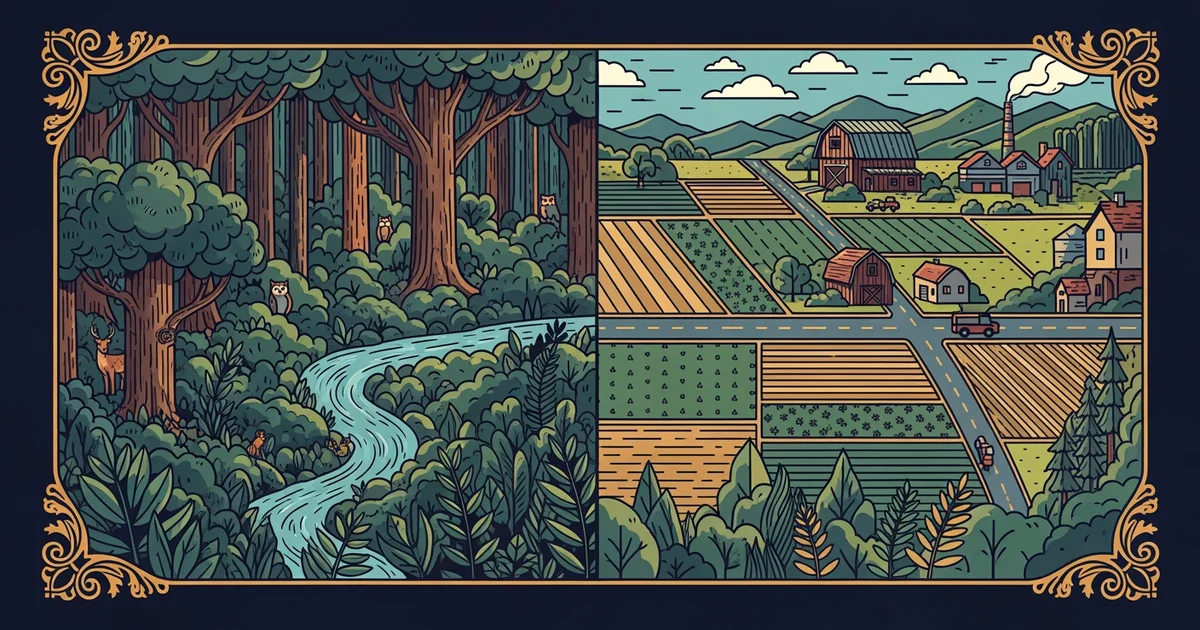
Imagine you are walking through a dense forest that suddenly turns into a wide, open field of crops. This sharp transition shows how people have actively changed the earth to meet their needs for food and shelter. Humans do not just live on the land, but they act as architects who constantly redesign the physical surface to ensure their own survival. This process began thousands of years ago when nomadic groups first decided to stay in one place for long periods.
The Shift to Permanent Settlement
When early groups moved from hunting and gathering toward farming, they began the first major phase of landscape modification. This change required clearing massive areas of trees to create space for planting seeds and grazing herds of animals. Think of this process like a business owner clearing out a cluttered warehouse to make room for a new, efficient inventory system. The land was no longer a wild space, but a resource designed to produce consistent food yields for a growing population. By removing natural vegetation, people effectively erased the original ecological identity of the region to favor their own agricultural goals.
Key term: Anthropogenic — changes to the environment that result from human activity rather than natural processes occurring in the wild.
As these settlements grew, the need for water management became a critical factor in how they shaped the local terrain. People started to dig irrigation channels to divert rivers into their dry fields, which permanently altered the natural drainage patterns of the area. This was not a small task, as it required moving tons of earth and stone to force water to flow where it was not naturally heading. These early engineering feats show that human influence on the planet is not a modern invention, but a long-standing tradition of managing resources.
Long-Term Impacts of Land Use
Beyond just farming, the construction of permanent homes and storage facilities created new, artificial landforms that did not exist before. People built mounds, leveled hillsides, and created embankments to protect their settlements from flooding or to provide a better view of their surroundings. These changes were often permanent, leaving marks on the ground that persist for thousands of years even after the original inhabitants have moved away. The physical surface of the earth acts like a historical record, holding onto the evidence of past human decisions and labor.
| Feature | Purpose | Impact on Terrain |
|---|---|---|
| Irrigation | Crop growth | Diverts water flow |
| Terracing | Slope farming | Prevents soil erosion |
| Deforestation | Land clearing | Changes local climate |
These modifications often caused unintended consequences that forced groups to adapt their strategies over time. For example, clearing too many trees often led to soil erosion, which forced farmers to move to new, more fertile areas. This cycle of use and abandonment created a pattern of human movement that was driven by the health of the land itself. We can see these patterns in the way that soil composition changes in regions where ancient people once lived and worked. The following list highlights how these activities changed the land:
- Soil compaction occurs when heavy foot traffic and livestock grazing press the earth into a dense layer that prevents water from soaking into the ground.
- Nutrient depletion happens when farmers plant the same crops repeatedly, which slowly drains the earth of essential minerals needed for future plant growth.
- Vegetation shifts occur when humans introduce non-native plants to a new area, which eventually pushes out the local species and alters the entire food chain.
Understanding these historical patterns helps us see that our current relationship with the earth is deeply rooted in these early, transformative actions. Every time we change the landscape, we set off a chain reaction that continues to shape the physical world for generations to come. By studying how our ancestors altered their environment, we can better understand the massive scope of our own footprint on the planet today.
The physical landscape serves as a lasting archive of human choices, where every modification to the earth reflects a trade-off between immediate survival and long-term environmental stability.
The next step in our journey explores how these cumulative changes have led scientists to define a new geological era known as the Anthropocene.